To experience more of our visit to Cologne and more details of our schnitzel tour, be sure to checkout our video blog on YouTube. Thanks for watching!
We love German food, but our absolute favorite is a delicious schnitzel. Ok, schnitzel actually originated in Austria, I know. But the Germans certainly make a wonderful schnitzel themselves. We think it’s even better than what you will find in Germany’s neighboring country to the south. (Don’t tell our Austrian friends.) Recently we were in the beautiful city of Cologne to meet some friends and we decided to go on a quest to find the best schnitzel in the city. We ate four fantastic schnitzel meals. Each one offered a different take on this classic dish. We would not hesitate to recommend all of them. We would definitely eat them again.

When visiting Cologne, you must cross over the Hohenzollern Bridge to get the classic view of the city.
Cologne is Germany’s fourth largest city and has an abundance of great places to eat. We only had three days. So, we limited our sample to four of Cologne’s most notable dining establishments: Bei Oma Kleinmann, Schreckenskammer, Lederer, and Peters Brauhaus.
First Night Dinner: Bei Oma Kleinman
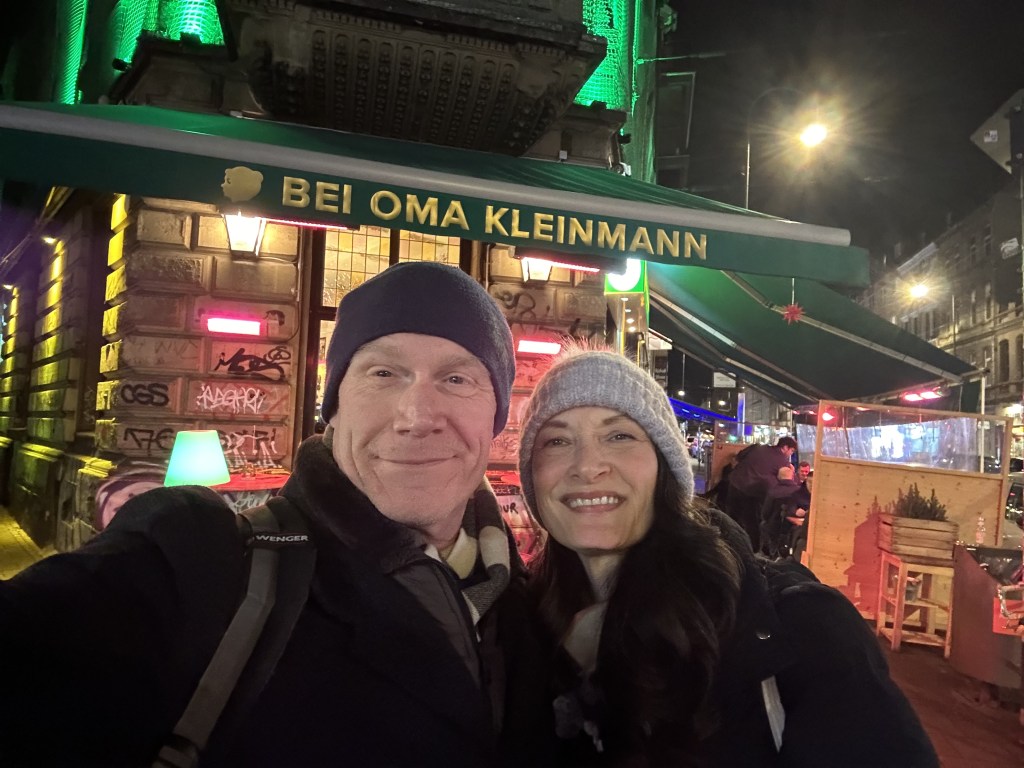
We were a little concerned, because we didn’t have reservations, but we figured it was a week-night and we were getting there early (shortly after 5:00 p.m.) so we thought we would be able to get a seat. Well, we were seated, but there was a little bit of a question when we first arrived.
They were very busy even at this time of the evening, but the staff were very friendly and ultimately they were able to accommodate us. But, we were told that we could only have our table for 90 minutes as it was reserved later that night.
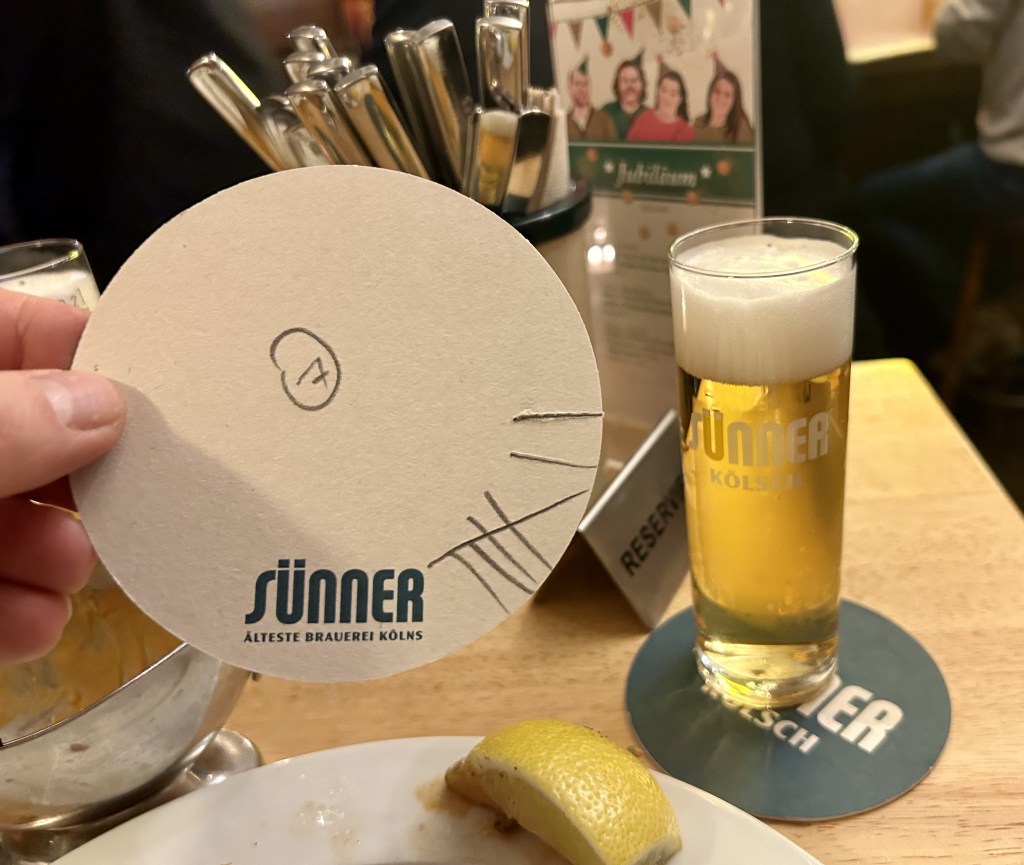
The Köbes keep track of many Kölsch you’ve had by marking your coaster each time you get a fresh one.
Beer culture in Cologne – We started off with a couple of glasses of the traditional Cologne brew – Kölsch. Kölsch is a light, but tasty beer and is the predominant beer in Cologne. It is served in small, .2 liter glasses that are called a Stange (pole). The Stange are constantly replaced as soon as you get close to the bottom of your glass. The servers who deliver Kölsch are called Köbes. The Köbes carry around 10-12 Stangen in a Kranz (wreath). A Kranz is a circular tray. When you order a Kölsch in Cologne, you are automatically signaling to continue serving you beer. This service continues until you either tell them to stop or you fall out of your seat, whichever comes first. The subtle way to stop your server from bringing more beer is simple. Place your coaster on top of your Kölsch glass. It is generally accepted as a signal that you’ve decided that you don’t want anymore.
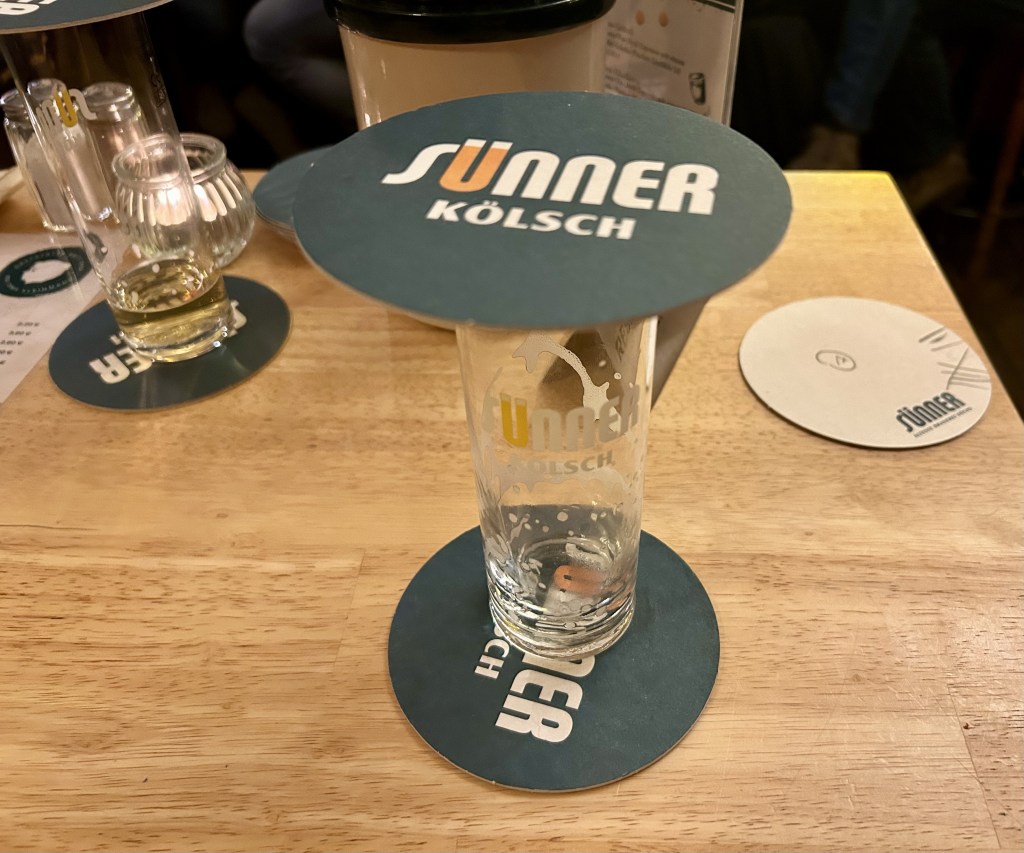
Signaling to the Köbe that I don’t want another Stange of Kölsch
We really liked Bei Oma Kleinmann for one main reason. The menu explains that all of their food is locally sourced. They even tell where the animals are raised that supply the meat for their dishes.
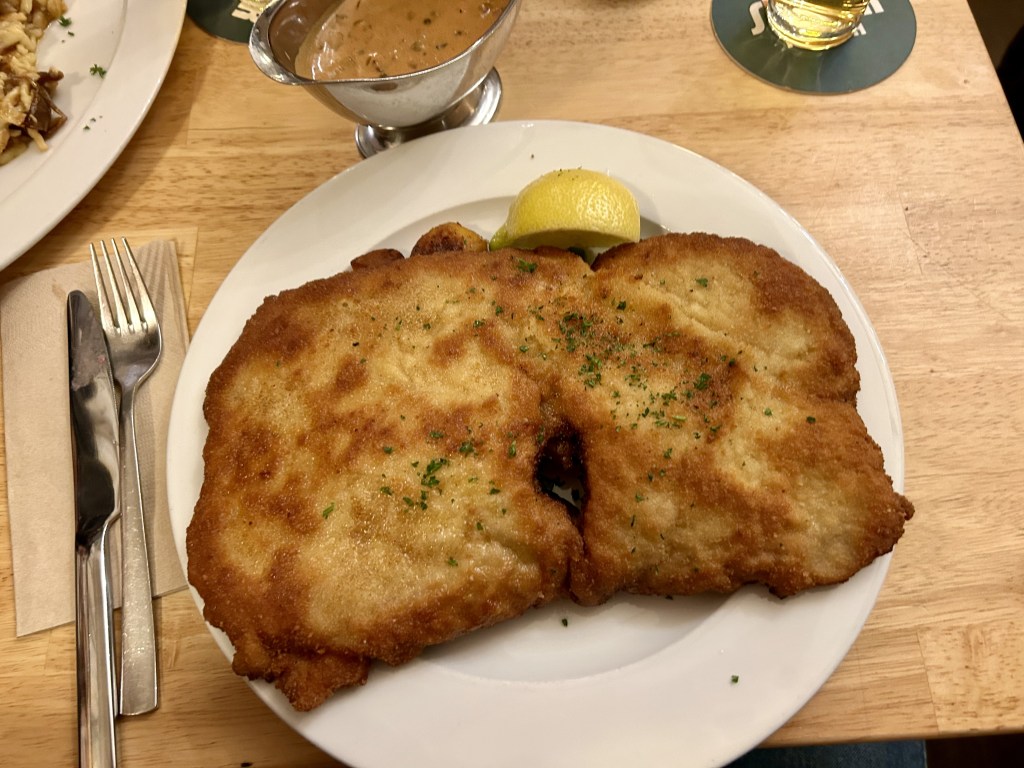
The schnitzel at Bei Oma Kleinann set a high bar for the other establishments that we would visit.
We had schnitzel with pepper cream sauce. We also had Bratkartoffeln and käsespätzle, which is a traditional German pasta dish with cheese and fried onions. It’s great for vegetarians, but not for vegans. We also had salad. The schnitzel was unbelievable. It was huge. It covered the entire plate. It was nicely thin and cooked perfectly. It was crispy and juicy. The sauce was out of this world. The Bratkartoffeln (home fries) were fantastic and the Käsespätzle was, without doubt, the best we’ve ever had. We washed it all down with several glasses of the famous Kölsch beer, a staple in Cologne. We left full and happy. We knew that the other dining establishments were going to have a hard time matching Bei Oma Kleinman.
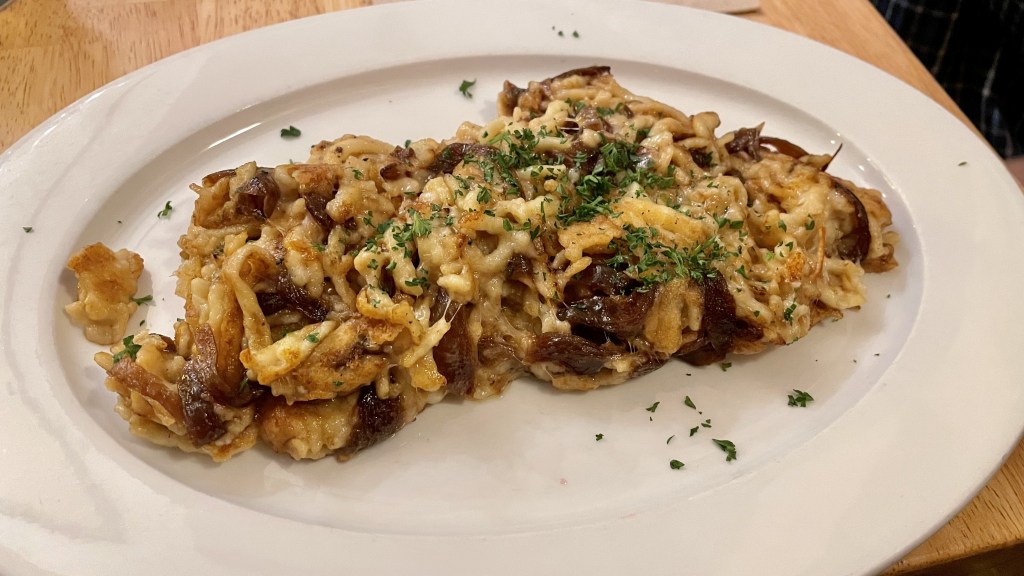
Probably the best Käsespätzle we’ve ever eaten at Bei Oma Kleinmann
Cost for dinner at Bei Oma Kleinman including seven Kölsch and tip – $67.63
Bei Oma Kleinmann – Zülpicher Str. 9, 50674 Köln
https://www.beiomakleinmann.de
Day Two Lunch: Schreckenskammer
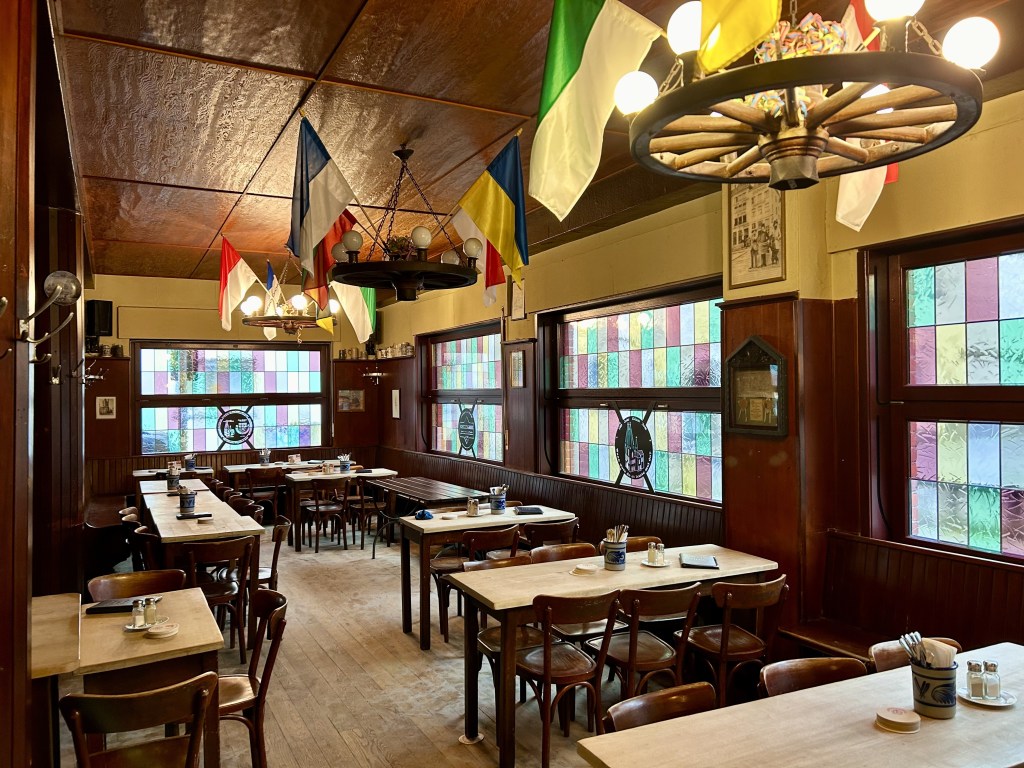
Schreckenskammer getting ready for a Carnival party
This may seem like a strange name for a restaurant because Schreckenskammer translates to Chamber of Horrors. The website (German only) gives a couple of possibilities for the name, but confirms neither one. The most interesting reason is the original brewery’s location. It was located along the way from the courthouse to Cologne’s death tower. Convicted delinquents received their executioner’s meal and their last beer in the “chamber of horrors” on the way there.
Whatever the origin of the name, today it is a wonderful restaurant and brewery. The brewery history goes back to 1452, yes they have been making Kölsch for a long time. Sadly, this is not the original location. The original Schreckenskammer was destroyed in the Second World War during the Paulus-Night bombing in 1943. We knew we were going to have schnitzel twice this day. We arrived early. It turns out they weren’t quite open yet. No worries though, their staff was amazing. They welcomed us in. They immediately served us some of their delicious Kölsch. They made us feel right at home even if they weren’t quite open.
One interesting point of the Schreckenskamer is the untreated oak-plank floors which can’t be cleaned in a normal fashion. The sand not only helps clean the wood, but also protects it and ensures that it lasts longer.

The untreated wood floors at Schreckenskammer are protected by sand
We started this lunch with a classic Cologne snack – Halven Hahn – which translates into – half a chicken. This is a very misleading name for the dish because there isn’t a chicken in sight. The Halven Hahn consists of a deliciously crunchy on the outside and soft on the inside Brötchen (bread roll), sliced onions, pickles, some fantastic mustard and a thick piece of Hollander cheese. You take all of this and put it together into a sandwich. It was exceptionally tasty and really surprised us at how good it was. But, we still have no idea where the name came from.

The classic snack of Cologne – Halven Hahn. Tasty, but we still don’t know how it got its name.
For our main dishes we had schnitzel with bearnaise sauce, pomme frites (french fries) and a side salad. I asked to have the fries substituted with Bratkartoffeln, but I was told no -which surprised me. In between our Halver Hahn and the arrival of the meal we were served a tasty and salty bowl of beef broth. We were told that this is a technique they use to increase the thirst of their patrons and therefore sell more drinks.

The schnitzel at Schreckenskammer was excellent. The bearnaise sauce was fantastic. Why wouldn’t they let me substitute for Bratkartoffeln?
The schnitzel was excellent! It was a little thicker than what we had the previous evening, but oh so good. It was crispy and juicy and the bearnaise sauce was delicious. However, I must admit that a little of the sauce went a long way as it was quite filling. The pomme frites were good, but not spectacular and the side salad was very good. Our other meal consisted of Rührei (scrambled eggs) and Bratkartoffeln. I was surprised that I couldn’t substitute the french fries with the schnitzel for home fries. It seemed strange because we were getting them with our other meal. But, oh well. The scrambled eggs were delicious and cooked just right, fluffy and buttery. The coveted Bratkartoffeln were out of this world! Cooked perfectly, crunchy on the outside, soft and warm on the inside and wonderfully seasoned.
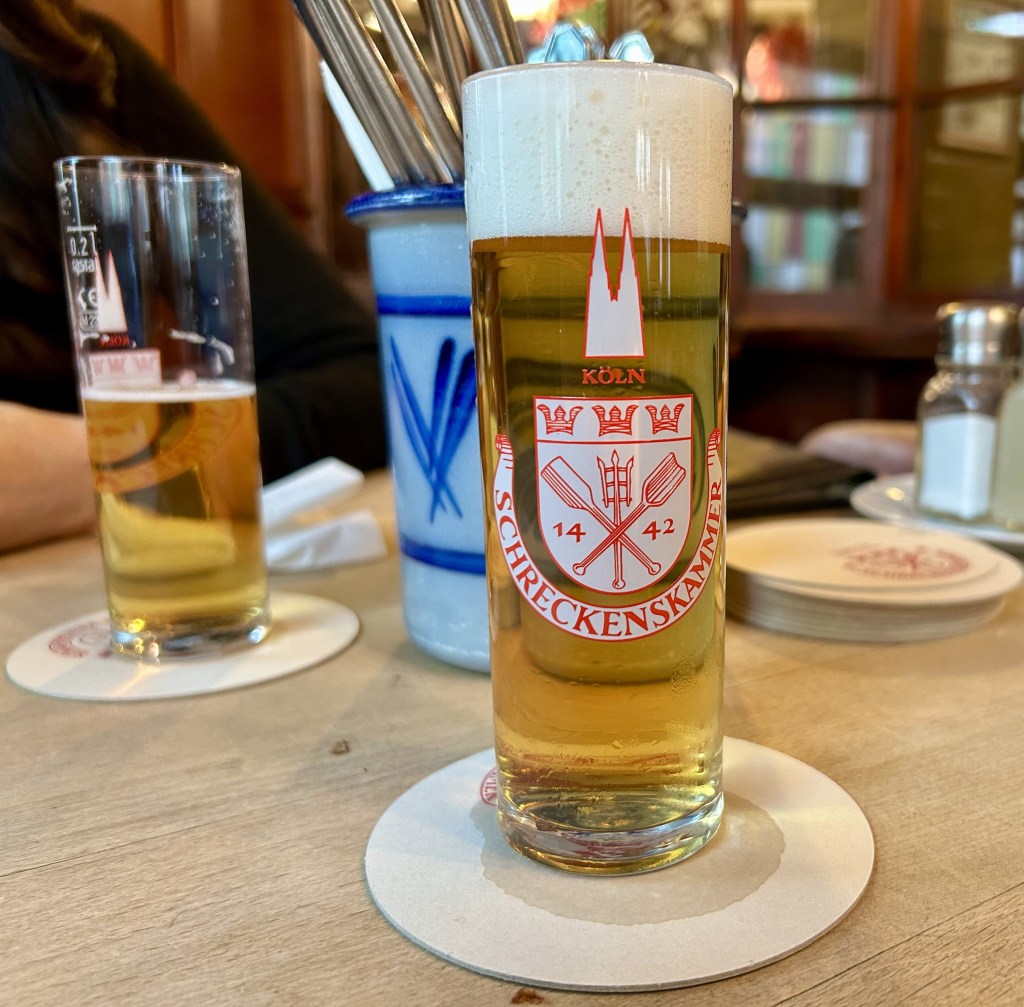
Schreckenskammer has been brewing Kölsch since 1442. They have mastered the art of brewing.
The cost for lunch was 50 Euro. It included five of the little glasses of Kölsch and a tip. These glasses would equal about two standard glasses of beer in Germany.
Brauhaus Schreckenskammer Köln – Reservations 0221 132581
Ursulagartenstraße 11-15, 50668 Köln
schreckenskammer.com
Afternoon exploring: The Church of St Ursula
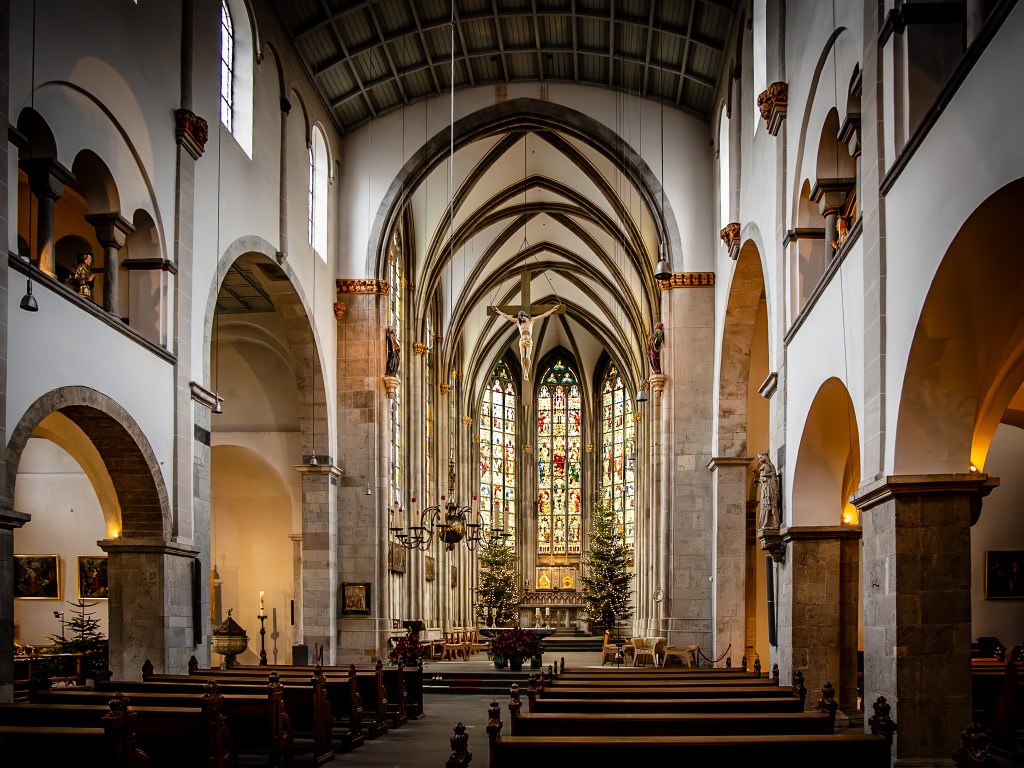
The Church of St. Ursula
After lunch we walked about 50 meters to the Church of St Ursula (St. Ursula Kirche) which is a Roman Catholic church, renowned for its rich history, legend and unique relic collection. This church is a real jewel that too many travelers miss.
Dedicated to Saint Ursula, a legendary British princess supposedly martyred with 11,000 virgins by the Huns. In the original story, Ursula traveled with 11 virgins. However, they discovered a vast collection of bones during the construction of the current structure. This led to the number being changed to 11,000 virgins. The church stands on what is believed to be their burial site. This belief has come into question in recent centuries.
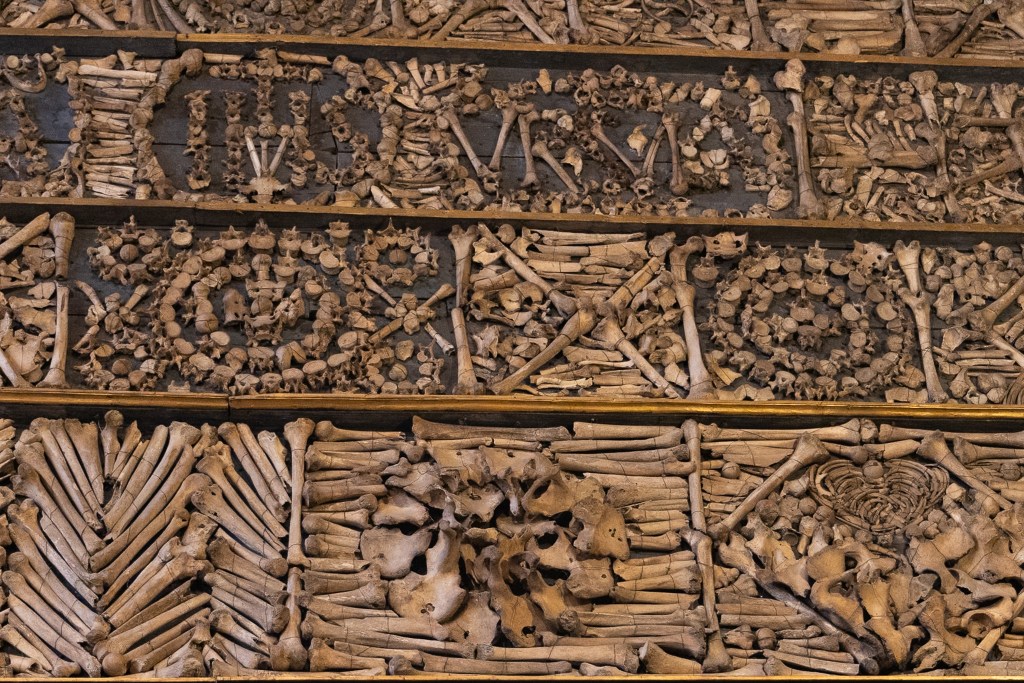
The bones of 11,000 virgins or those of Roman soldiers?
Historical Background
The original church dates back to the 4th or 5th century, but the current Romanesque structure was built in the 12th century. Over the centuries, Gothic and Baroque elements were added, giving the church a distinct architectural blend.
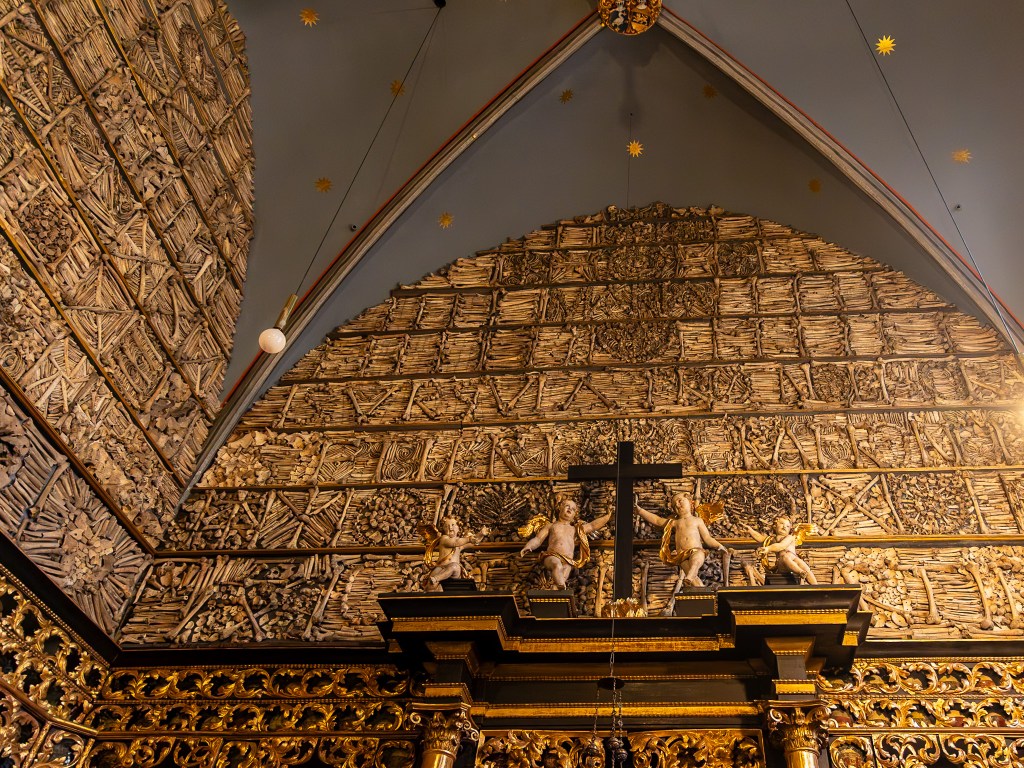
The collection of bones is very impressive
Golden Chamber (Goldene Kammer)
One of the church’s most fascinating features is the Golden Chamber. This is a room decorated with human bones arranged in intricate patterns. These bones are said to belong to Saint Ursula and her companions, making it one of the most extraordinary reliquaries in Europe. However, in recent centuries the thinking has shifted to believing that the church was built over a Roman graveyard and the skeletal remains actually belong to Roman soldiers. Cologne was a Roman city for about 500 years from the 1st century BC until the mid-5th century AD.
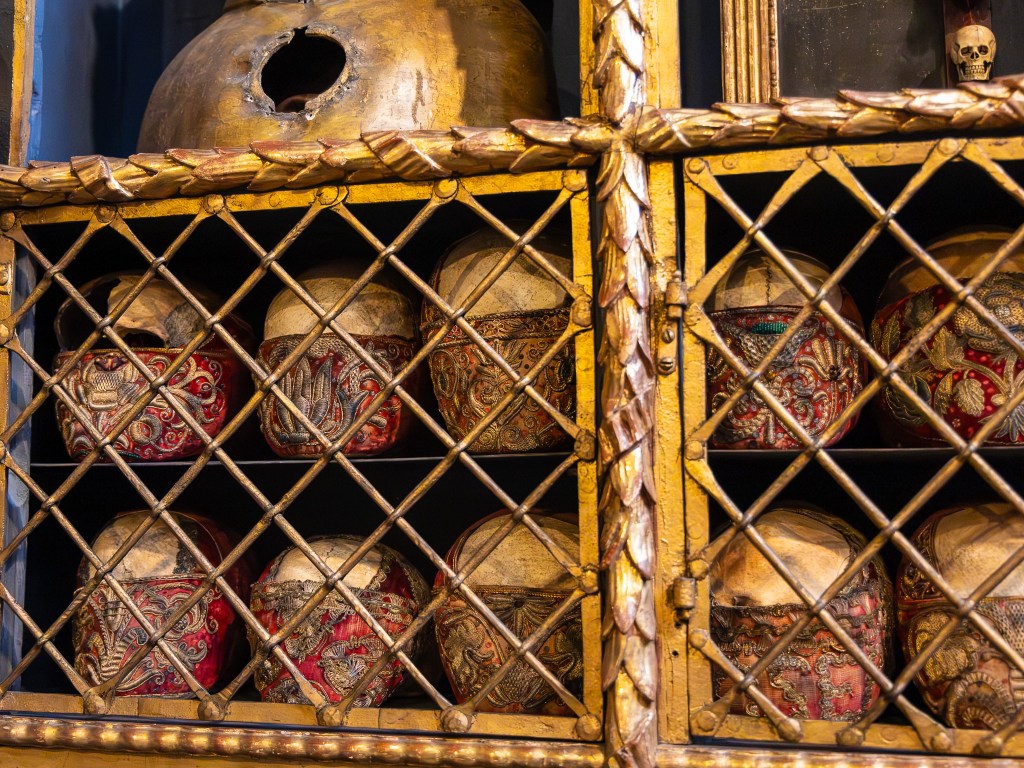
Who do these skulls belong to? What stories do they have to tell?
The Church of St. Ursula is a must-visit for history enthusiasts and pilgrims alike, offering a glimpse into medieval Cologne’s deep religious devotion. It stands as both a place of worship and a testament to the city’s storied past.
Entry to the church is free, but it costs 2 Euro (cash only) to enter the Golden Chamber. The gentlemen responsible for taking the money unlocked and went into the chamber with us. He allowed us to stay inside as long as we wanted. He was extremely friendly and although he struggled a bit in English, he definitely did his best to explain the history and significance of the church. We had no trouble understanding his narration.
Afternoon snack: Reibekuchen (potato pancakes) from Rievkoochebud
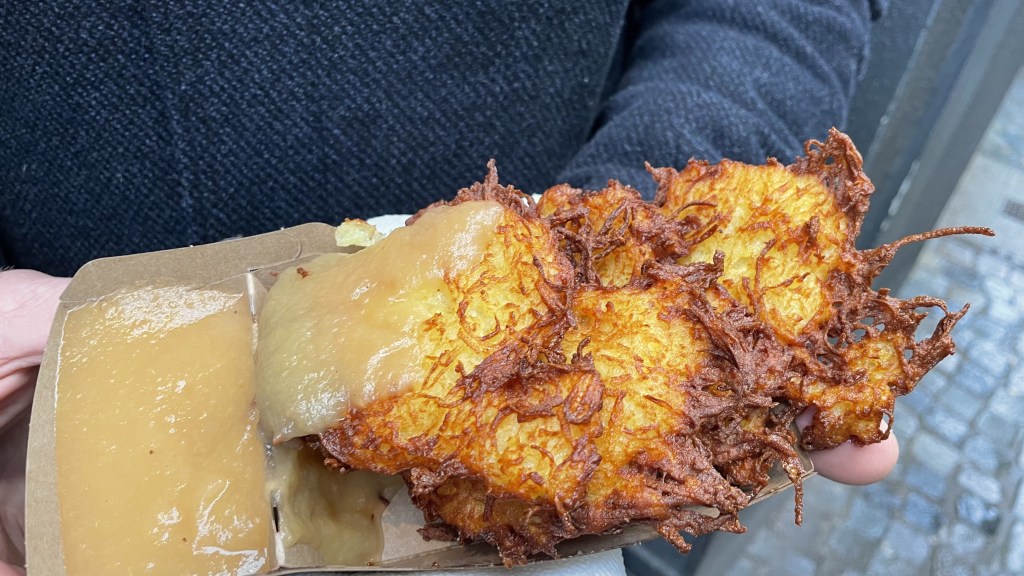
Perhaps the perfect Reibekuchen (potato pancakes)
If you’ve watched any of our Christmas Market videos on YouTube, you know that we love Reibekuchen. We thought that we have had some of the best. However, Rievkoochebud takes these delicious treats to a new level. Crispy, fluffy, delicious and not too greasy – perfect. If you are near Colognes Old-town and need a quick, inexpensive and delicious snack head over to Rievkoochebud. They offer two sizes and several different sauces with the first sauce being free. As we weren’t really all that hungry and still had dinner scheduled we went with a small order which included three perfect Reibekuchen (large comes with four). For our sauce we went with the classic – Apfelmuß (apple sauce).
Cost: small serving (4 pieces) 4.50 Euro – large serving – 5.50 Euro
Rievkoochebud Reibekuchen – Salzgasse 6, 50667 Köln
Day Two Dinner: Lederer
For dinner on day two we had reservations to meet two other social media influencers who love Germany. We met Darion from Magnificent Germany with Darion and Martin from My._Germany on Facebook and Instagram. This was our first time meeting both of these gentlemen. We have been communicating with Darion for months through our YouTube channel. The staff was very helpful in accommodating our group. It turned out to be one person less than given with the reservations.
Gaststätte Lederer is a historic restaurant located almost directly under the Cologne Cathedral. The building’s origins trace back to 1468, and it was among the first establishments rebuilt after World War II.
The restaurant offers a cozy atmosphere, blending traditional Cologne charm with an international flair. The menu features a variety of traditional German dishes. This includes Haxe (pork hock), various styles of schnitzel, and sausages. Even vegetarian and vegan options are available.
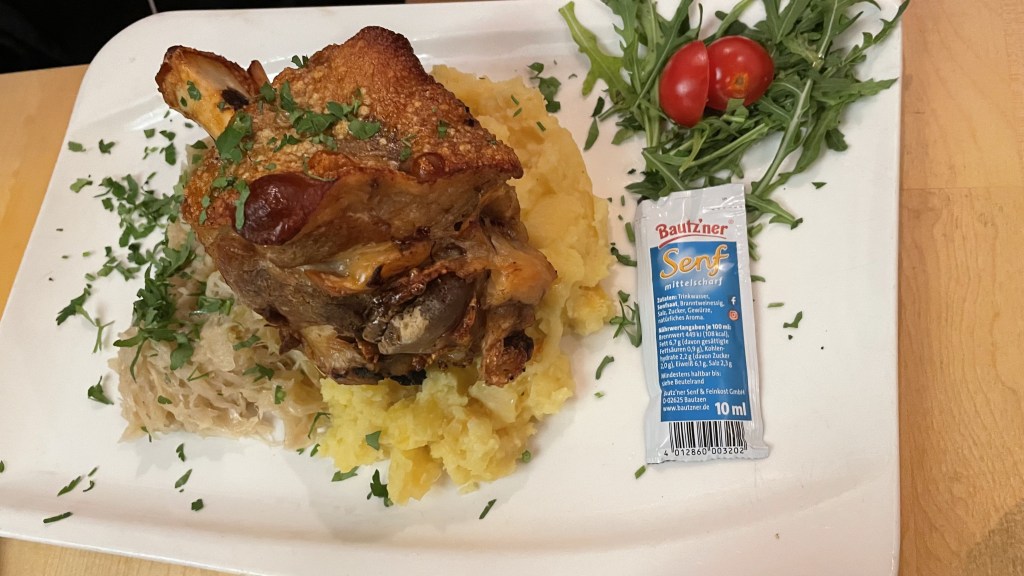
Martin had Haxe, which looked fantastic. The staff was nice enough to prepare one for him to take home to his wife who unfortunately couldn’t join us. They went out of their way to have it ready just in time for us to leave.
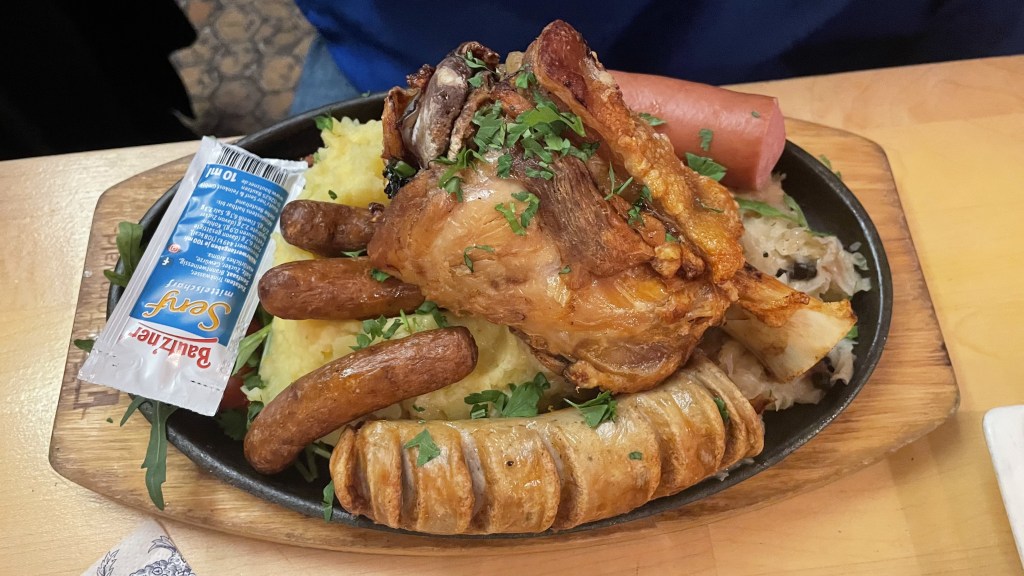
Darion had the Lederer Teller (Plate). It was a port extravaganza. The dish included half a Haxe, three types of wursts, sauerkraut, and mashed potatoes. Honestly, this was the dish that I think everyone else wished they had ordered. It looked and smelled delicious.
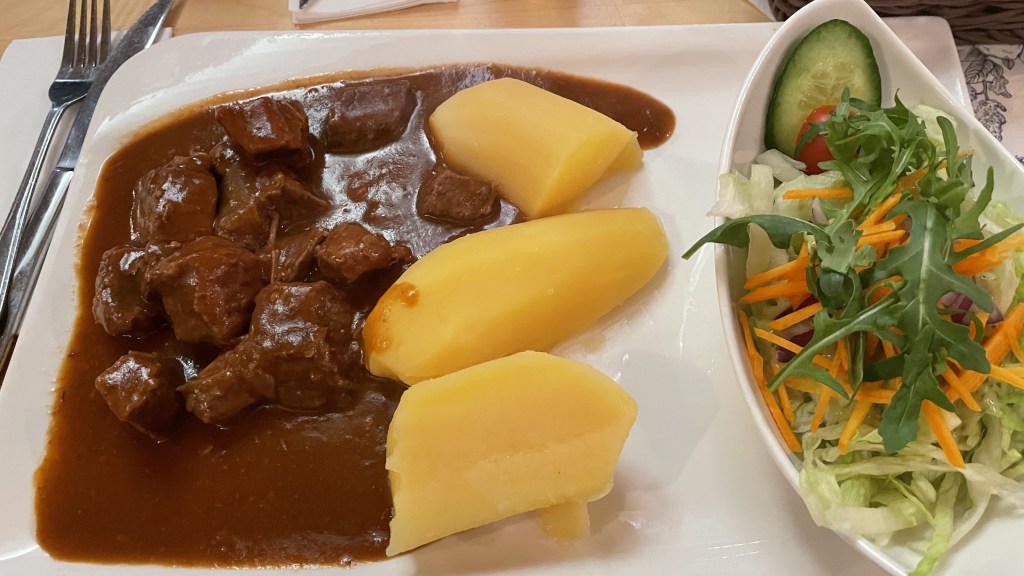
Betty had Beef Goulash, big chunks of beef roast simmered in a spicy paprika sauce with boiled potatoes. She said the goulash was very good, but not great. She is quite a connoisseur of goulash to be honest.
For the schnitzel challenge, I had the Lederer Schnitzel which was unlike any schnitzel I’ve ever had. The schnitzel was served with bratkartoffeln, which were very good and a side salad, also very good. The schnitzel was very well prepared and cooked nicely, if not a little thicker than I normally like schnitzel. The topping of the Lederer Schnitzel was covered with Hirtenkäse (shepherd’s cheese), sliced cherry tomatoes, and fresh herbs. A unique twist on this traditional dish.
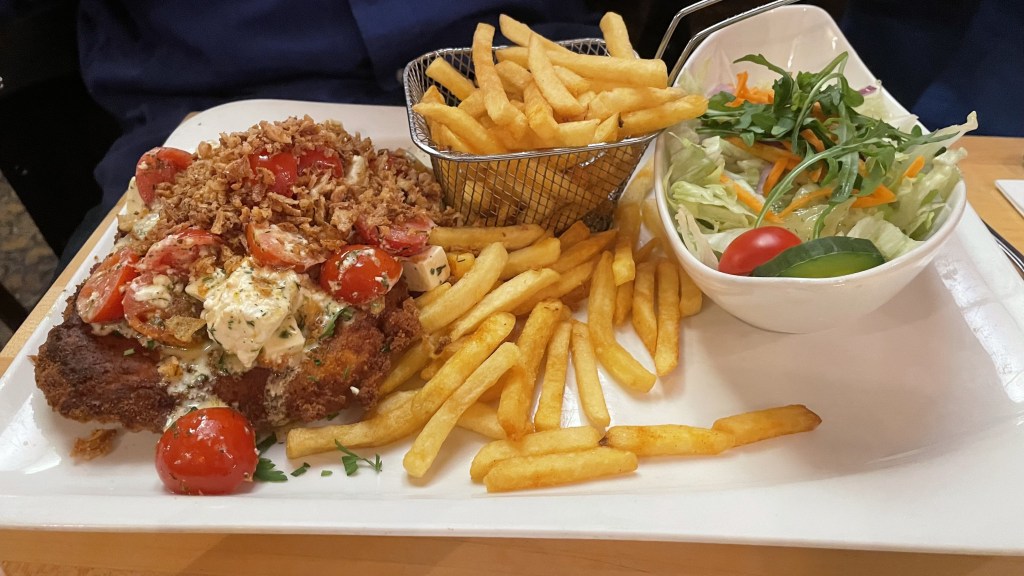
It was a great evening of food, Kölsch, and meeting new friends.
Cost: 60 Euro (with tip) which included tip and five glasses of Kölsch
Lederer – Unter Fettenhennen 2, 50667 Cologne
Telephone – 0221 257 7549
Lederer.koeln – reservations can be made online and the website is available in multiple languages, including English.
Day Three Lunch: Peters Brauhaus
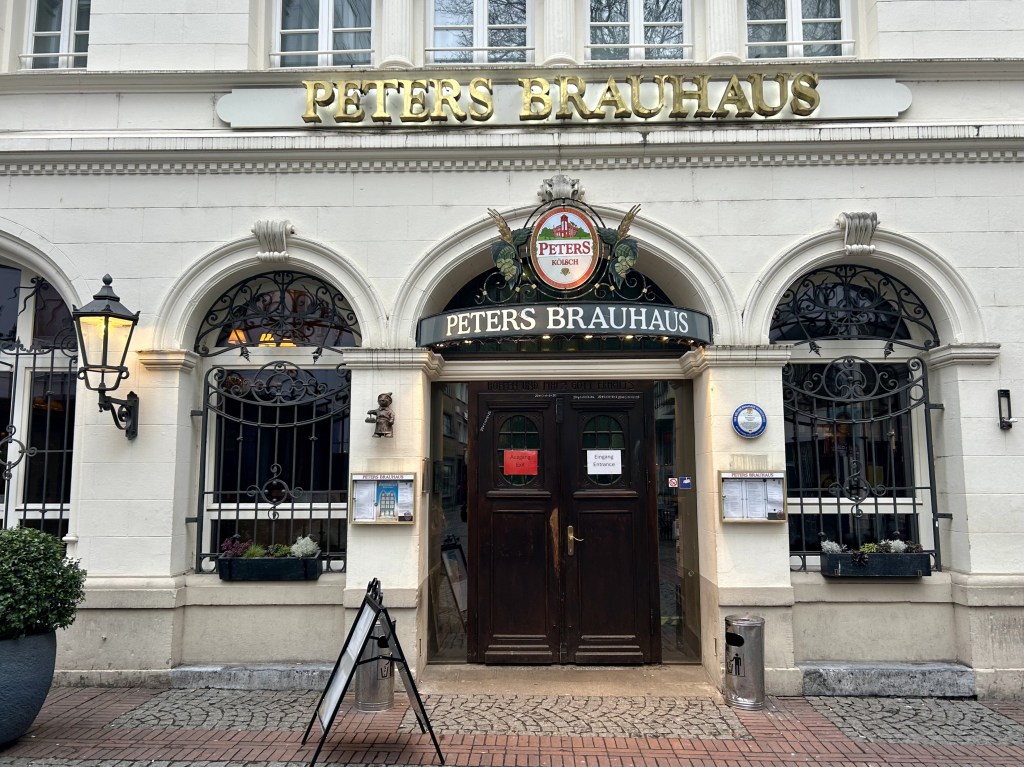
Nestled in the Altstadt (Old Town), this brewery-restaurant is beloved among locals and tourists. It is a must-visit for those eager to enjoy traditional German cuisine. Visitors can also savor freshly brewed Kölsch beer. Peters Brauhaus occupies a beautifully restored historic building. It has a warm and rustic ambiance. This ambiance perfectly captures Cologne’s brewing heritage. The interior features wood-paneled walls, stained-glass windows, and antique brewing equipment. This decor creates an atmosphere where history and hospitality go hand in hand.
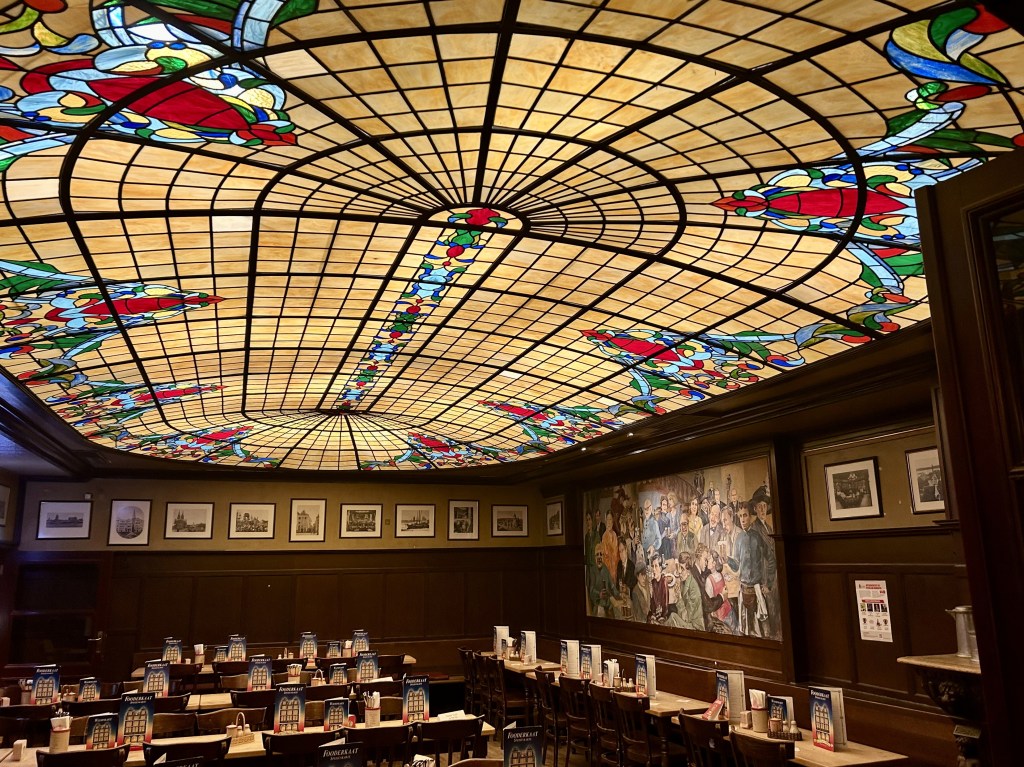
Interior of Peters Brauhaus
With a train to catch later than afternoon, we wanted to get to the restaurant as soon as possible. The website clearly states they open at 11:30. However, we were told, not so politely, that they don’t open until 12:00. So, we strolled around the old-town for thirty minutes which wasn’t a bad alternative.
When we returned at 12:00, we weren’t the only people ready for lunch. Several groups were there and people just continued to arrive while we were there. Despite the initial gruffness, the staff was quite pleasant this time around.
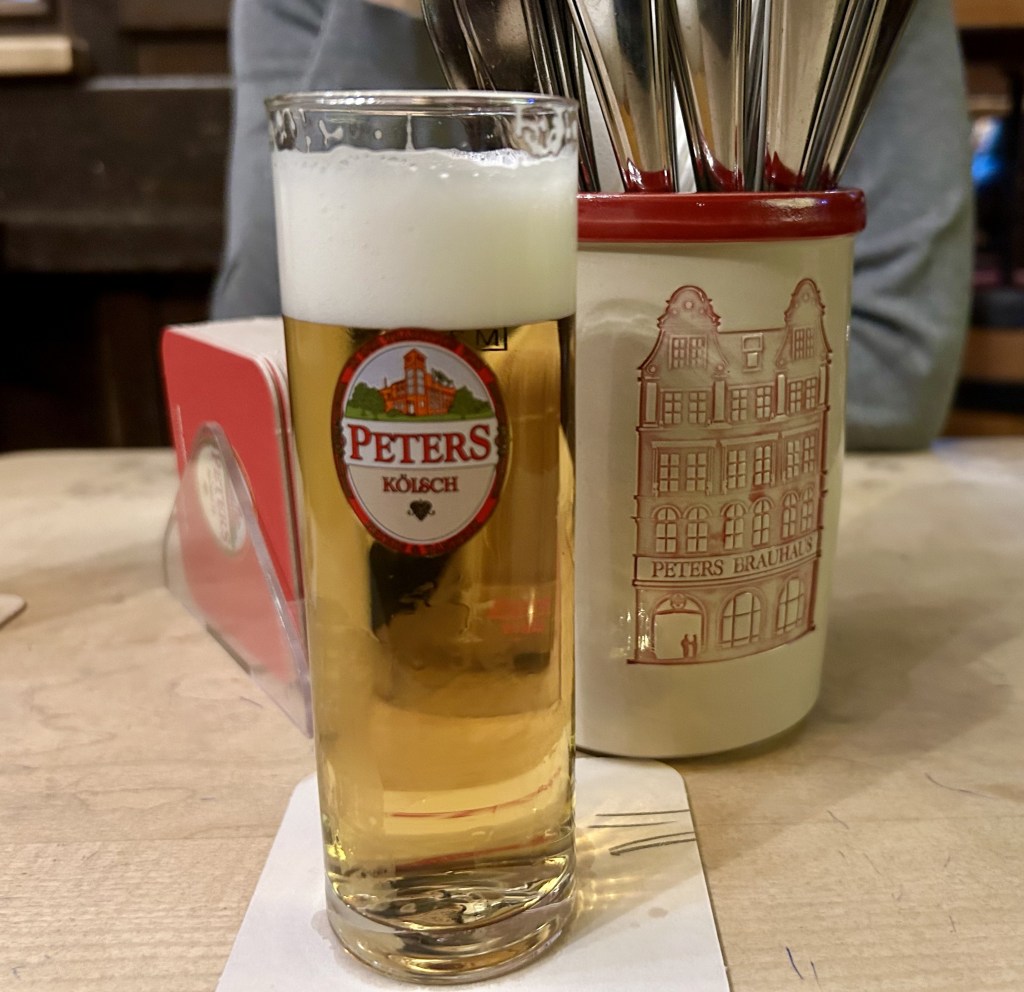
We started, as usual in Cologne, with a couple of Kölsch. The service kept our glasses fresh. We quickly had to place our coasters on top to ensure that we kept our senses about us.
Betty was suffering from a bit of meat over-load. She opted for the Salad plate. It was a huge plate of greens, vegetables, and sliced boiled eggs. She really enjoyed it.
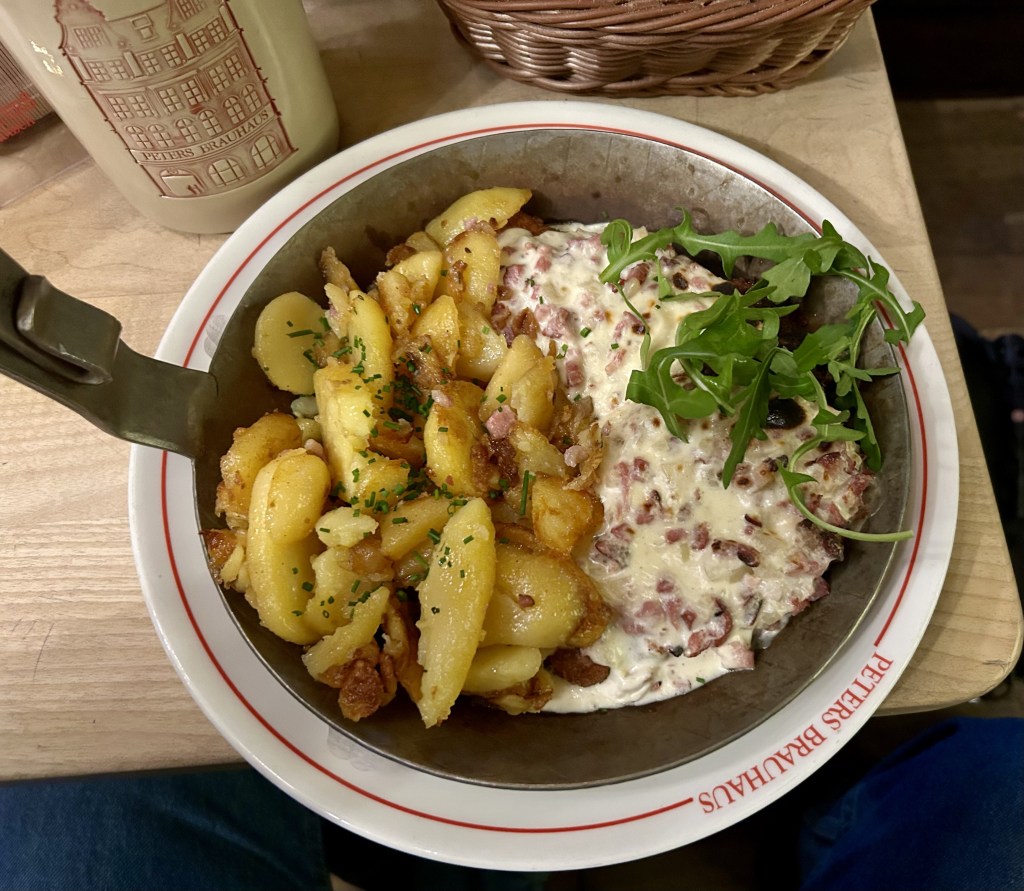
I had the Straßburg Schnitzel, which I ordered from the Wochenkarte (weekly menu) and isn’t a permanent menu item. The schnitzel was served with a herb sauce, bacon cubes, bratkartoffeln and salad. It was scrumptious! The Bratkartoffeln were wonderfully prepared (a trend that we’ve noticed in Cologne), crispy, soft on the inside and seasoned perfectly. The schnitzel was outstanding. The sauce was delicious, but with the bacon cubes it may be a bit salty for some tastes. All in all a wonderful meal.
Cost: 52 Euro (with tip) which included 5 Kölsch
Peters Brauhaus – Mühlengasse 1, 50667 Köln
http://www.petersbrauhaus.de – website available in multiple languages; reservations can be made online or at 0221-2573950
Day Three – Kaffee und Kuchen (coffee and cake). We had ice cream at Eiscafe Marco Polo.
We had a little time left before catching our train. After lunch, we had a bit of a sweet pocket left. We strolled through the Altstadt. We were drawn in by some wonderful looking cake in the window.
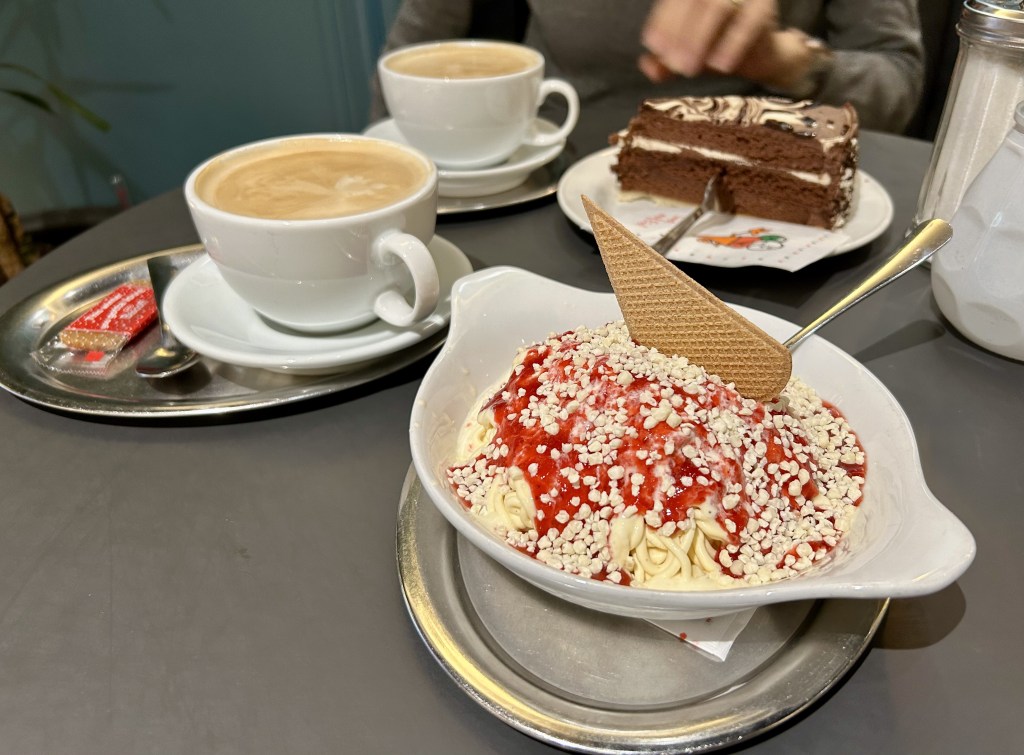
Inside we were warmly greeted and seated quickly. We ordered a Milchkaffee (cafe latte). We also ordered a Cafe Creme. It is a cup of coffee prepared using the espresso method. As for cake, we had the beautiful Schokosahne (chocolate cream) cake that lured us in from the street. In honor of our new friend Darion, check out his YouTube channel to understand. We also had the German specialty of Spaghettieis (spaghetti ice cream). It is ice cream pushed through a device that makes it come out stringy, like spaghetti. It is then topped with strawberry sauce and chopped nuts. When served, it resembles a plate of spaghetti with sauce and parmesan cheese on top. This version was also served with some vanilla sauce. The cake, ice cream and coffee were fantastic and really hit the spot.
Cost – 23 Euro with tip – cash only
Eiscafe Marco Polo, Alter Markt 44, 50667 Köln
The best schnitzel in Cologne:
We enjoyed three lovely days in a fantastic city. We had meals in some fantastic dining establishments. We highly recommend them. We would not hesitate to return if given the opportunity. Although in future outings we may expand our orders beyond schnitzel.
Ultimately, this was our Schnitzel Challenge and we decided that the clear winner was: Bei Oma Kleinmann. The schnitzel was perfectly cooked and the sauce was just right. The side dishes were also fantastic.
This wasn’t part of our contest, but we thought the best Kölsch was at Schreckenskammer.
We had a great time touring and eating our way through Cologne and we can’t wait to return..

 Traveling Expats
Leave a reply to Betty Cancel reply