
Our recent month-long stay in Istanbul was nothing short of magical, as we experienced the city’s rich history, vibrant culture, and deep spirituality during the holy month of Ramadan. Staying in Kadıköy on the Asian side, we embraced the unique charm of this quieter part of the city, before venturing across the Bosphorus to explore some of Istanbul’s most iconic sites on the European side. Although it is possible to visit all of these sites in one marathon day, we believe the experience would be more enjoyable if spread out over a few days. Here’s a recap of our unforgettable experience.
Morning: Kadıköy to the European Side

Looking to capture some stunning early morning photographs, we started our day early. A quick coffee and we were on our way. We were staying in Kadıköy, a lively and authentic neighborhood known for its bustling markets, trendy cafes, and vibrant street art. The morning air was filled with the scent of freshly baked simit, and locals moved about with a sense of purpose, preparing for the day ahead.
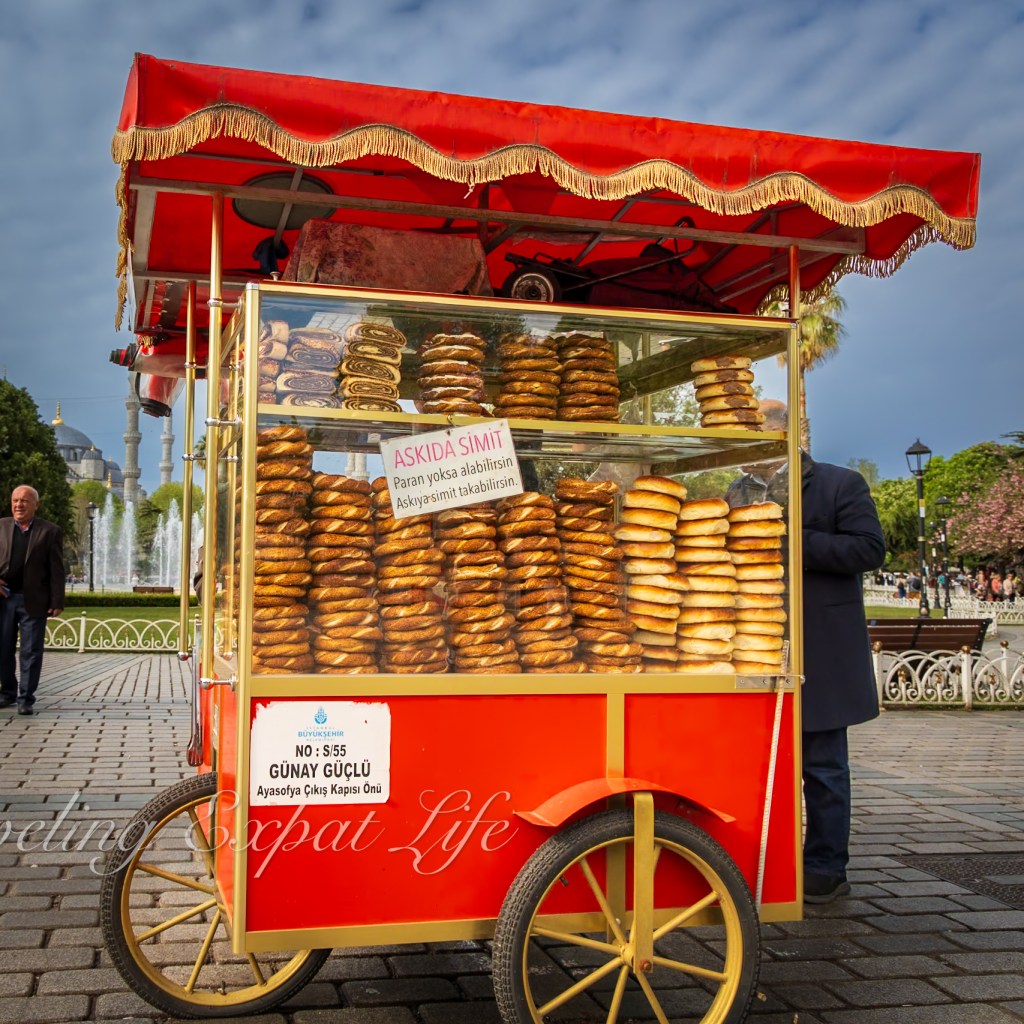
A Simit is kind of like the Turkish version of a Bavarian pretzel and they make a great breakfast or snack. Simit trolleys are easily found throughout Istanbul, often selling these tasty treats with cheese, honey or nutella
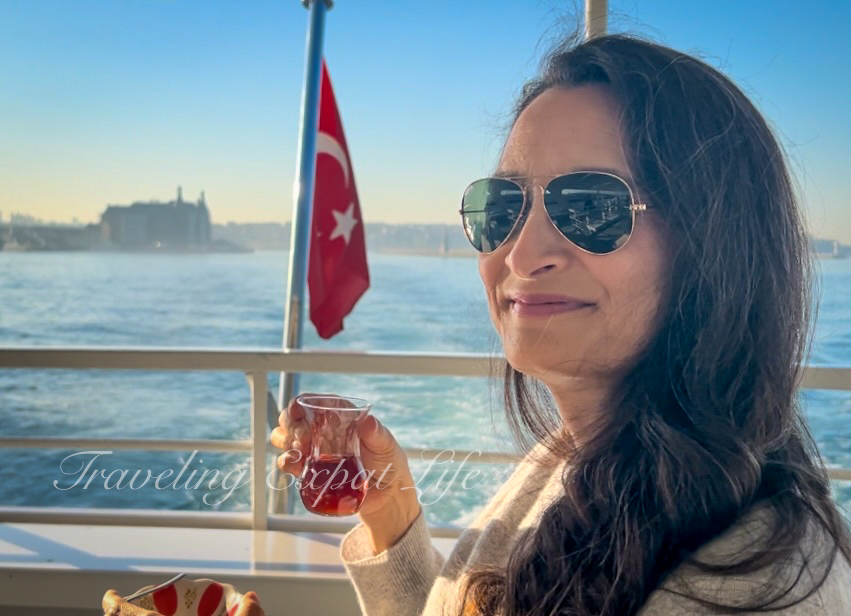
One of the best parts of traveling in Istanbul – a cup of chai while riding the ferry from Asia to Europe
We made our way to the ferry terminal. Taking the ferry across the Bosphorus is an experience in itself and quite honestly one of the most enjoyable parts of our month-long stay in Istanbul. As the boat glided through the waters, we were treated to stunning views of the city’s skyline, with minarets and domes piercing the sky. We loved the tea and simit service on the ferry. One cup of chai cost the equivalent of fifty U.S. cents. The ferry ride itself was about 70 US cents. The best way to travel in Istanbul is to purchase an Istanbul Card from one of the many kiosks at the ferry terminals or subway stations, load some money on it and simply scan it every time you use public transportation. The machines have an option for “English”, so there really is no language barrier.
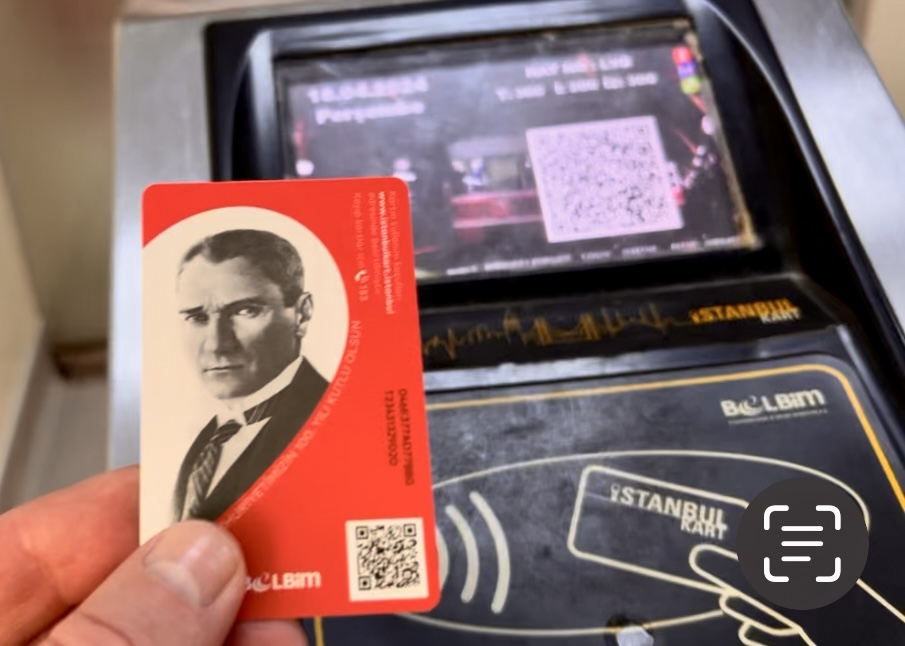
Scanning our re-loadable Istanbul Kart before using public transportation in Istanbul
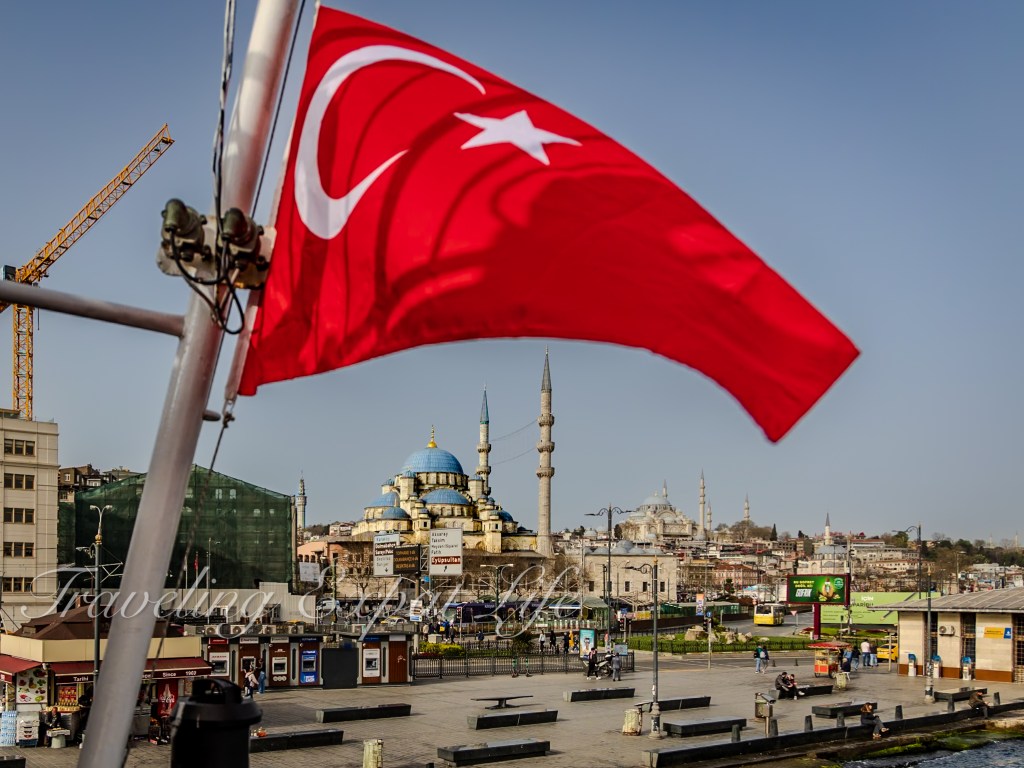
Arrival at the port of Eminönü on the European side of Istanbul
Hagia Sophia: A Marvel of Architecture
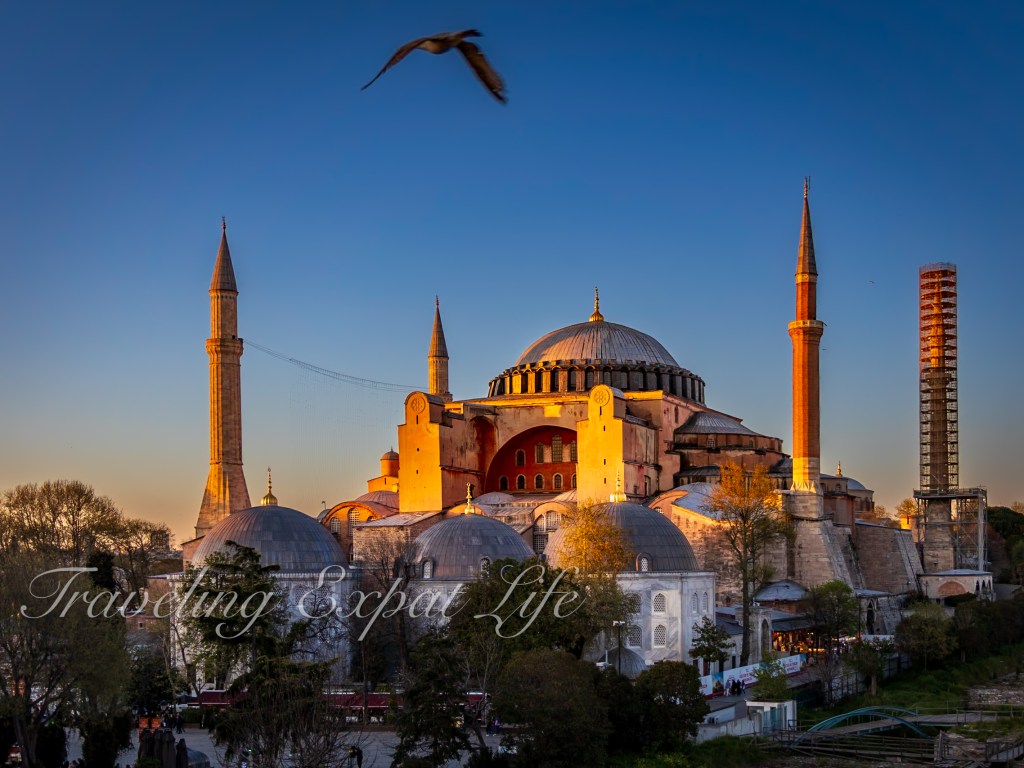
The stunning Hagia Sophia at sunset, still looking great at nearly 1,500 years old
After arriving at the port of Eminonu our first stop was the UNESCO World Heritage Site of Hagia Sophia, a site that embodies the layers of Istanbul’s history and is possibly the most important religious building in the history of the world. Originally built as a christian church in 537 AD, converted into a mosque in 1453, and now a museum and mosque once again, Hagia Sophia is a breathtaking example of Byzantine architecture. As we entered, the grandeur of the massive dome, the intricate mosaics, and the blend of Christian and Islamic elements left us in awe. The history here is palpable, and it’s easy to see why this site has been a spiritual center for centuries.
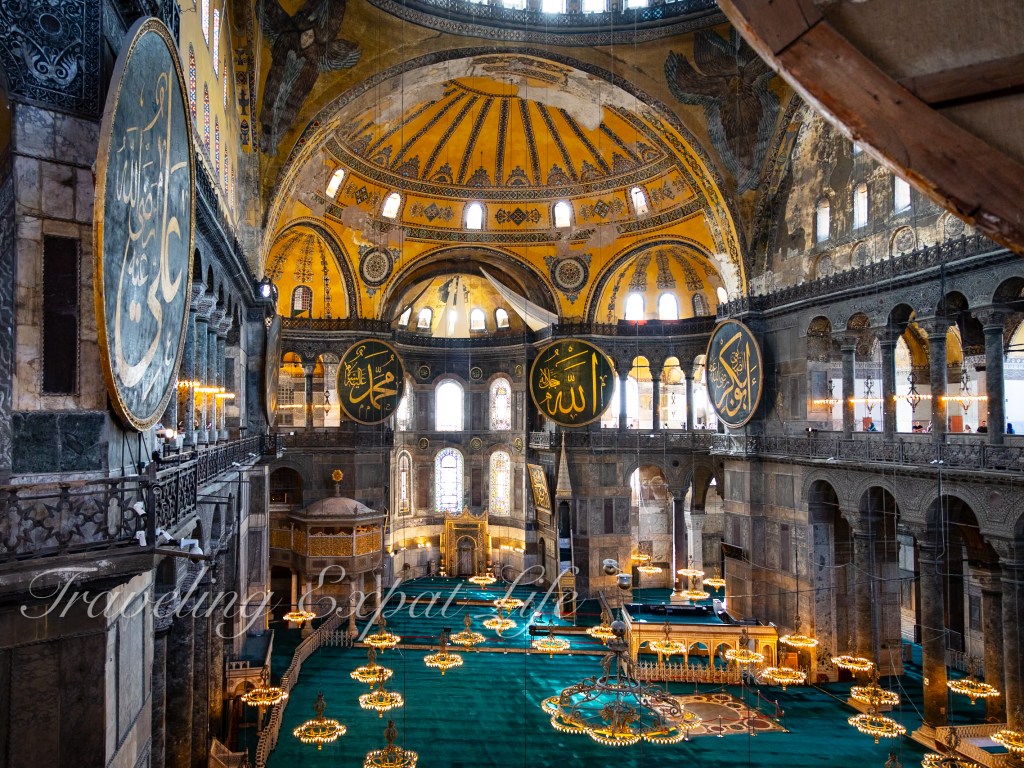
Inside the Hagia Sophia – it’s impossible to describe the feeling of being surrounded by 1,500 years of beautifully layered history
As of January 2024, entry to the Hagia Sophia is no longer free there is a charge of €25 (yes Euro) to access this glorious building and non-muslim visitors now have limited access. The line for tickets forms early, so It’s a good idea to get there well before opening. Like all mosques, everyone is expected to dress modestly, no exposed shoulders or knees – this applies for men and women. Anyone who doesn’t meet the acceptable standard of dress will be required to wear a special suit that looks like it was designed for Haz-mat protection before entering. Women are required to cover their heads, they will be provided a covering if they don’t have bring one of their own.
Basilica Cistern: An Underground Gem
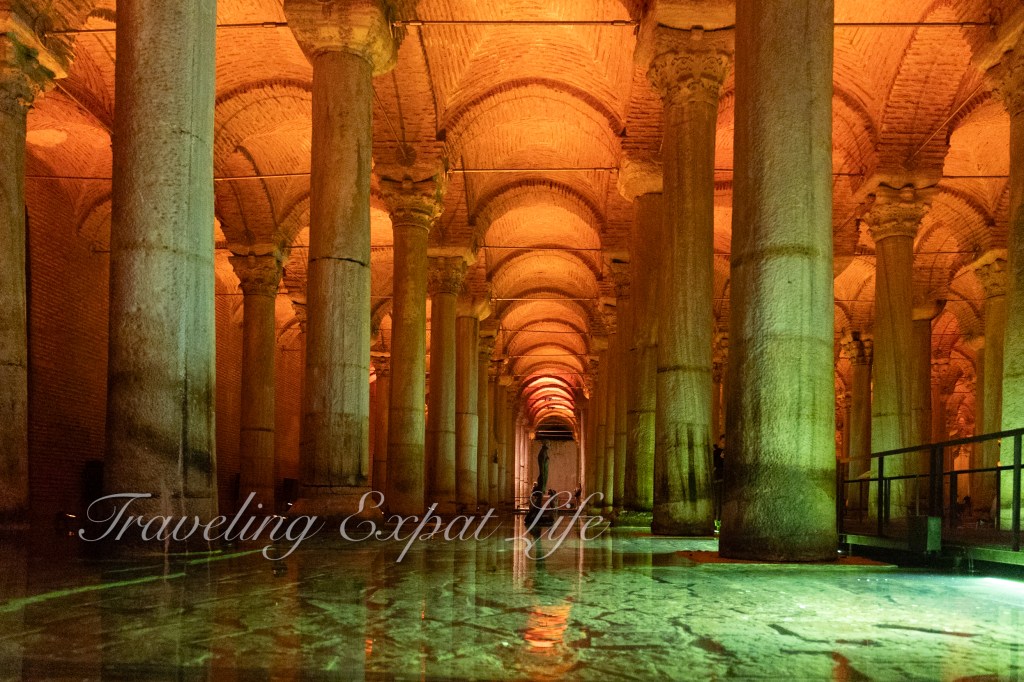
Marvelling at the largest underground water supply for ancient Constantinople
Just a short walk from the Hagia Sophia, we descended into the cool, shadowy depths of the Basilica Cistern. This ancient underground water reservoir served as a water supply to the ancient city of Constantinople and is the largest Byzantine-era cistern in the city that is still standing. It’s supported by 336 marble columns and is a hauntingly beautiful sight. The soft lighting, the sound of dripping water, and the sight of the mysterious Medusa heads at the base of two columns created an atmosphere of quiet contemplation. It’s a hidden gem that offers a stark contrast to the bustling city above.
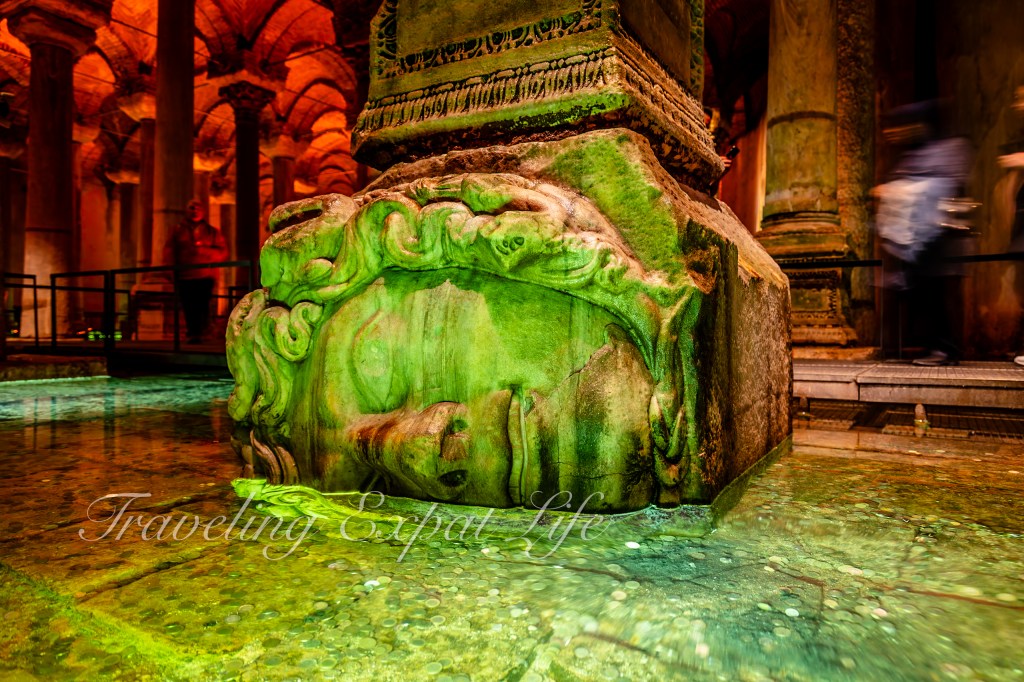
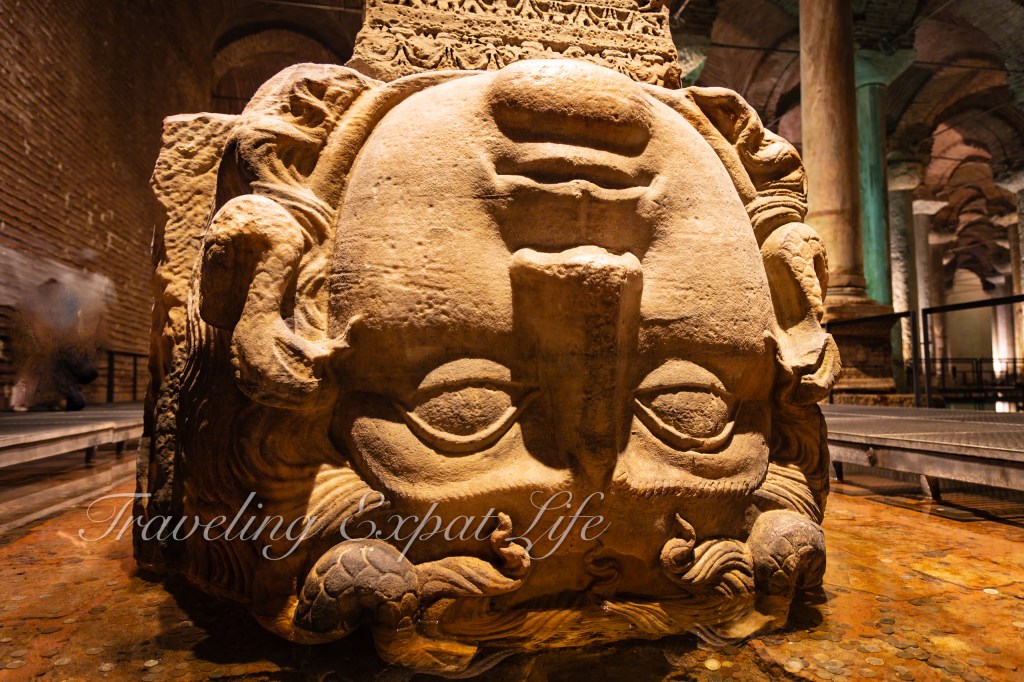
The mysterious Medusa Heads of the Basilica Cistern. Why are they positioned this way?
As of January 2024, the entry fee to the Basilica Cistern is 800 Turkish Liras (approximately $24 U.S.). Like most of the major attractions in Istanbul, the line for entry starts forming early.
Blue Mosque and the Hippodrome: A Step Back in Time
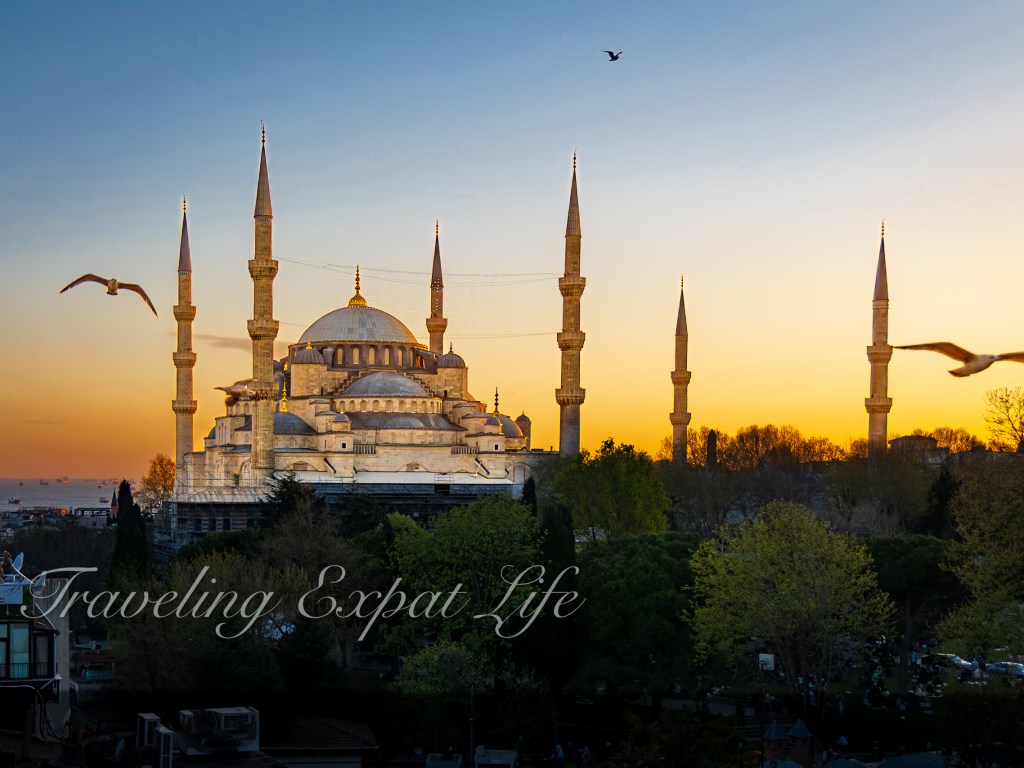
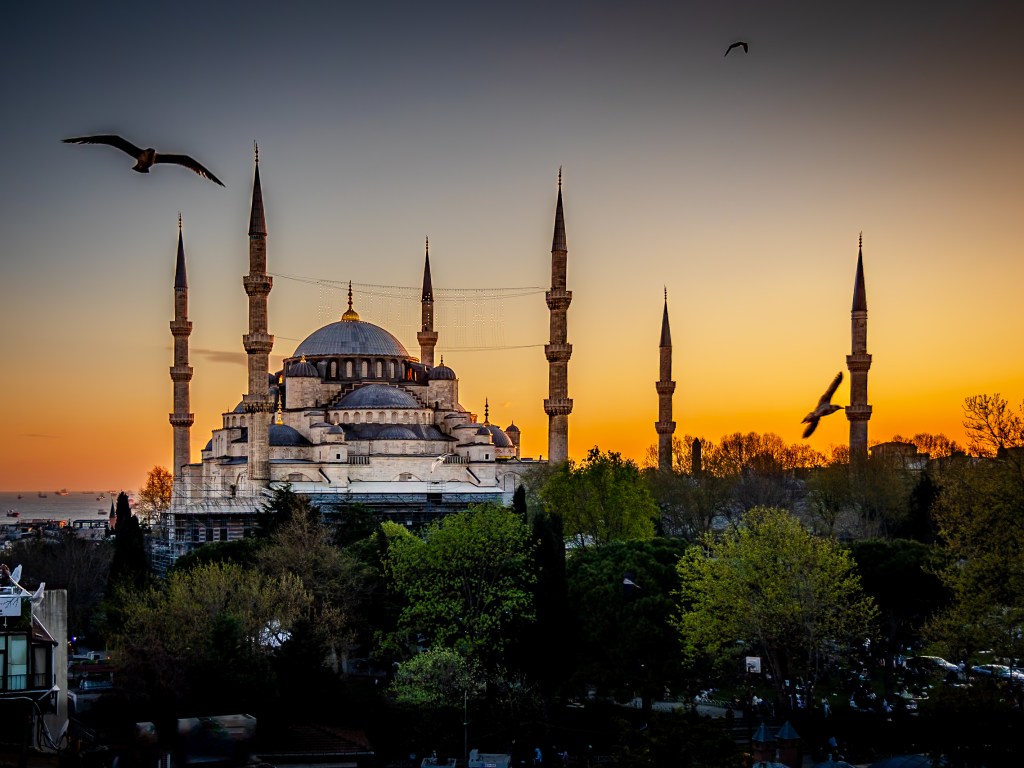
The Sultan Ahmed Mosque, also known as the Blue Mosque, at sunset
Next, we visited the Sultan Ahmed Mosque, commonly known as the Blue Mosque which was built 1609-1616. The beauty of its six minarets and the intricately designed blue tiles that give the mosque its name were mesmerizing. The mosque’s courtyard, with its central fountain, provided a peaceful space to reflect on the spiritual significance of the day.
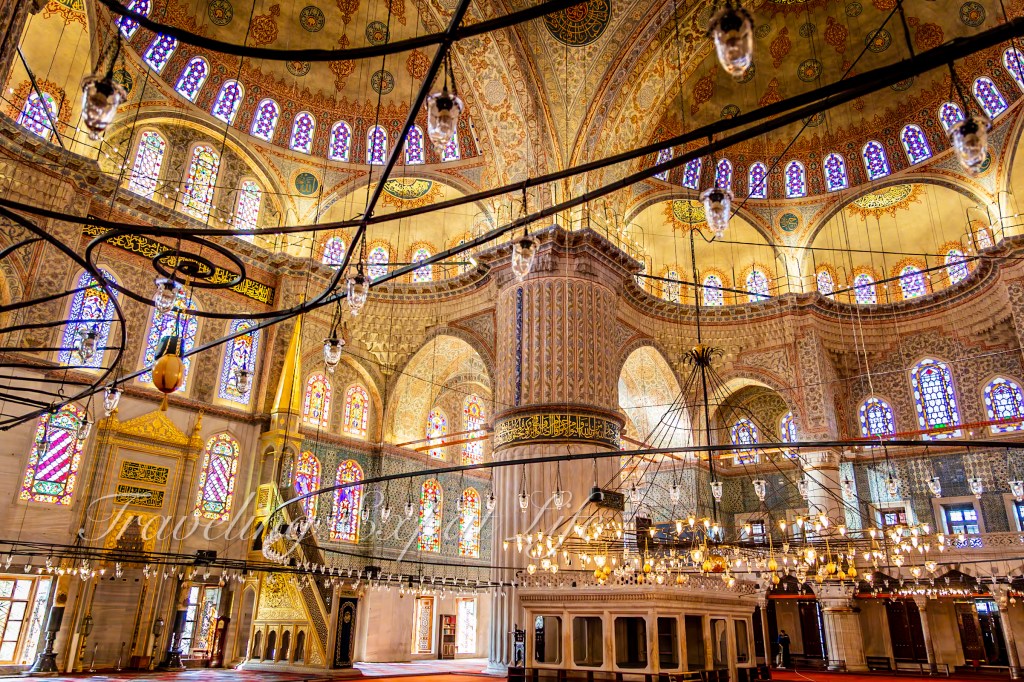
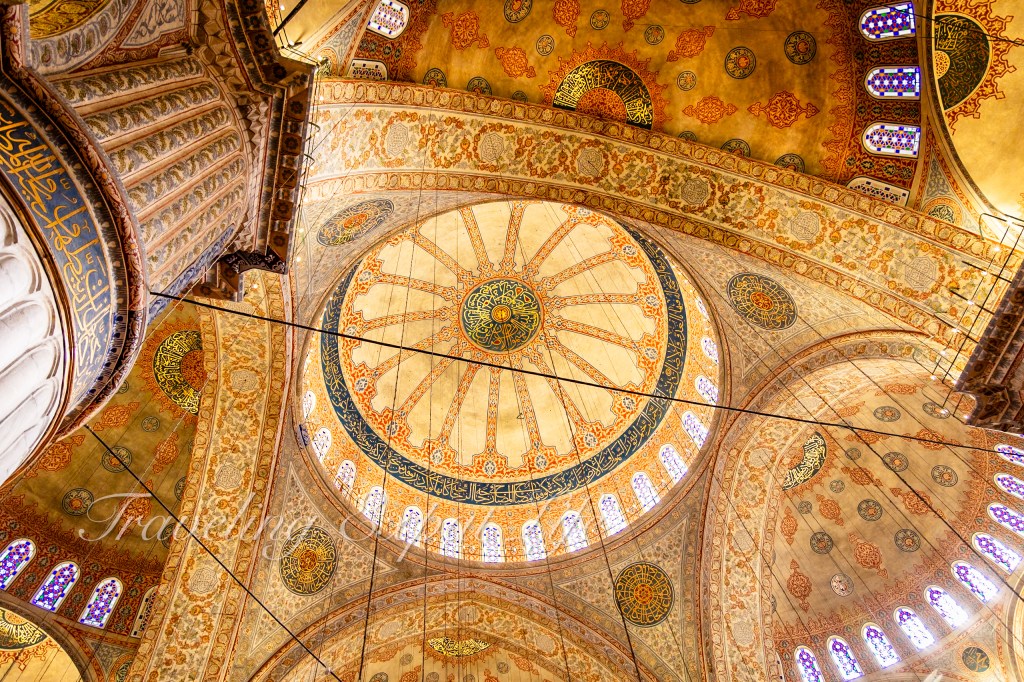
Interior views of the Blue Mosque
Entry to the mosque is free, but like other sites the line forms early. All visitors are expected to dress modestly and remove their shoes. Women must cover their heads. There are “cubby” holes located at the entrance for shoe storage, but we recommend bringing a bag to carry your shoes with you.
Afterward, we strolled through the Hippodrome, once the social and sporting center of Constantinople. Today, the area is marked by ancient monuments, including the Obelisk of Theodosius (15th century BC, moved to Constantinople in 390 AD) and the Serpent Column (479 BC, moved to Constantinople by emperor Constantine the Great in 324 AD), each telling a story of the city’s storied past.
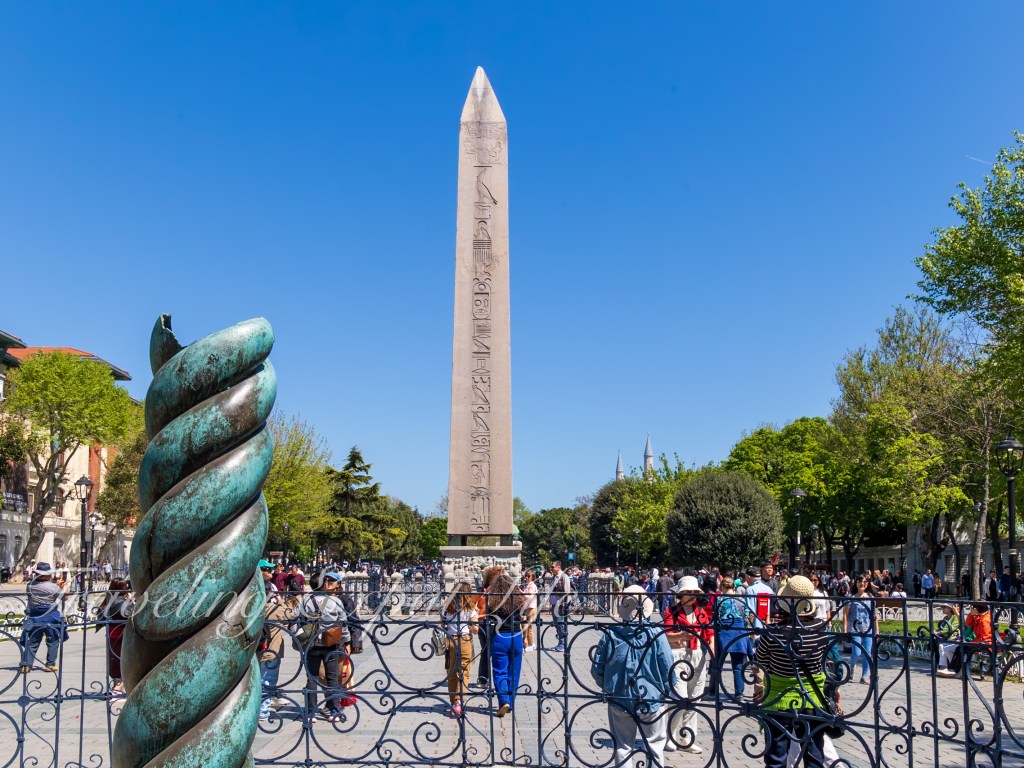
The ancient Hippodrome, once bustling with Roman chariots, now bustling with tourists
As the Roman/Byzantine Empire transitioned to christianity, violent entertainment such as gladiator battles were replaced with less deadly events such as chariot races which was the purpose of the Hippodrome.
Afternoon: Gülhane Park and Iftar Preparations
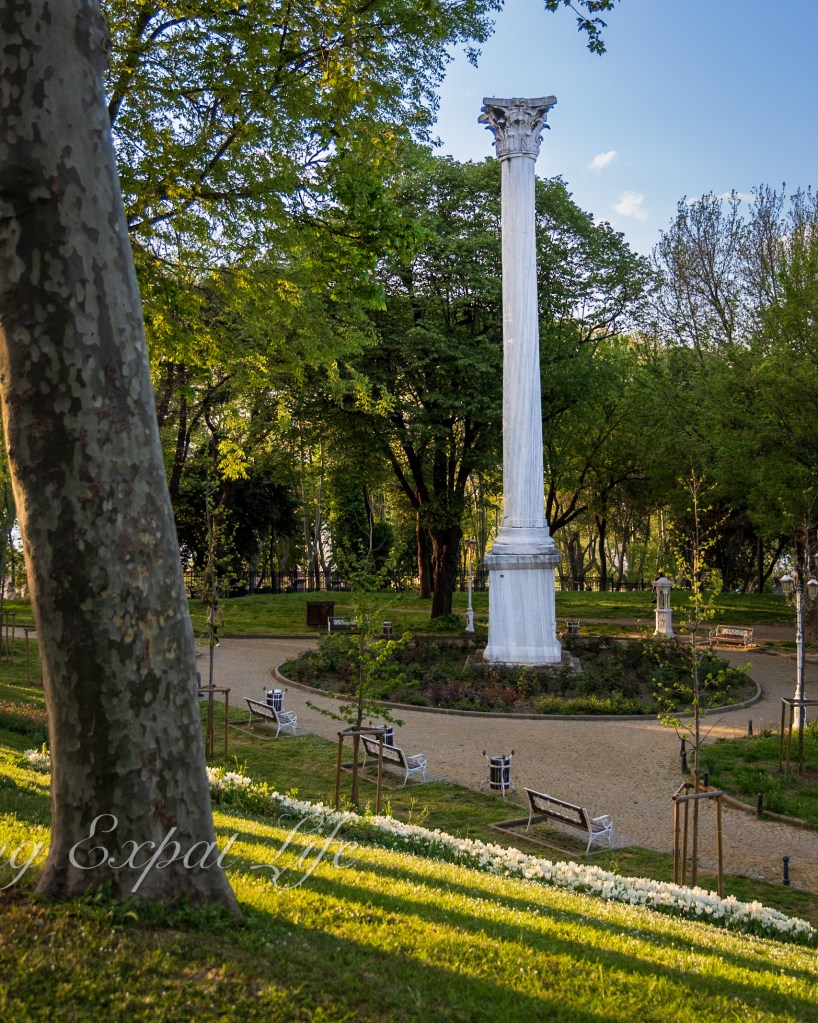
The Column of the Goths from the 3rd century A.D. in Gülhane Park
By afternoon, we made our way to Gülhane Park, a green oasis in the heart of the city. Once the outer garden of the Topkapi Palace, the park is now a peaceful retreat where locals and tourists alike come to relax. We took a leisurely walk through the tree-lined paths, enjoying the sight of tulips in full bloom—a symbol of Istanbul’s cultural heritage (the famous tulips of the Netherlands actually came from Turkey).
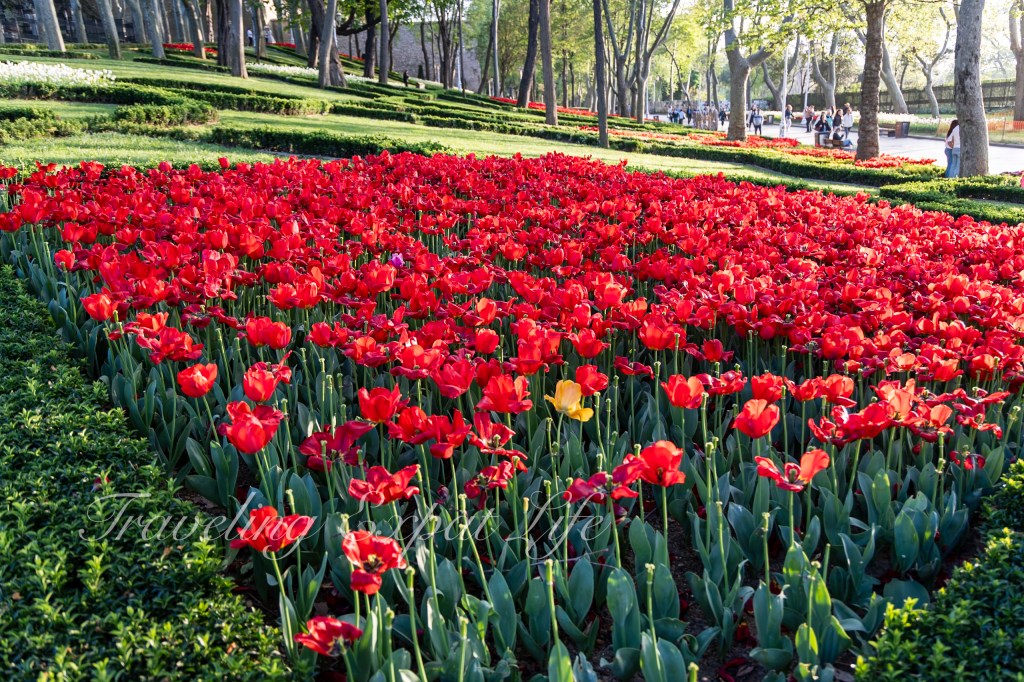
The beautiful tulips of Gülhane Park. Tulips first arrived in Holland from Turkey in 1578.
As the sun began to set, we made our way to the Seven Hills Restaurant, perched atop one of Istanbul’s seven hills. The view from the terrace was nothing short of spectacular, with the Hagia Sophia and the Blue Mosque illuminated against the fading light. Watching the sunset over the Bosphorus while sipping on Turkish tea was a moment of pure serenity.
Evening: Witnessing Iftar in Sultan Ahmet Square
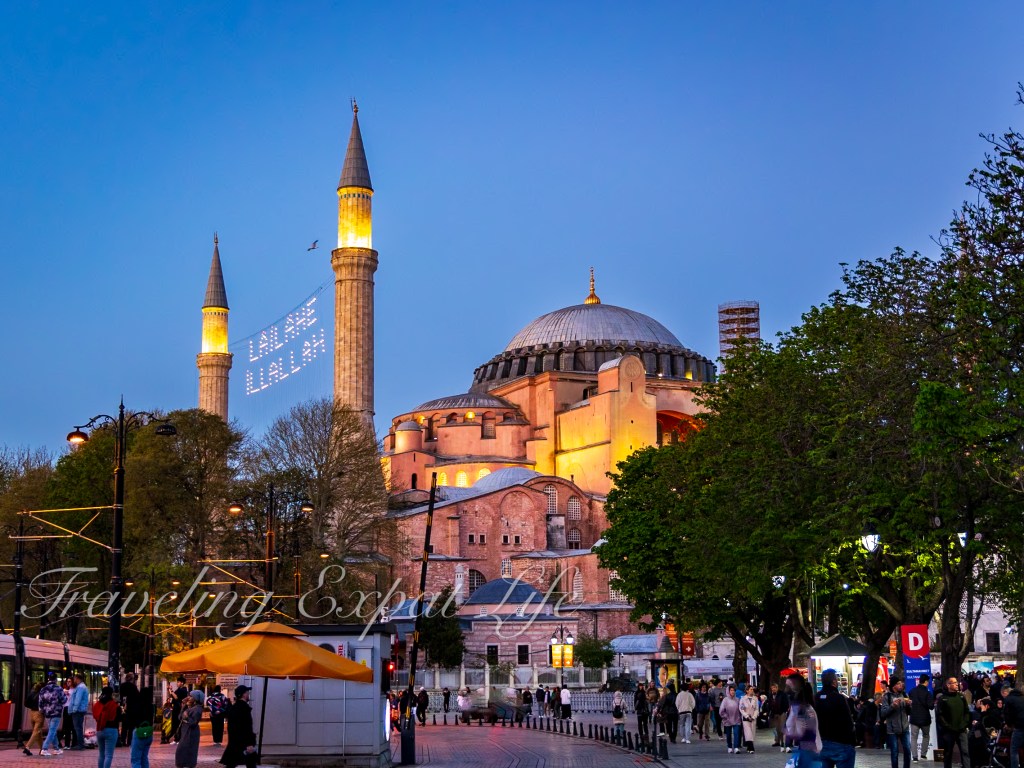
The Hagia Sophia all lit up for Iftar
As evening approached, we headed to Sultan Ahmet Square to witness Iftar, the meal that breaks the daily fast during Ramadan. The square was filled with a palpable sense of anticipation as people gathered to share this special moment. The call to prayer echoed through the air, and as the sun dipped below the horizon, families, friends, and strangers alike came together to break their fast. Witnessing Iftar in such a historic and spiritual setting was an incredibly moving experience, one that highlighted the communal spirit of Ramadan.
Reflections on a Day Well Spent
Our day in Istanbul was a journey through time, culture, and spirituality. From the grandeur of the Hagia Sophia to the quiet beauty of Gülhane Park, each moment was a reminder of the city’s unique place in history. Experiencing Istanbul during Ramadan added a layer of depth to our visit, as we witnessed the city’s rich traditions come to life.
Whether you’re drawn to Istanbul for its historical sites, its vibrant culture, or its deep spiritual significance, a visit to this incredible city during Ramadan offers an experience unlike any other. The sights, sounds, and flavors of Istanbul during this holy month will stay with you long after you’ve left its ancient streets.
If you would like to see more from our adventure in Istanbul, check out our Youtube videos from our trip. Thanks for watching!

 Traveling Expats
Leave a reply to vogdene902ba0f2f Cancel reply