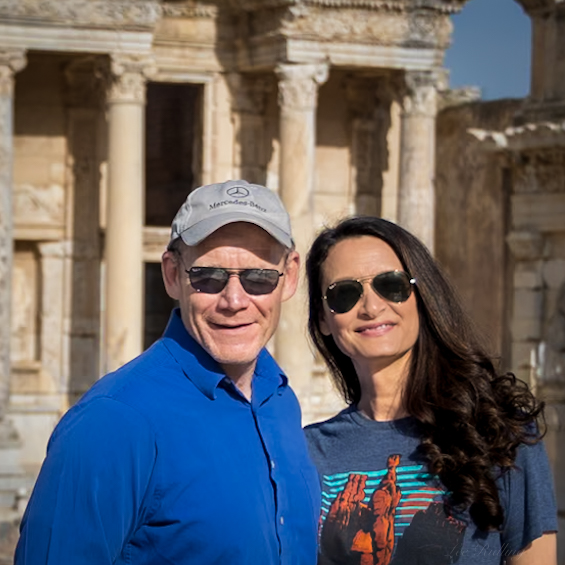
When we first started traveling almost 30 years ago, one of the places that truly took our breath away was the ancient city of Ephesus, located in western Turkey near the Aegean Sea. The stunning ruins and rich history of this once-thriving metropolis captivated our imagination. Ever since, it’s been a place we’ve longed to return to.

Library of Celcus – one of the most spectacular buildings from the ancient world
More than a quarter of a century later, after visiting many destinations, we found ourselves back in Turkey, this time exploring Istanbul for the first time. With a few extra days on hand, we decided to rent a car and return to Ephesus. After all these years and travel experiences, would Ephesus still impress us? Would it still ignite our passion for travel and learning, as it once did? We were determined to find out.
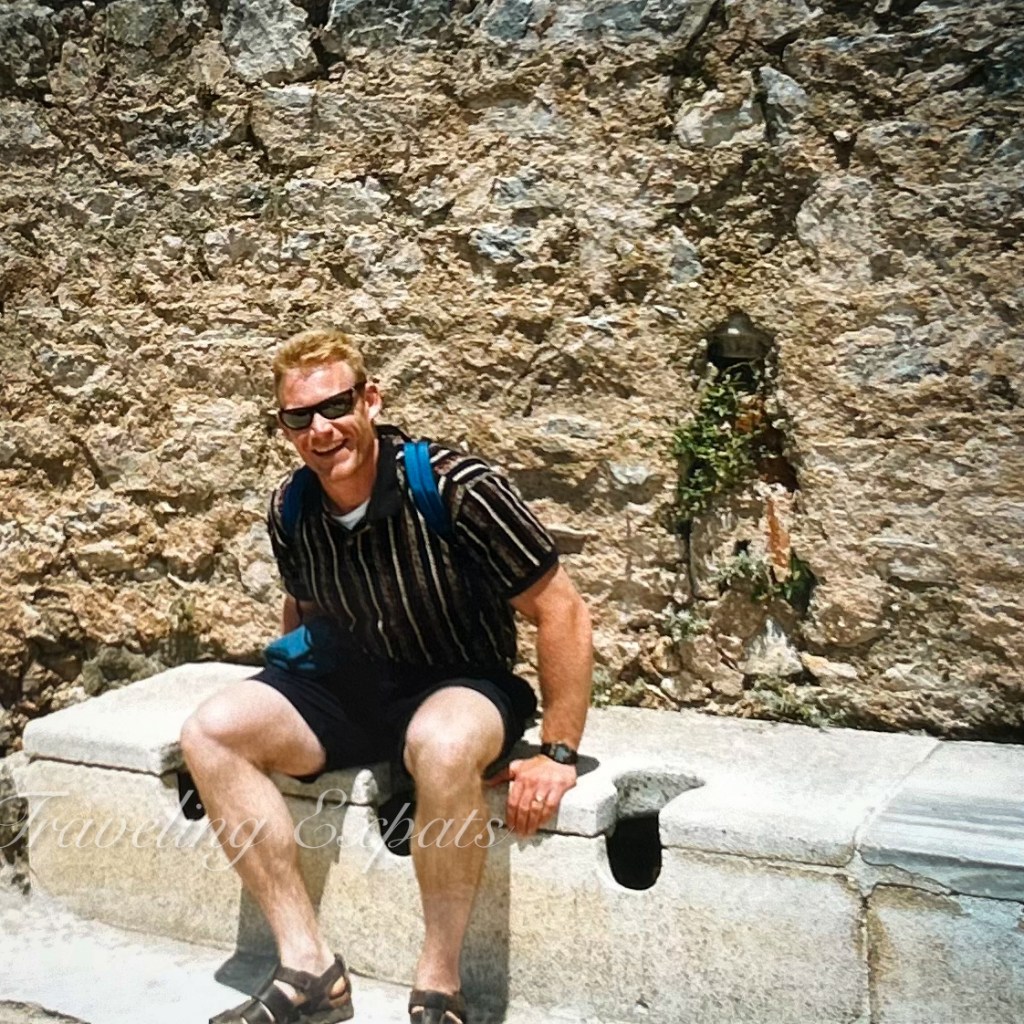
An enthusiastic young man demonstrating the public toilets in Ephesus many years ago. Note – this is no longer allowed.
Nestled on the Aegean coast of Turkey, Ephesus is an ancient city steeped in history, mythology, and architectural marvels. Once a bustling metropolis of the Roman Empire, it stands today as a testament to the ingenuity and grandeur of civilizations long past.

We rented our car from Windy Car at Istanbul Airport (IST), also known as Istanbul Havalimani (Istanbul has two major airports—this one is the newer, very modern one on the European side of the city.) The rental company staff spoke English, which isn’t always guaranteed in Turkey, and they were polite (also not always guaranteed). However, we’d been warned by previous travelers that rental companies in Turkey sometimes try to add on fraudulent charges or claim damage that didn’t occur. We were charged twice for our rental, but it has been resolved (partially). The issue arose because the person who reserved the car (Betty) wasn’t the driver, so they required a credit card from the driver (Lee), leading to both cards being charged. After disputing the second charge, we have been reimbursed – partially. Three days of car rental with unlimited mileage was $87.31 and we have been reimbursed $28.23.
The drive from Istanbul Airport to Ephesus is approximately 350 miles, takes a little more than 5 hours, and passes through MANY toll stations. We discovered that, with Turkish plates, you simply drive through the toll booths. Most of the time, the traffic control arm was already raised; other times, it would lift as we slowly approached. Occasionally, we had to stop before it went up. Ultimately, we were charged $32.61 by the rental company for tolls on our round-trip journey.
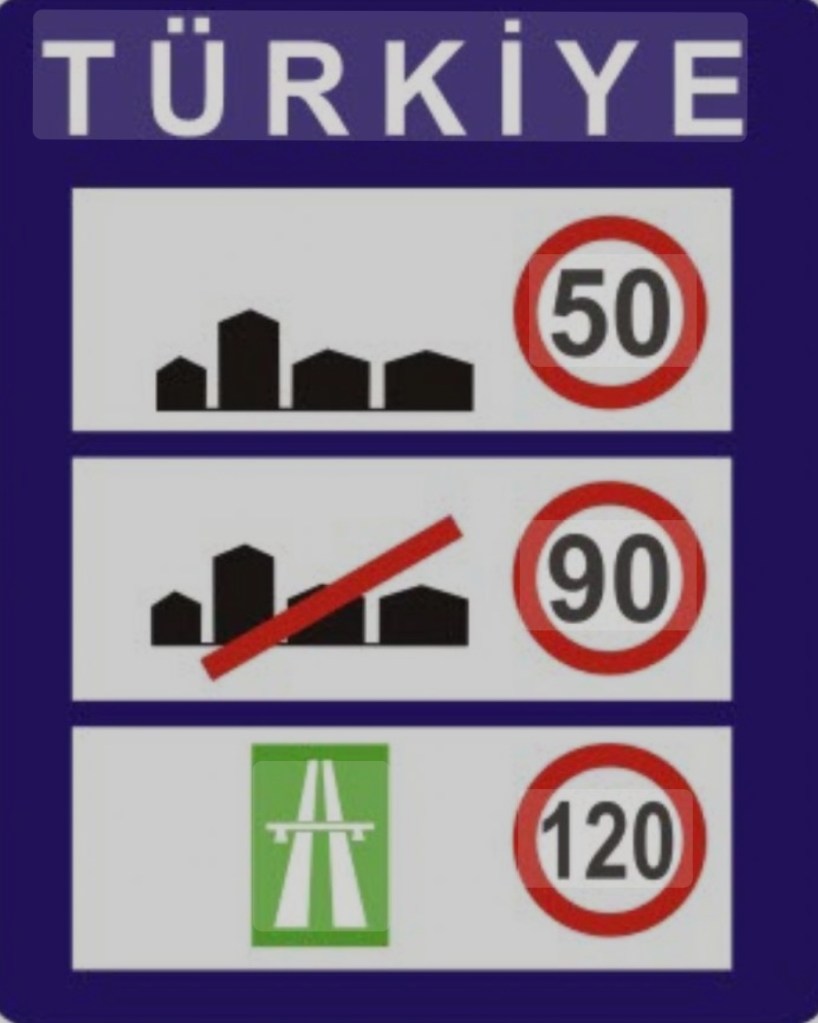
Drivers from the United States should brush up on the metric system and Turkish traffic signs before hitting the road.
Driving in Turkey can be described as calm on the highways but chaotic in urban areas. The highways are well-maintained, with big, wide lanes (all those tolls are put to good use!), and traffic flows smoothly. Drivers mostly follow standard rules—slower traffic to the right, passing on the left. Plus, there are large fuel stations and clean rest areas roughly every 20 kilometers. But in the cities, it’s every car for itself! Defensive driving skills are essential, and roundabouts will test your nerves—religious or not, you’ll find yourself praying as you approach them. Drivers from the United States need to adopt a metric system mindset when driving in Turkey as all speed limits and distances are in kilometers rather than miles.
Upon arrival, we stayed two nights at the ANZ Australia-New Zealand Guesthouse in Selçuk, about 2 miles from the Ephesus archaeological site. The rooms were reasonably priced, clean, and included a nice breakfast. Harry and his family were excellent hosts, and there’s a small gift shop selling Turkish carpets and other items. You can enjoy a beer, coffee, or tea while taking in the incredible view from their dining room. Harry’s son also recommended a fantastic local restaurant, Amazon, for dinner.


Breakfast at the ANZ Guesthouse in Selcuk
Selçuk is a pleasant town to stroll through, with several restaurants and spots to relax with a drink. In addition to Ephesus, it has some interesting points of interest. The Ephesus Archaeological Museum is definitely worth a visit, and the remains of the Basilica of St. John are just a 10-minute walk uphill from the museum. You can buy a combined ticket to access all three sites (the Ephesus ruins, the museum, and the basilica). An impressive fortress also overlooks the basilica.

A delicious meal at the Amazon Restaurant in Selcuk
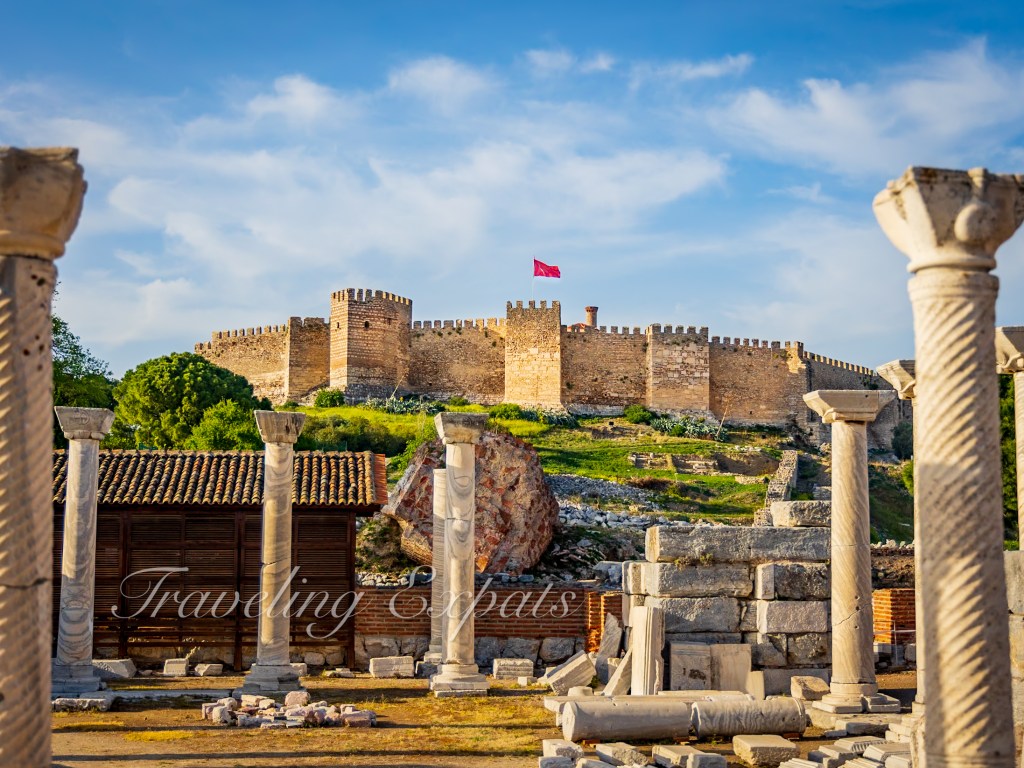
View from the Basilica of St John
Visiting the archaeological site: The site opens at 8:00 a.m. and closes at 7:00 p.m. (although the website claims it stays open until midnight, which we weren’t sure about). Entry costs 40 euros, and for 59 euros, you can also visit the Terrace Houses and the Ephesus Archaeological Museum in Selçuk. The additional 19 euros is well worth it. There are two entry gates to the archaeological site, and most visitors enter through the upper gate, while guided tours tend to enter from the upper gate and exit through the lower gate. Be sure to bring a hat, sunglasses, sunscreen, water, and snacks. Drinks and snacks are sold inside the site, but they’re pricey. You’ll find cheaper options just outside the lower gate.
We recommend arriving as soon as the site opens, before the crowds and the heat set in. We visited during the first week of April, and by 11:00 a.m., it was already uncomfortably warm.
Ephesus was settled as a Greek community around 1000 B.C., and it eventually became one of the grandest cities in the world. In the 1st and 2nd centuries A.D., Ephesus had a population of over 200,000, making it the second-largest city in the Roman Empire—only Rome was bigger. Greeks, Persians, Romans, and Christians all left their mark here before the Ottoman Empire took control. Historical figures such as Julius Caesar, Marc Antony, Cleopatra, St. Paul, St. John, and perhaps even the Virgin Mary are believed to have walked these streets. What an incredible history!
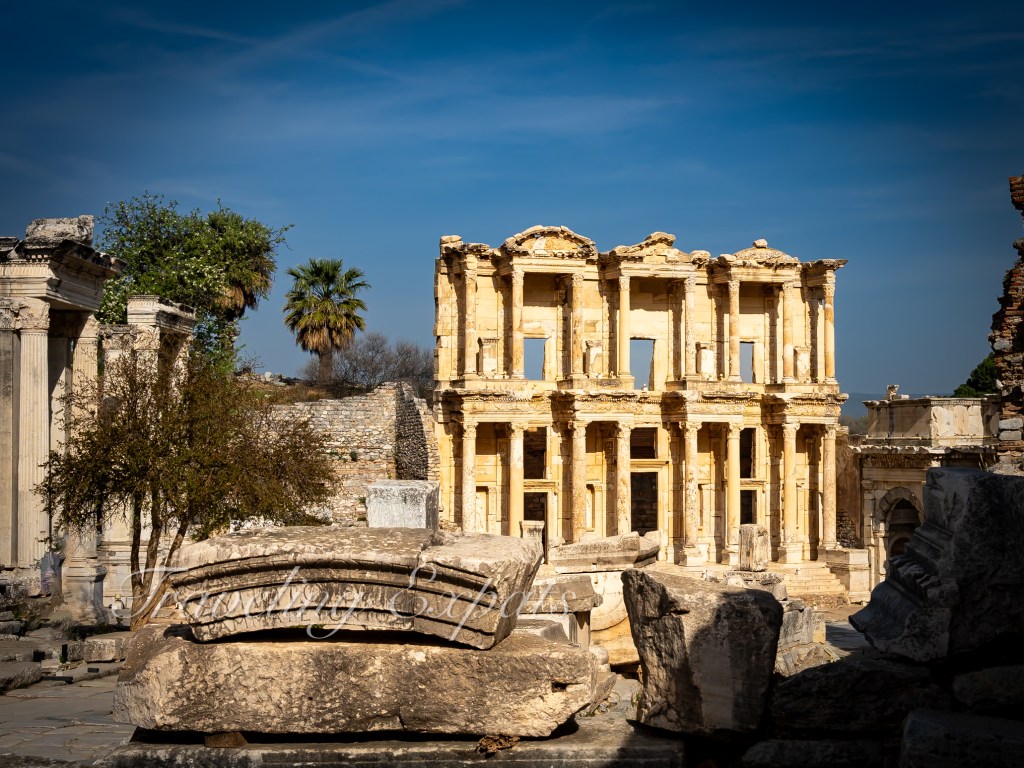
The Library of Celsus is the most photographed structure in Ephesus. Built in the 2nd century A.D., it was the third-largest library in the ancient world, housing over 12,000 scrolls in a structure designed to protect them from weather and moisture. Only the libraries of Alexandria and Pergamum were larger.
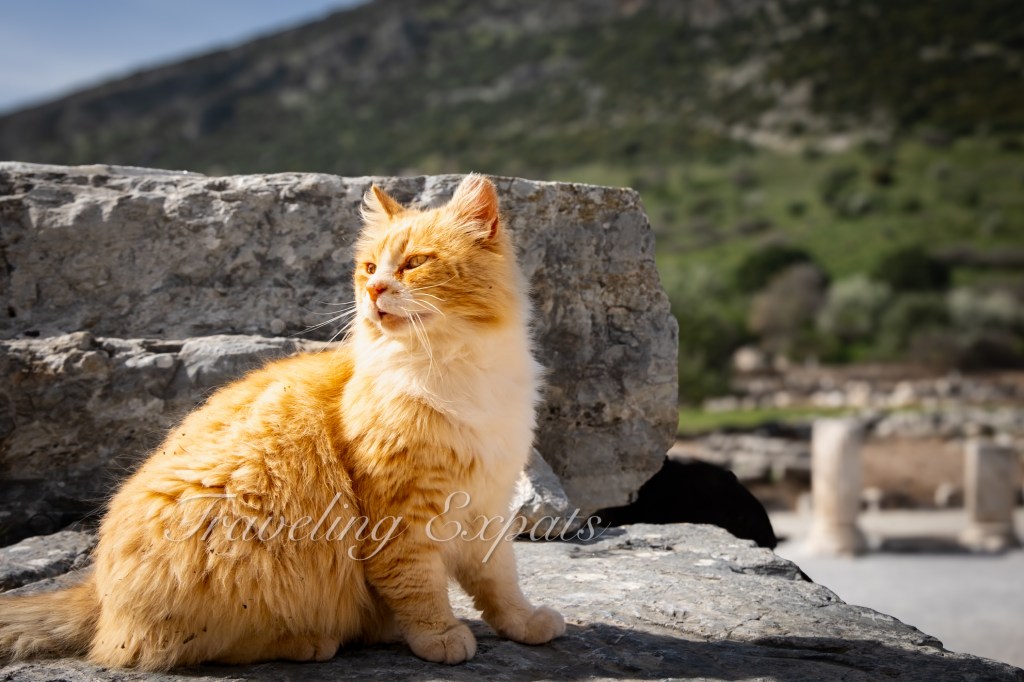
As in most everywhere in Turkey, cats make themselves at home among the ruins of Ephesus
As you step into the ancient city of Ephesus, the sense of walking through history is immediate and overwhelming. This once-thriving metropolis, now a UNESCO World Heritage site, was one of the largest and most influential cities in the Roman Empire, and its well-preserved ruins offer a fascinating glimpse into the lives of those who walked these streets nearly 2,000 years ago.
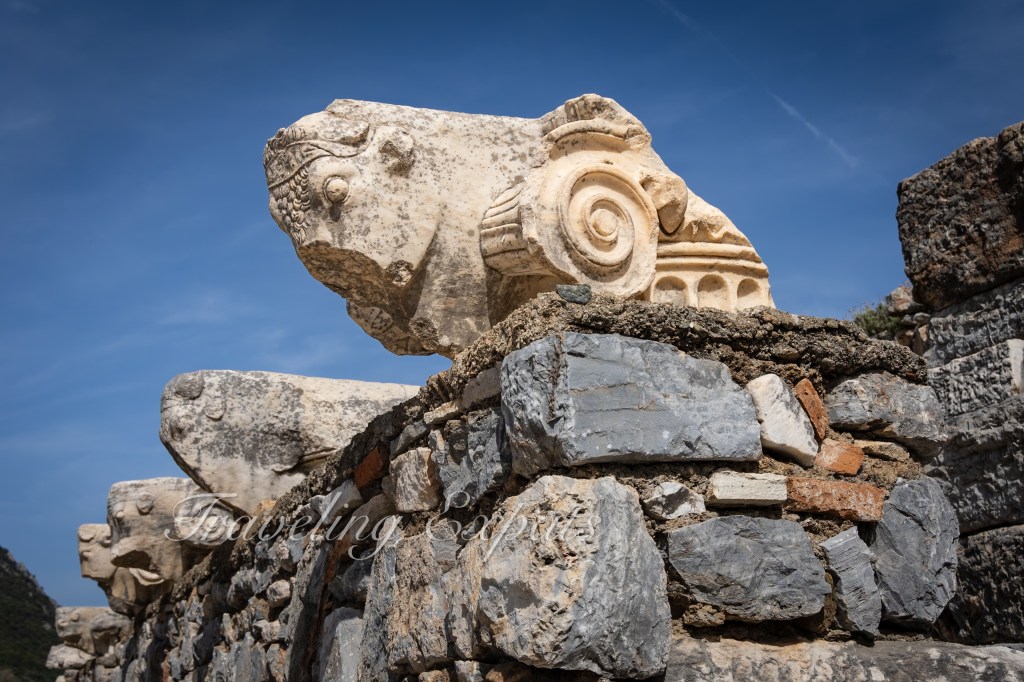
1. Entering Through the Upper Gate:
Most visitors begin their tour at the upper gate, which offers a downhill route through the city’s ruins. This is also where many guided tours start, and it allows you to explore the site with the best perspective of the main landmarks as you walk down. Be sure to arrive early to beat the heat and the crowds—Ephesus can get very busy, especially during the summer months.
2. The Odeon and the State Agora:
Your first stop after entering is the Odeon, a small theater that could seat about 1,500 people. This structure, built in the 2nd century, was used for concerts and public meetings. As you stand here, imagine the debates and performances that took place in this very spot, under the gaze of Ephesus’ elite.
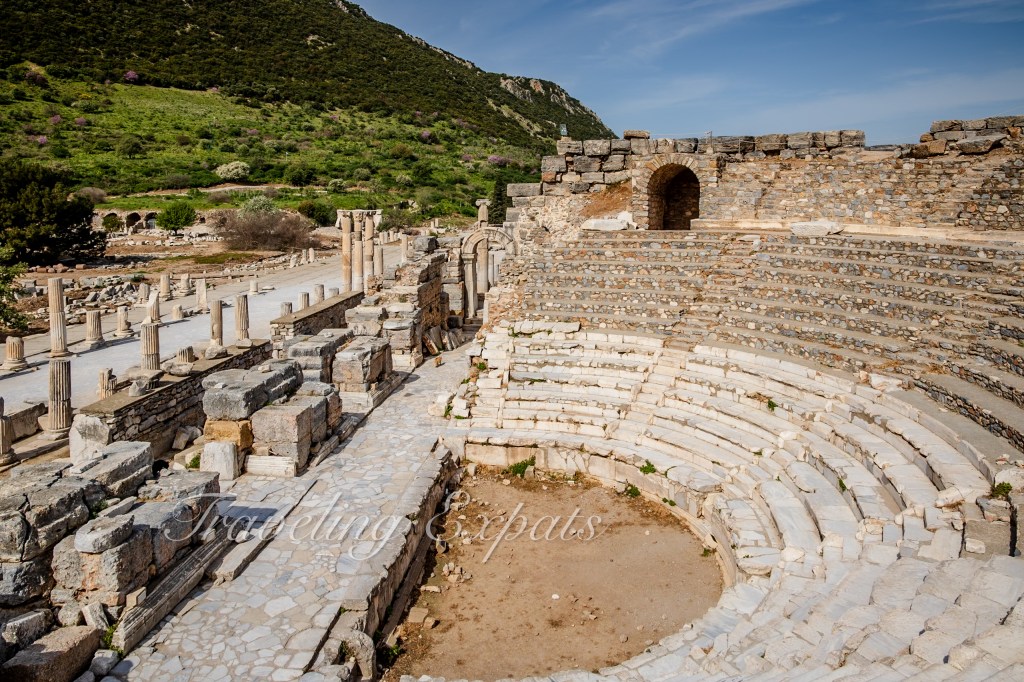
The Odeon
Next, you’ll come across the State Agora, the political heart of ancient Ephesus. This large public square was used for civic meetings and official ceremonies. Surrounding you are the ruins of important administrative buildings that once served as the center of local government.
3. The Prytaneion:
As you continue along the marble-paved street, you’ll come across the Prytaneion, the town hall of ancient Ephesus. This building once housed the sacred eternal flame, tended to by the Vestal Virgins of the city. Today, it’s a collection of ruins, but you can still see the reconstructed columns that hint at its former grandeur.
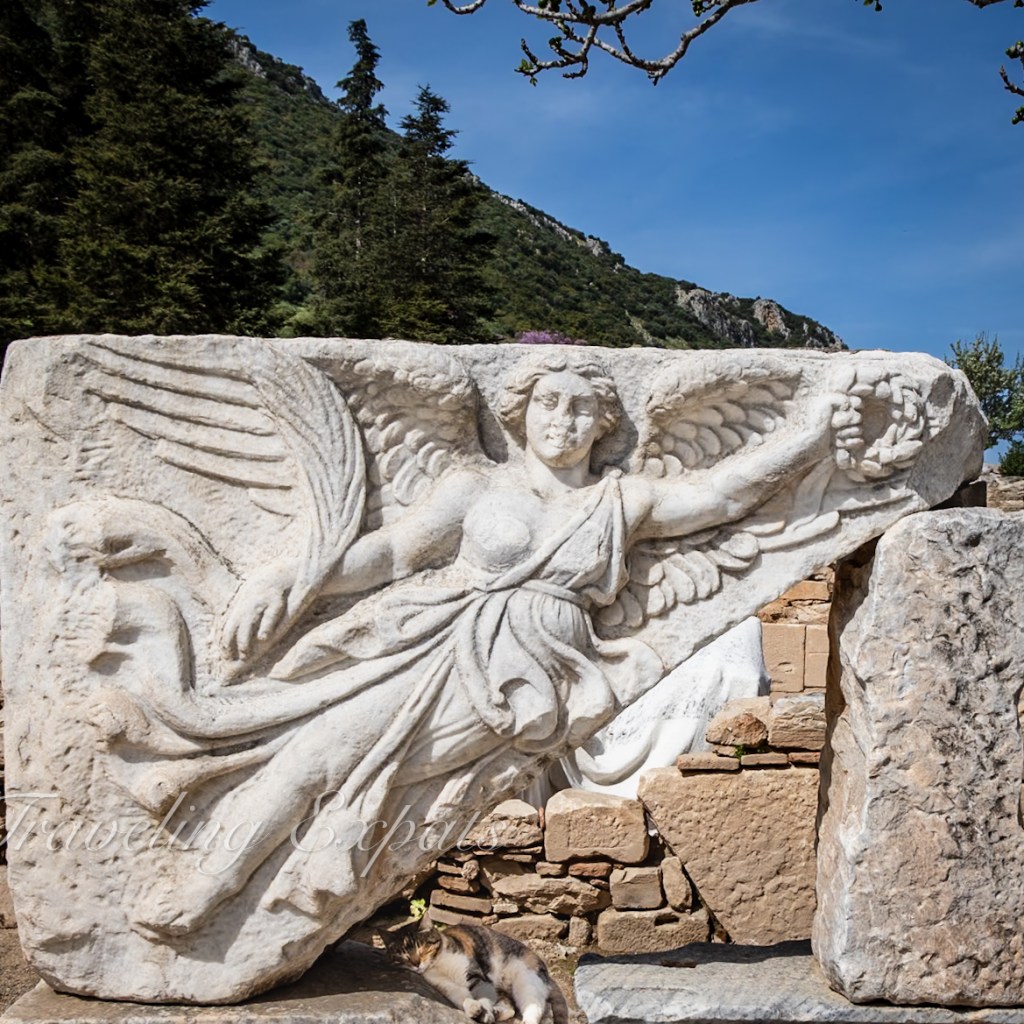
The marble relief of the Greek goddess of victory Nike, dated to the 1st century AD, stands on the west side of Domitian Square.
4. Domitian Square and the Temple of Domitian:
Moving forward, you’ll find Domitian Square, dominated by the remains of the Temple of Domitian. This temple was one of the largest structures in Ephesus, dedicated to Emperor Domitian. It once stood as a symbol of Roman authority and the imperial cult that worshiped the emperor as a god. Standing here, you can almost feel the imposing presence the temple must have had over the people of Ephesus.
5. The Terrace Houses:
One of the highlights of any visit to Ephesus is the Terrace Houses, which are available for an additional fee. These homes belonged to the city’s wealthiest residents, and they offer a fascinating insight into the luxurious lifestyle of Ephesus’ elite. The houses are filled with mosaics, frescoes, and intricate marble floors, and they feature rooms for dining, bathing, and entertaining. Walking through these multi-level homes, it’s hard not to marvel at the craftsmanship and opulence of ancient Roman architecture.

Mosaic floor in the Terrace Houses
6. The Celsus Library:

Arguably the most iconic and photographed structure in Ephesus is the Library of Celsus, built in the 2nd century A.D. to honor the Roman Senator Tiberius Julius Celsus. This towering facade was once the third-largest library in the ancient world, housing over 12,000 scrolls. Today, the intricately designed two-story facade still stands, with its columns and statues symbolizing wisdom, knowledge, and virtue. This is a must-stop spot for photos, so take your time to admire the craftsmanship and the grandeur of the library.

7. The Great Theatre:

Just a short walk from the Library of Celsus is the Great Theatre, one of the largest ancient theaters in the world, capable of seating 25,000 people. This magnificent structure was used for everything from dramatic performances to gladiatorial contests. As you climb the steps of the theatre, take a moment to look out over the ancient city and imagine the roar of the crowd as they watched performances or political speeches unfold before them.
8. Curetes Street and the Fountain of Trajan:
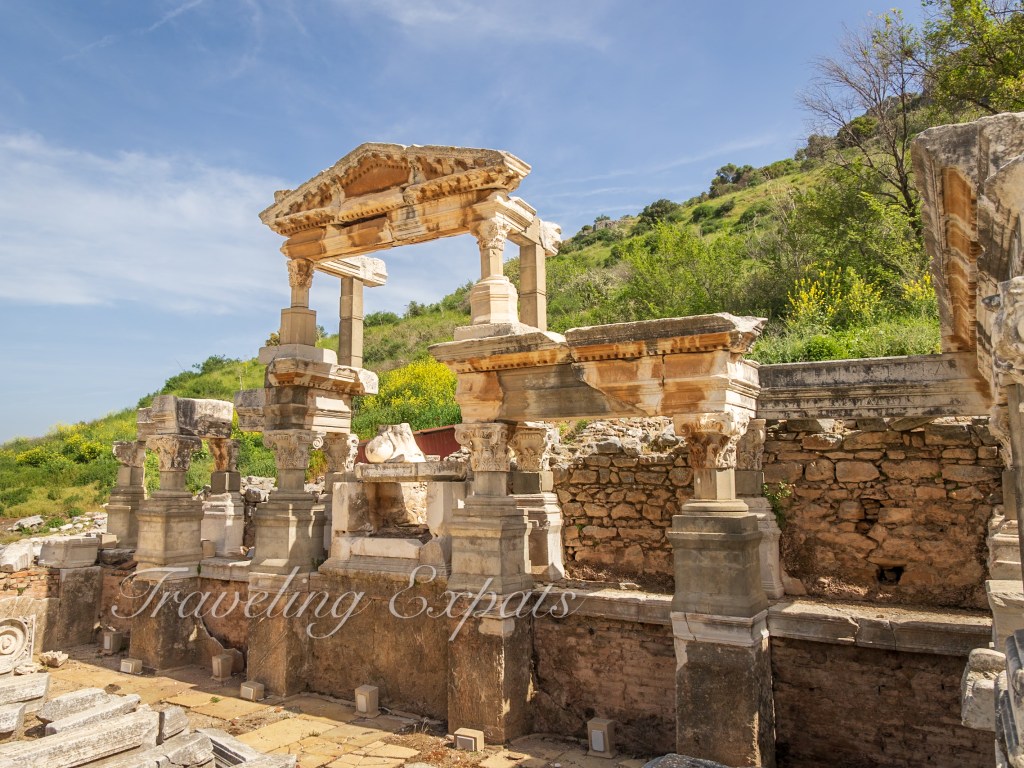
Continuing your journey along Curetes Street, one of the main thoroughfares of ancient Ephesus, you’ll pass numerous monuments, statues, and fountains. One of the most striking is the Fountain of Trajan, built to honor the Emperor Trajan. The base of the fountain still features a large statue of the emperor, and you can admire the intricate carvings that once adorned this grand structure.
9. The Temple of Hadrian:
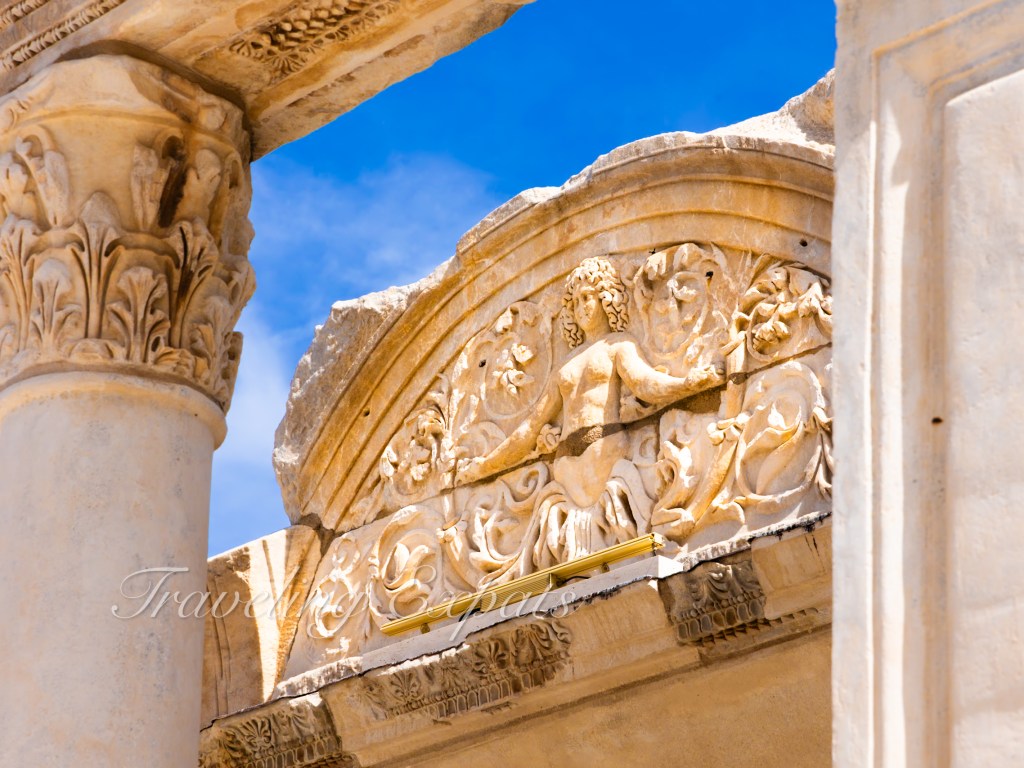
Further along Curetes Street is the beautifully preserved Temple of Hadrian. This small temple, built in the 2nd century A.D., is dedicated to Emperor Hadrian and is known for its elegant arch and reliefs depicting scenes from Ephesus’ mythology. The temple’s facade is one of the best-preserved structures in the city, offering a glimpse of the artistry of ancient Roman builders.

The Temple of Hadrian
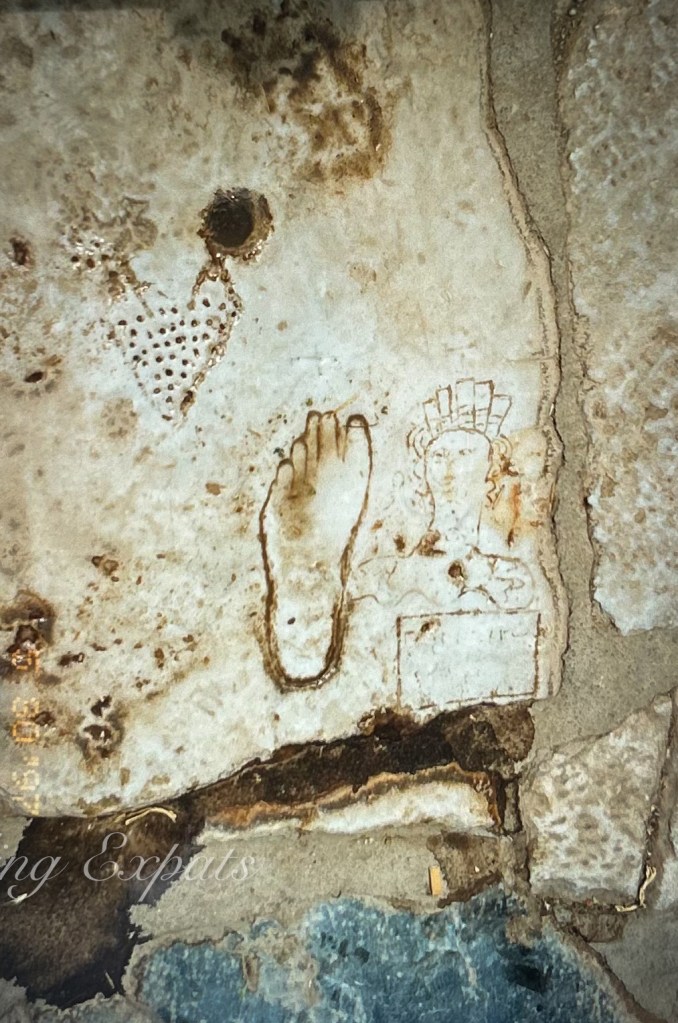
This ancient “billboard” for the local brothel is perhaps the world’s oldest advertisement. If your heart is pounding, bring money down the street to your left and you will find some female companionship.
10. The Lower Gate:
As your tour winds down, you’ll approach the Lower Gate, which marks the exit for many visitors. Here, you’ll find shops and vendors selling drinks, snacks, and souvenirs. This is a great place to rest and reflect on the incredible journey through time that you’ve just experienced.
Practical Tips for Visiting Ephesus:
- Arrive early: The site opens at 8:00 a.m., and getting there early will help you avoid both the heat and the crowds.
- Bring essentials: A hat, sunscreen, sunglasses, and water are must-haves for touring the site, especially in the hotter months.
- Wear comfortable shoes: The streets are uneven, and there’s a lot of walking involved.
- Consider hiring a guide: A knowledgeable guide can bring the history of Ephesus to life with fascinating stories and insights.
- Take breaks: There are benches and shaded areas throughout the site, so don’t rush your visit—take time to appreciate the incredible history surrounding you.
Ephesus is not just a collection of ruins—it’s a window into the ancient world, where history, mythology, and culture intersect in one of the most extraordinary places on earth. Whether you’re a history buff or just curious about ancient civilizations, a visit to Ephesus will leave a lasting impression.
For more about Ephesus, see our YouTube video from our visit. Thanks for watching!
 Traveling Expats
Leave a comment