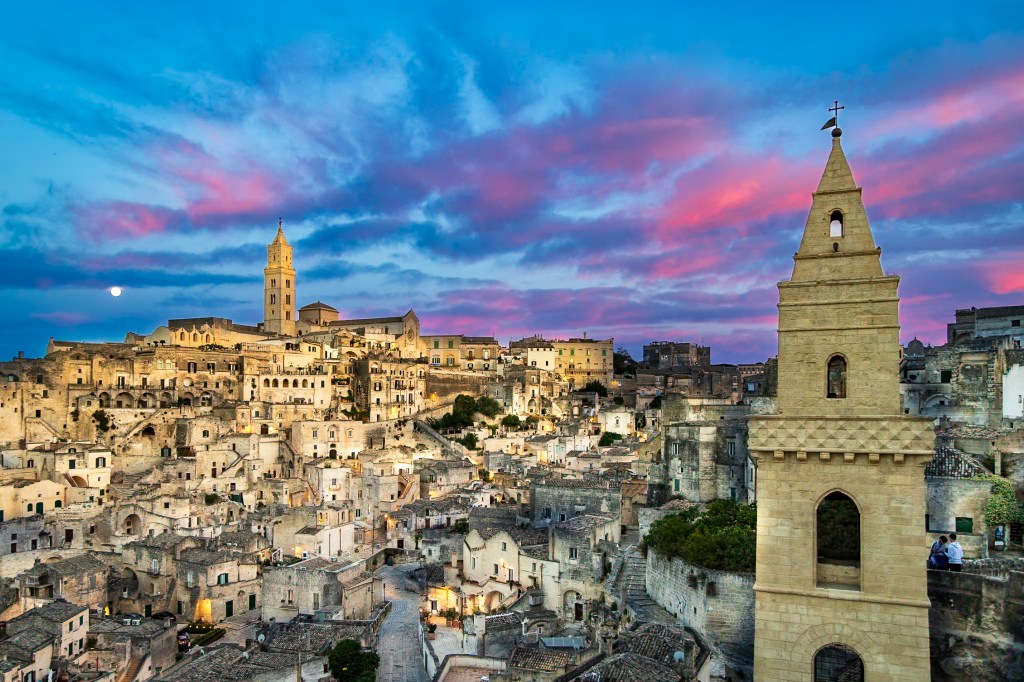
A visit to Matera, the beautiful “Shame of Italy” in the southern region of Basilicata, is an unbelievable experience. It gives you an opportunity to see what it was like to live in caves that were dug into the side of a mountain. Life with no electricity or running water, when farm animals lived in the same quarters as their masters as a way of staying warm in the winter. Then – you get to return to a spectacularly stunning setting with all of the luxuries of the modern world. And when I say spectacularly stunning, I mean it is fit to serve as a movie set and in fact, it has been the set for several movies including – “The Passion of the Christ” and James Bond “No Time to Die”.
Getting There
We traveled to Matera via train from Bari, which is less than 50 miles away in the Puglia region and has the nearest airport. Although Matera is in Basilicata, it is often included in itineraries for visits to the Puglia region which receives more tourists than Basilicata. The train ride took about an hour, was very scenic and, in my opinion, is the best way to reach Matera. You will not need a car while in Matera and finding a parking space may prove problematic. The train station is a short 15 minute walk to the heart of Matera. The route to the center of Matera is very steep and cobbled, which I enjoyed because I’m a bit of a masochist and I viewed it as an opportunity to earn some delicious calories during my stay. If you aren’t a masochist or if you don’t feel the need to earn your holiday treats, there are Taxis at the train station that can take you to your hotel in town.
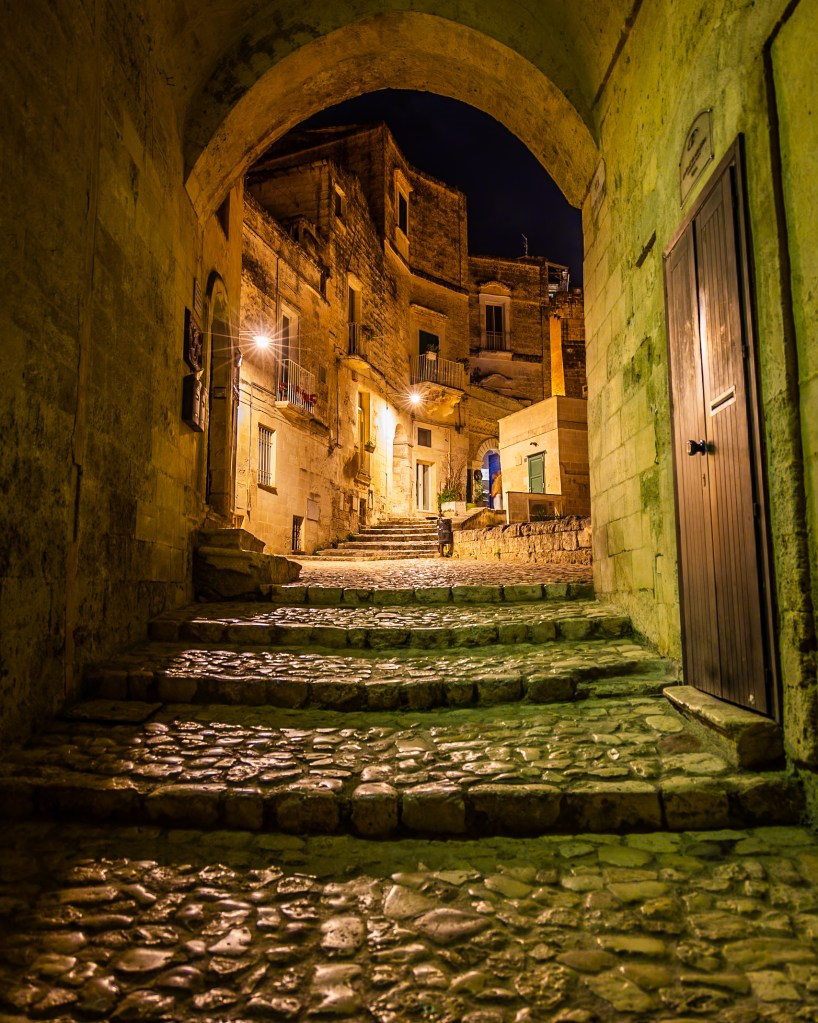
Typical walking path in Matera.
Let’s Go!
While Matera may have once been known as the Shame of Italy, today it’s known as a UNESCO World Heritage Site, movie set and in 2019 it was selected (along with Plovdiv, Bulgaria) as a co-European Capital of Culture. Thirty years ago no one would have thought about spending their holiday in Matera, but today it is bustling with tourist activity. It’s not as crowded as some of the better known tourist destinations in Italy, but take heed – the crowds are growing.

Walking up to the Duomo – Matera Cathedral
Exploring the Sassi
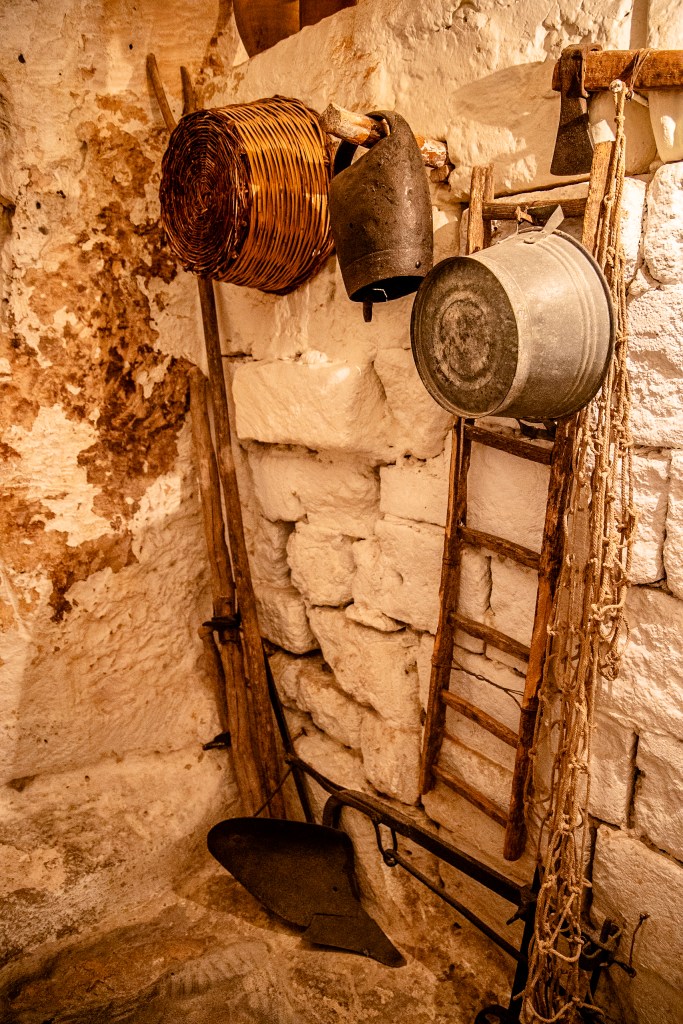
A visit to Matera is never complete until you have visited the Sassi. The Sassi di Matera are ancient cave dwellings carved into the limestone cliffs. This area is divided into two districts: Sasso Caveoso and Sasso Barisano.
Casa Grotta di Vico Solitario: A reconstructed cave dwelling that offers insights into the traditional way of life in Matera.

Kitchen in a Sassi home
In the 1950’s, Italian officials were shocked to learn that thousands of people (approximately 15,000) were living in the Sassi, all without electricity or running water. Oftentimes livestock were brought into the living quarters to provide heat during cold winter nights. Upon visiting the Sassi, it is fascinating to think how people survived in such harsh conditions.
Historic Churches
Matera is home to numerous historic churches, many of which are carved into the rock. Some must-visit churches include:
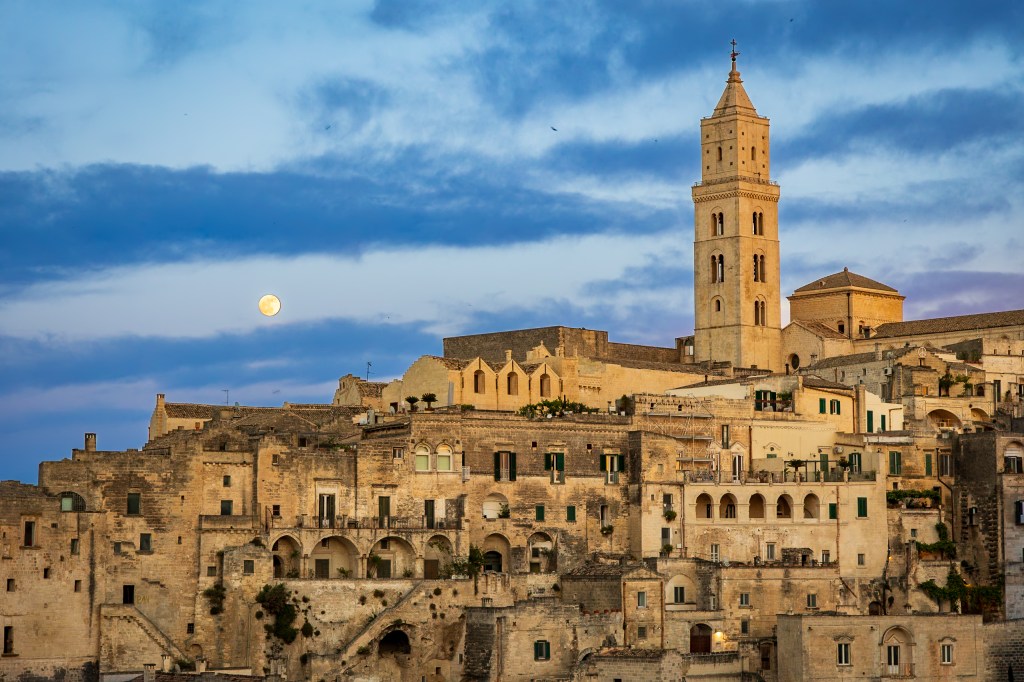
Cattedrale di Matera: The city’s cathedral, located at the highest point of the Sassi, offering breathtaking views of the surroundings.The Cathedral is a stunning example of Apulian Romanesque style and was built in the 13th century. The Cathedral is dedicated to Madonna della Bruna and Saint Eustace. We were fortunate to witness a festival honoring Saint Eustace.
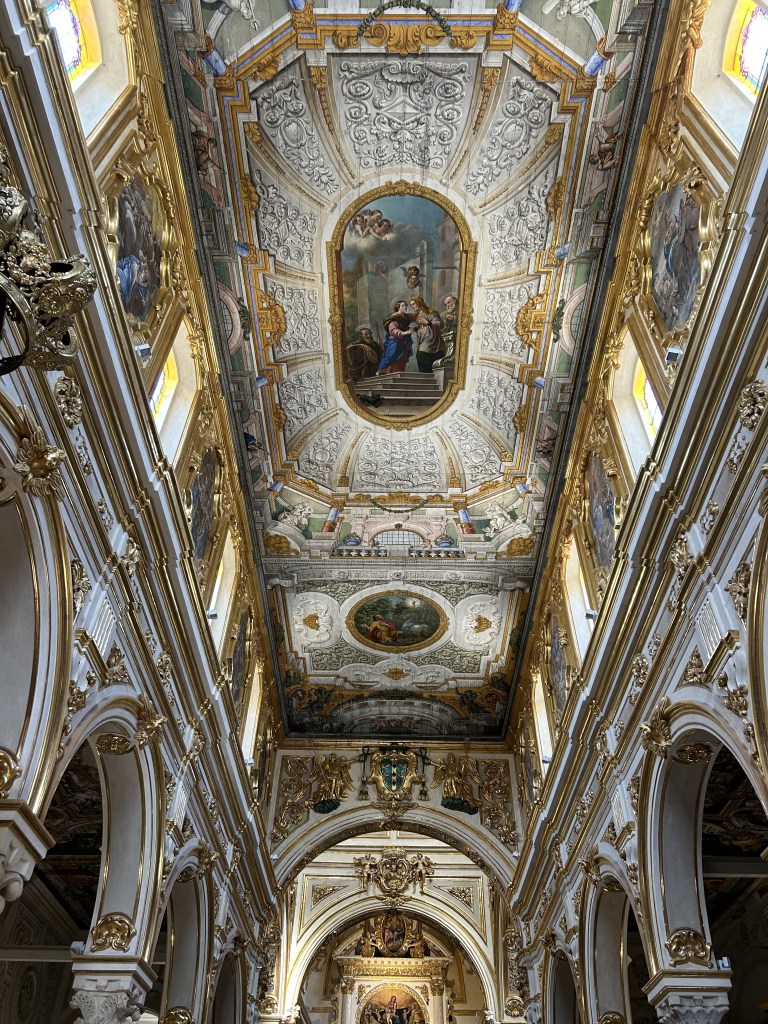
Inside the Matera Cathedral
Santa Maria de Idris: A rock-hewn church situated on a rocky spur, known for its unique architecture and stunning interior. It’s an incredible feeling to look at this church and to marvel at how difficult it must have been to carve it into the rock. The church is built into a rock complex that also includes the crypt of San Giovanni in Monterrone. The church is connected to the crypt by a tunnel with frescoes that date from the 12th to 17th centuries.
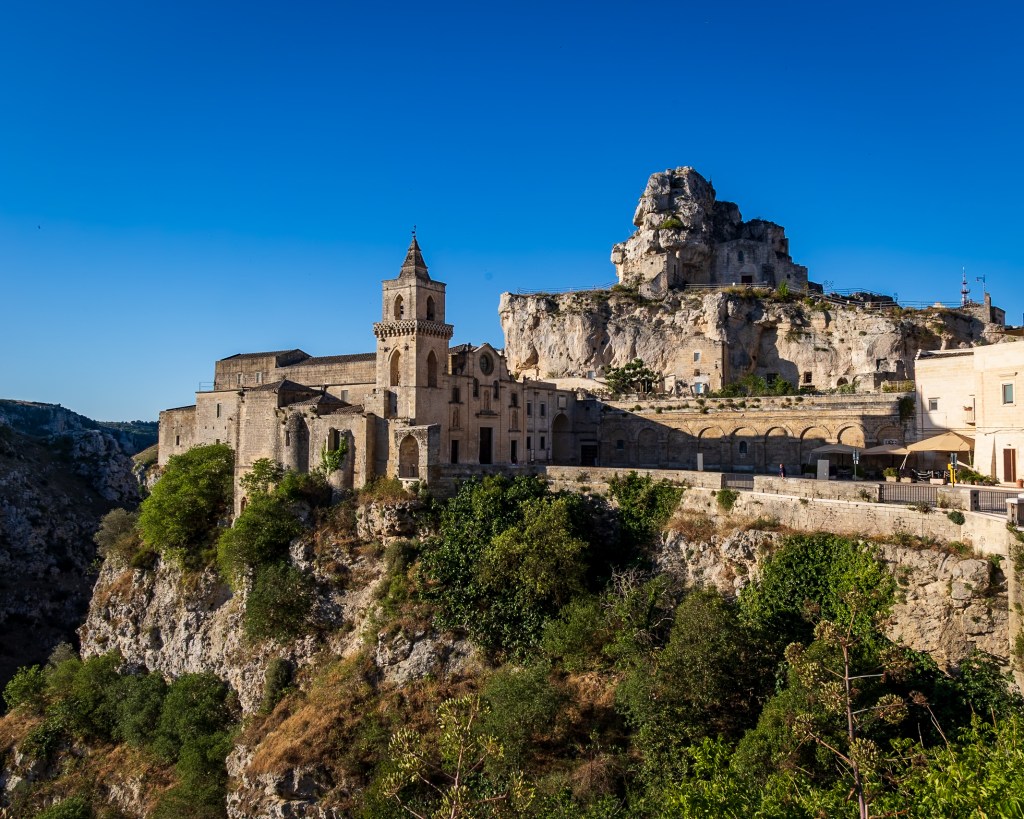
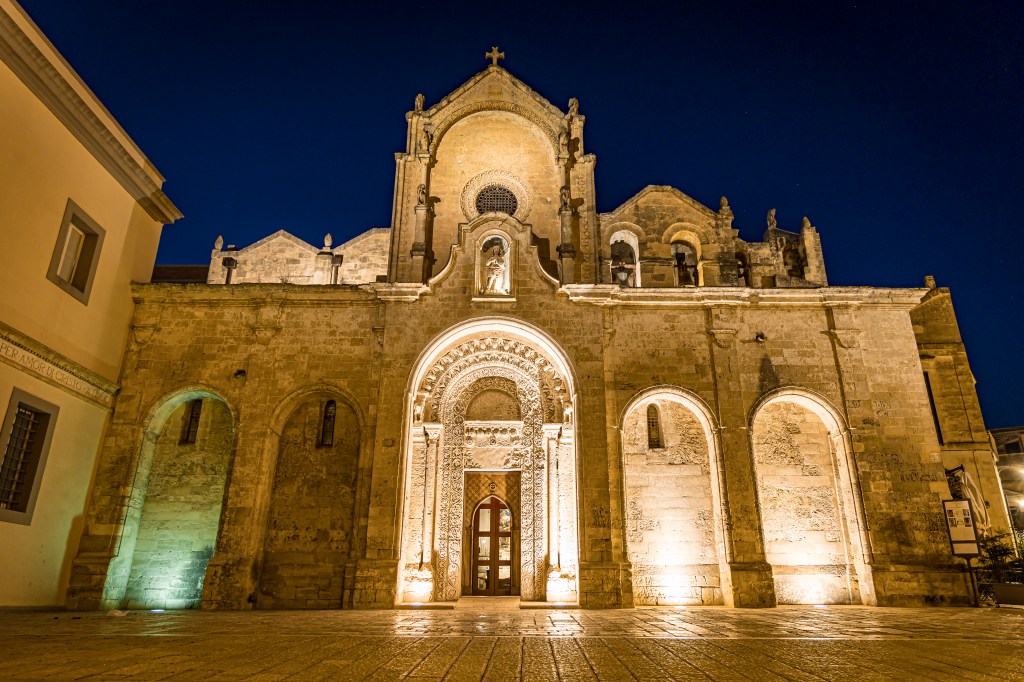
Chiesa di San Giovanni Battista: An exquisite church dating back to the 13th century, like the cathedral it features beautiful Apulian Romanesque architecture. Filming took place in this church for the James Bond movie “No Time to Die”
Ancient Water Supply
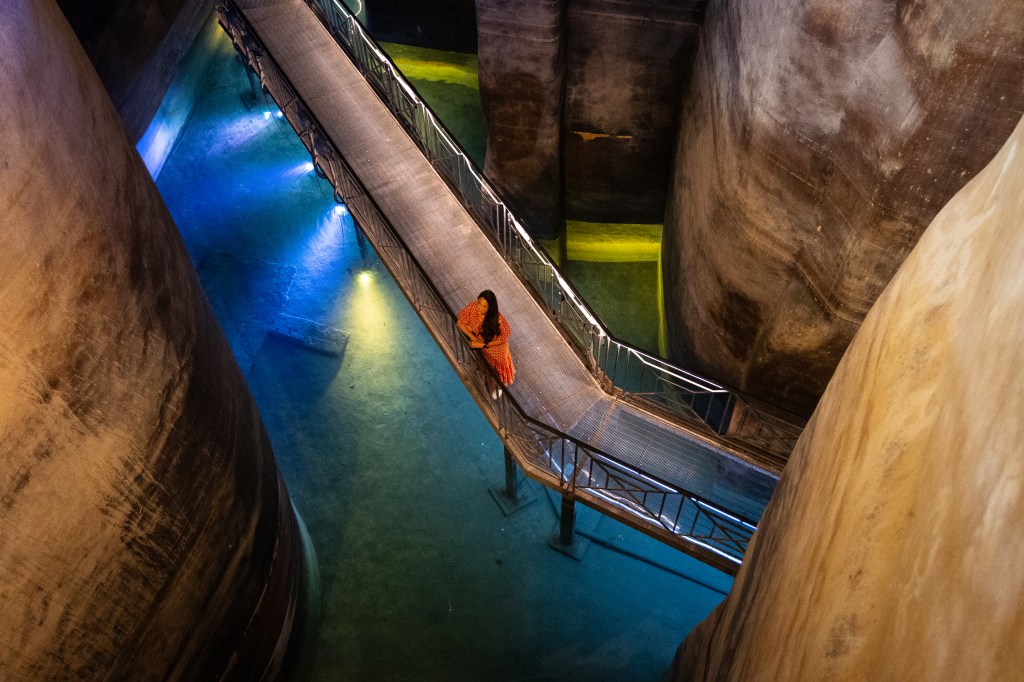
Another very interesting location is the Palombaro Lungo which is an ancient underground cistern located beneath Piazza Vittorio Veneto. This was the main water source for the city until the Apulian Aqueduct started delivering water to the city in the 1930s. The Palombaro Lungo was then closed and abandoned until it was discovered during the construction of the Piazza Vittorio Venoto in 1991. At 14 meters deep and 50 meters long, the cistern had a water capacity of over 5 million liters. Today you can tour the facility and explore its impressive engineering for 3 Euros.
Local Cuisine
Matera’s culinary scene is a delightful blend of traditional flavors and local ingredients. Must-try dishes include:
Pane di Matera: A unique bread made from local durum wheat, known for its distinctive shape and flavor.
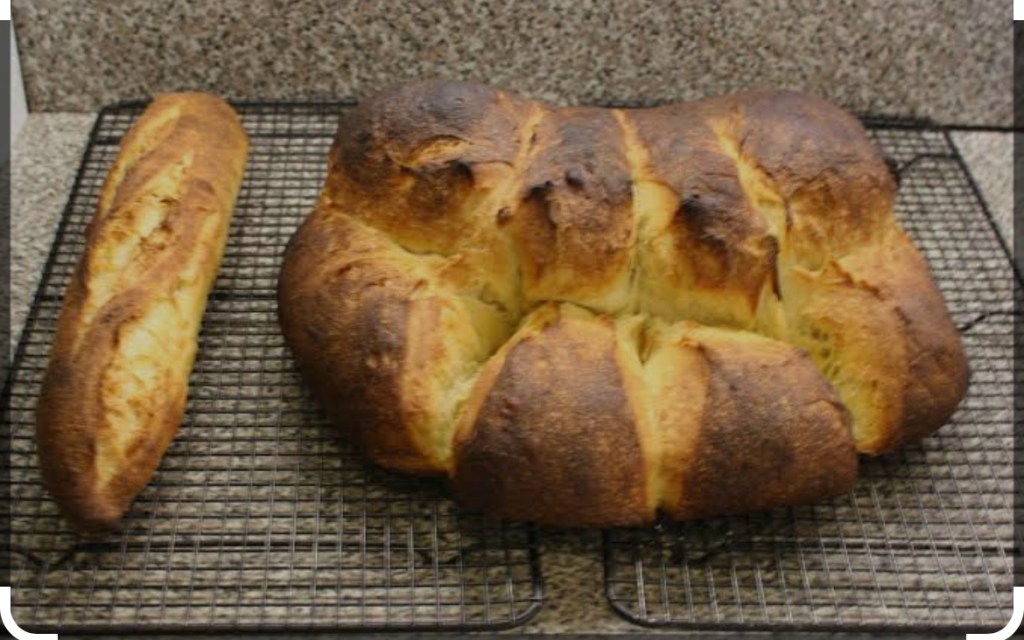
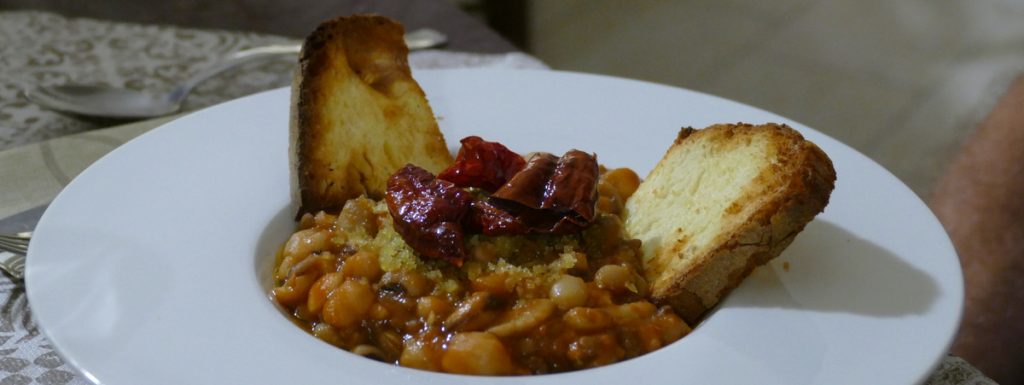
Crapiata: A hearty stew made with various legumes and grains, traditionally prepared during harvest festivals.
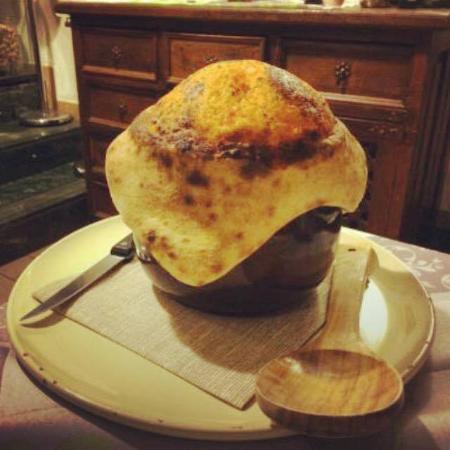
Pignata: A slow-cooked lamb dish with potatoes, onions, and herbs, cooked in a clay pot.
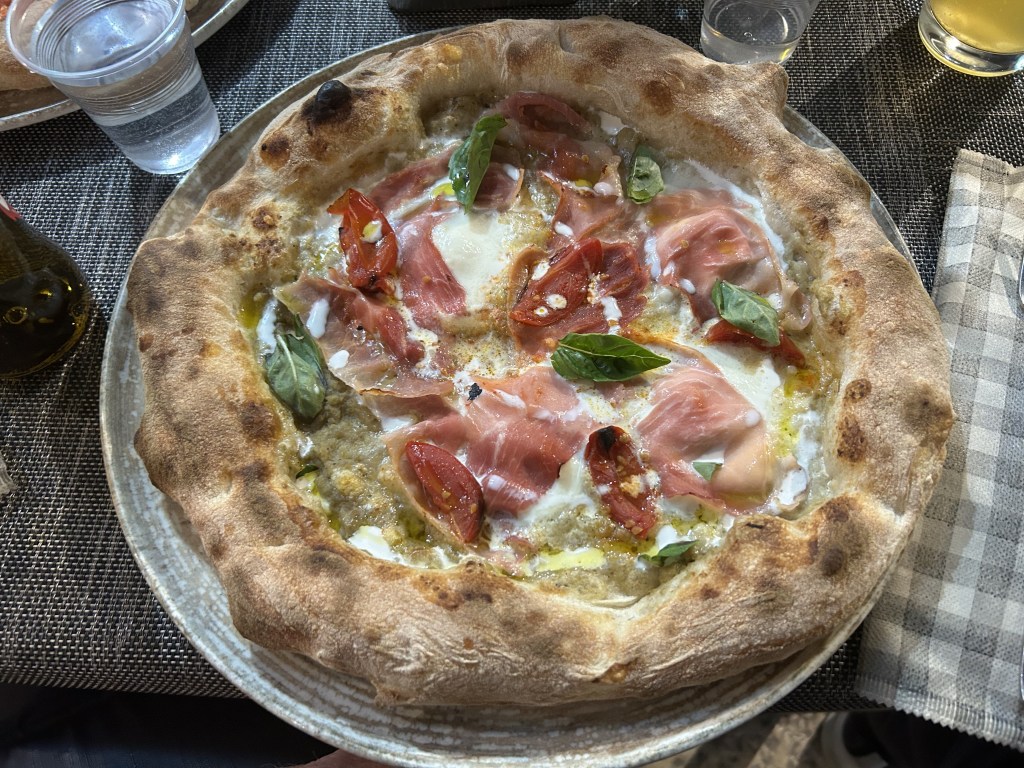
Pizza – this is southern Italy, of course you must have pizza
Tips for Travelers
Wear Comfortable Shoes: Exploring Matera involves a lot of walking, often on uneven surfaces, with lots of hills. Comfortable shoes are a must.
Plan for the Weather: Summers can be hot, and winters chilly. Check the weather forecast and pack accordingly.
Guided Tours: Consider joining a guided tour to fully appreciate the historical and cultural significance of the Sassi and other landmarks.
Conclusion
Matera is a city that seamlessly blends ancient history with modern charm. Its unique cave dwellings, historic churches, and rich cultural heritage make it an unforgettable destination. Whether you’re exploring the Sassi, savoring local cuisine, or simply soaking in the stunning views, Matera promises an enchanting travel experience.
 Traveling Expats
Leave a comment