
When in Europe, we all dream of stumbling upon that hidden treasure, a spot untouched by tourist hordes, where we can bask in old-world charm without having to dodge selfie sticks or fight for a café table. But does such a magical place even exist? And if it does, is it hidden in the middle of absolutely nowhere? Well, surprise – not always!
Enter – Bad Wimpfen a picturesque village straight out of a snow-globe that seems, in many ways, to be frozen in time. Surprisingly it’s just a stone’s throw away from Stuttgart (40 miles), Mannheim (46 miles) and Heidelberg (41 miles) and easily reachable by regional train. It’s a great destination from any of those three cities if you are using the amazing 49 Euro Deutschland ticket.
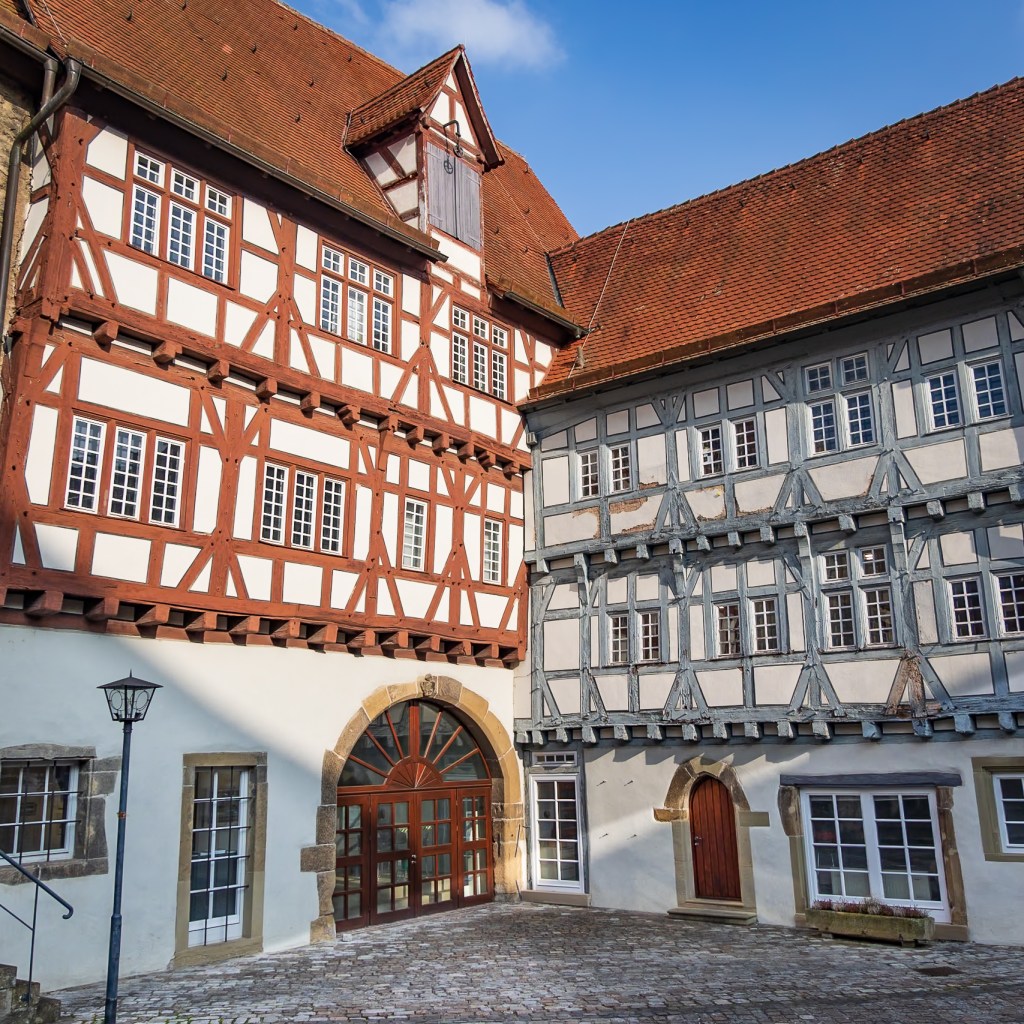
We arrived by train and went straight to the Tourist Information which was about a ten minute walk from the station. The staff at the TI spoke fluent English and happily answered all of our questions, including providing recommendations for lunch. Since we knew very little about the town, other than it is really cute in our Instagram feed, we purchased a walking-tour guide for 3 Euro which took us to the key points of interest in town and provided interesting background information on each location. The TI also serves as the city history museum.
The walking tour took us to beautiful points of interest such as:
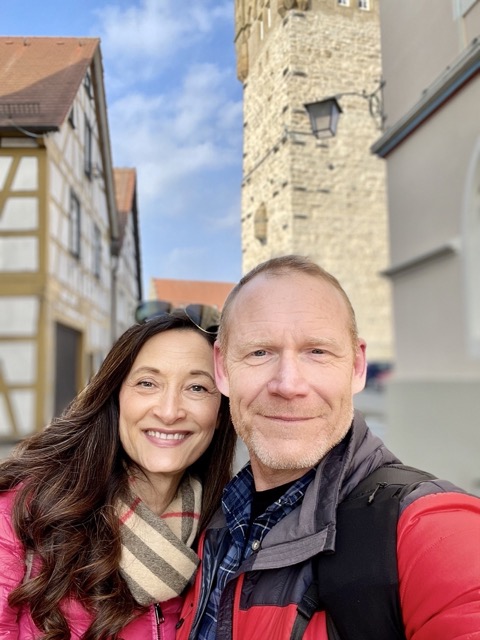
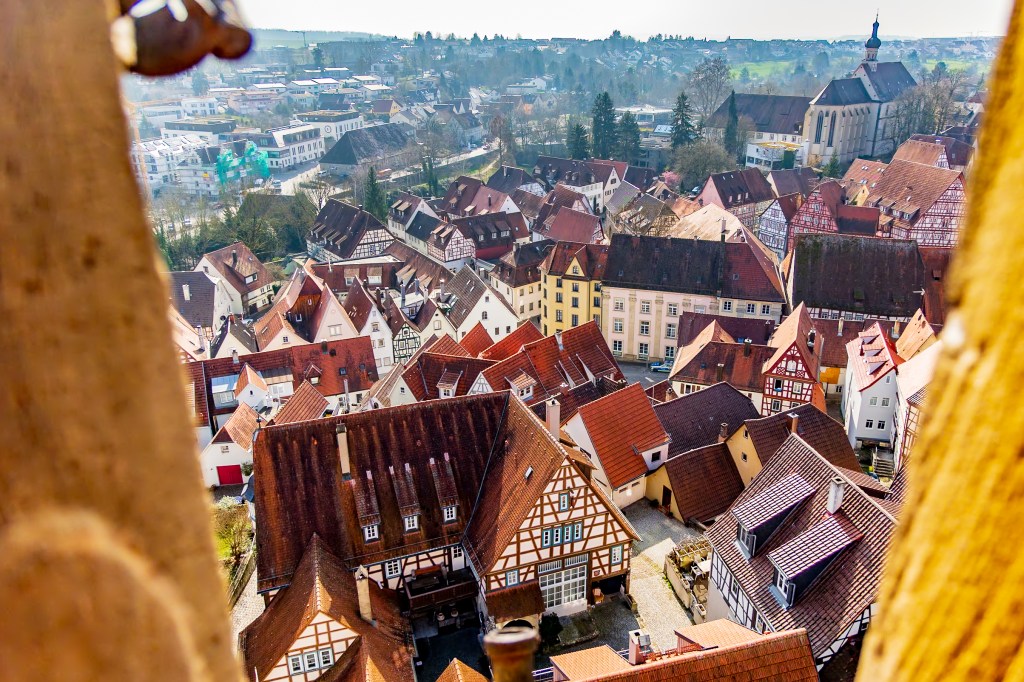
The Blue Tower which was built in 1170 and is mostly original, although the top of it did receive significant damage by fire in 1984. You can climb to the top for outstanding views over the town and countryside. The view from the tower will cost 3 and a half Euro and your money will be collected after you have almost reached the top. There is still an active Tower Guard who lives in an apartment near the top of the tower. The live-in tower guard is something most places have long since done away with, but it is a neat reminder of yesteryear here in Bad Wimpfen.
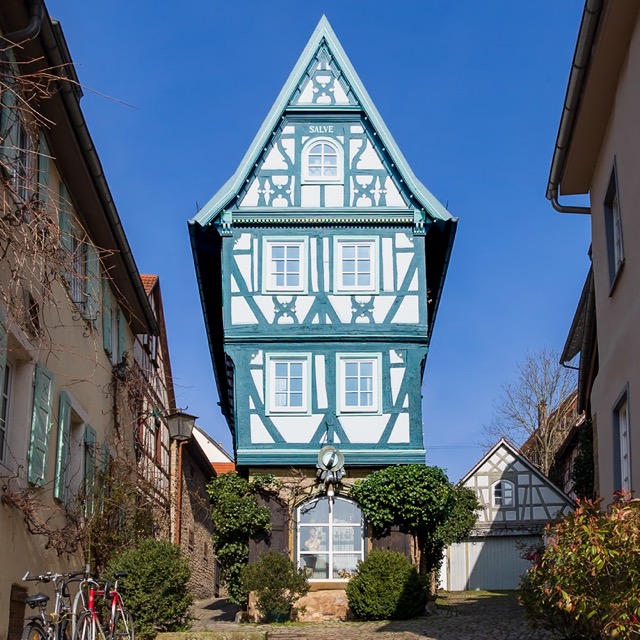
The Bügeleisenhaus (Flat Iron House) which was built in the 1600s is one of narrowest and most beautiful timber-framed houses in all of Germany. If you are seeking a location for your instagram page, this is where you will take it. The narrow, tapering iron shape and beautiful colors, truly make this building something to behold.
The Protestant Church which was built around 1295 and features a beautiful interior with a crucifix that (uniquely?) has real human hair. It also has an amazing outdoor (covered) crucifixion scene that was sculpted in the late 1400s.
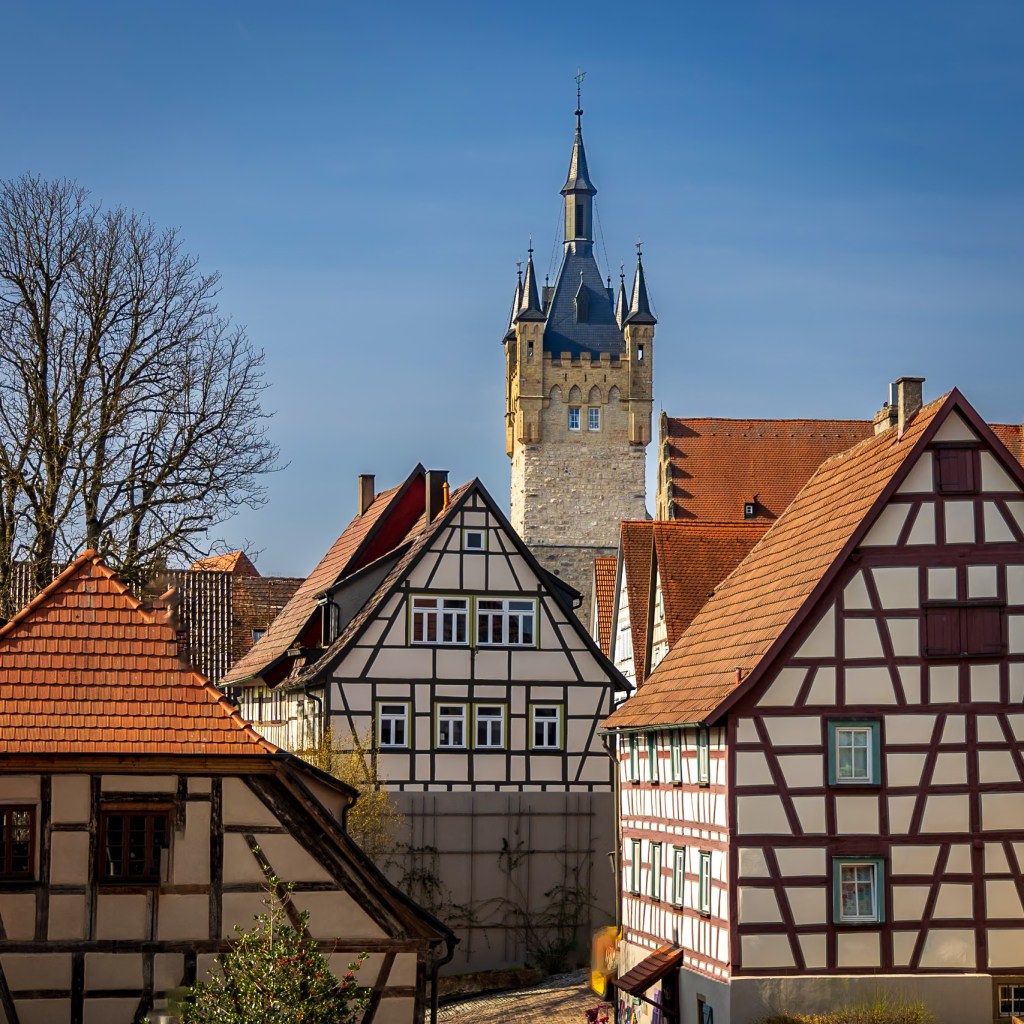
The Red Tower – We aren’t sure about the year of construction, but it is one of the remaining towers from the original town wall. This tower looks like it has been damaged and rebuilt because of the different construction materiel used, but this is actually how it was originally built. It receives its name from the red roof that it used to have which was destroyed during the Thirty Years War (1618-1648) and never replaced.
The cute little Nürnberger Türmchen (Little Nuernberg Tower) which was built to honour the city of Nürnberg which helped Bad Wimpfen during the Thirty Years War. Little tower, little bratwurst from Nürnberg – is there a connection? I wonder?
The Eagle Fountain from the 16th century which is known as the Stork Fountain because women who drink from it are said to become pregnant soon thereafter.
The Steinhaus History Museum – A beautiful stone building that was built in 1511. It was such a beautiful and sunny late winter day that we did not go into the museum. We’re saving that for our next visit.
We stopped for a delicious lunch at the Feyer Abend guest house which serves traditional dishes from Baden-Württemburg and is located in a beautiful building from 1535. If you know the German language, you surely know that at the end of the work day the Germans will routinely say “Feierabend!” (Pronounced – Fire Ah-bend). This is a combination of the words feier (celebration) and abend (evening) into celebration evening or “quitting time.” I appreciate how the Feyer family used their last name to call their guest house “Feyer Abend”.
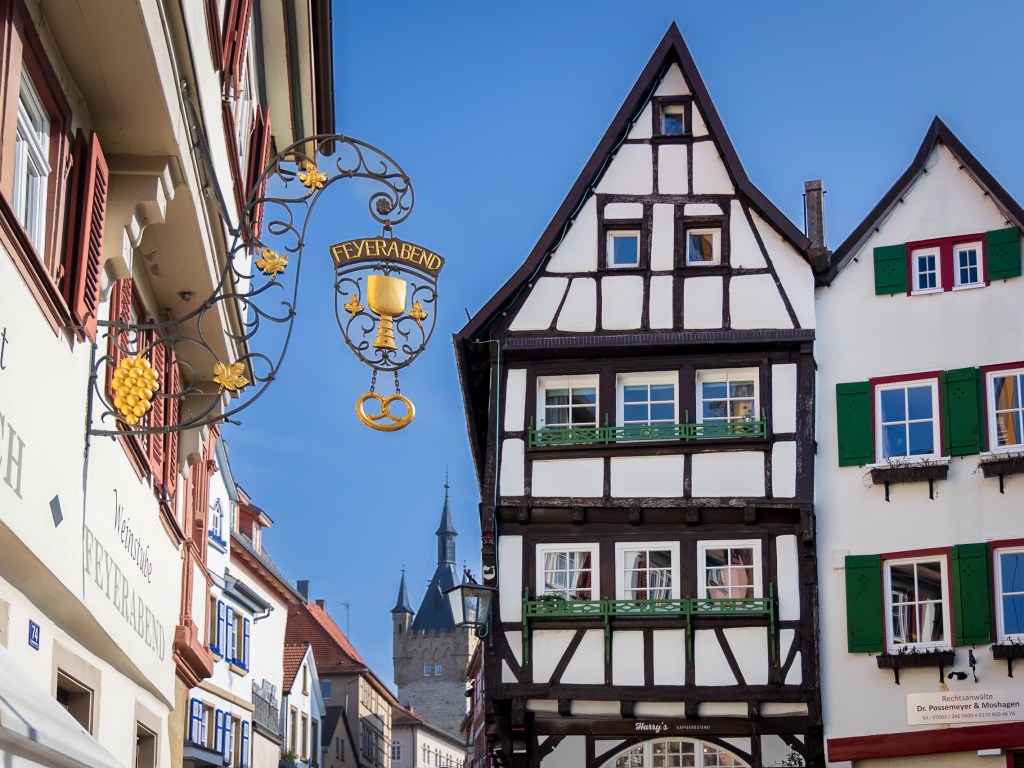
The Großhaus (Big House) which is the largest timber-framed building in town and was built in the 1500s.
The Bürgermeisterhaus (Mayor’s House) a beautiful building from the 1500s.
Finally we ended up at the beautiful Dominican Catholic Church which was constructed in the 1200s and has an absolutely stunning interior.
Yes, there are beautiful, historical and interesting places to visit in Europe that aren’t completely overwhelmed by tourists. It may take some searching and a bit of planning, but they are there if you want to visit them.

Thanks for joining us in Bad Wimpfen. If you’d like to see some video from our visit, be sure to check out our You Tube channel for footage of Bad Wimpfen and other beautiful places in Europe and throughout the world.
Here is a link to our Youtube video about Bad Wimpfen:
If you’re puzzled or just need a question answered, feel free to contact us. Whether you have a comment, sharing your victories, or just fancy a chat, we’re all ears and excited to hear from you!
Happy Travels!
Betty and Lee


 Traveling Expats
Leave a comment