
Recounting the History of Carnival
Carnival in Germany mirrors the festivities of Mardi Gras in the United States and Carnival in Brazil. This event deviates from the conventional notion of a fair or carnival commonly linked with the term “carnival.” This jubilant event spans a week leading up to Ash Wednesday, heralding the commencement of the Lenten season. Characterized by vibrant street parades, elaborate costumes, masked revelers, and exuberant gatherings in bars and on the streets, Carnival is a cultural highlight in Cologne.
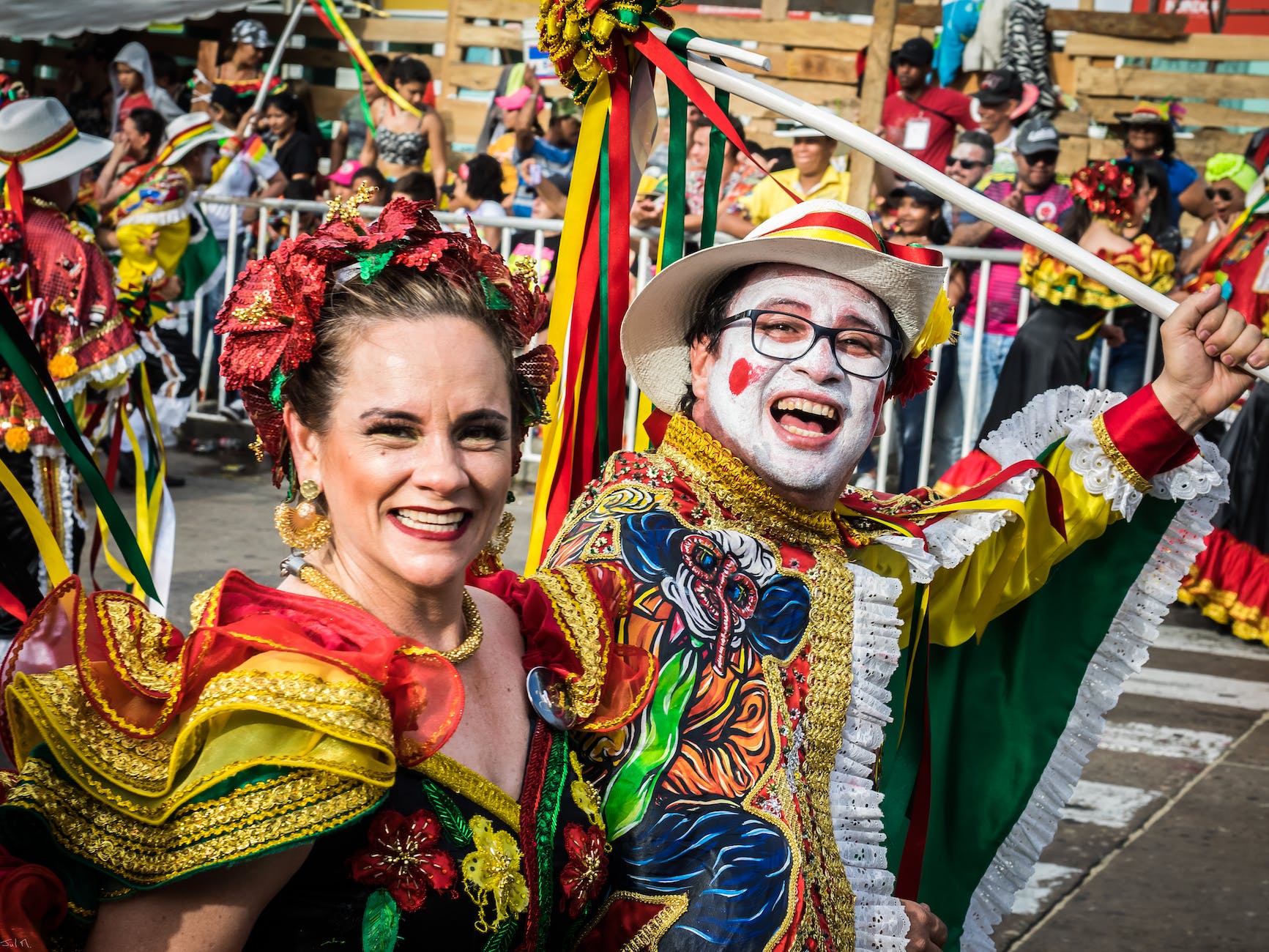
Dating back to the era of the Germanic tribes, Carnival boasts rich historical roots. Traditionally, Germanic tribes marked the seasonal transition from winter to spring during this period. As Christianity gained prominence, it assimilated pre-existing tribal festivities and intertwined them with significant Christian occasions. Karneval evolved into a means to release one’s indulgent tendencies prior to the observance of Lent.
The modern iteration of Carnival was revived in 1823 through the establishment of the Festival Committee. The inaugural parade, reminiscent of an ecclesiastical procession honoring the crowning of a new emperor, set the tone for the event. Nevertheless, from its inception, a sense of light-hearted irony permeated the atmosphere, revealing a prevailing skepticism towards the interplay of church and state. This skepticism endures to this day, frequently illustrated in the thematic representations adorning the parade floats.
Why is Cologne so famous for Carnival?
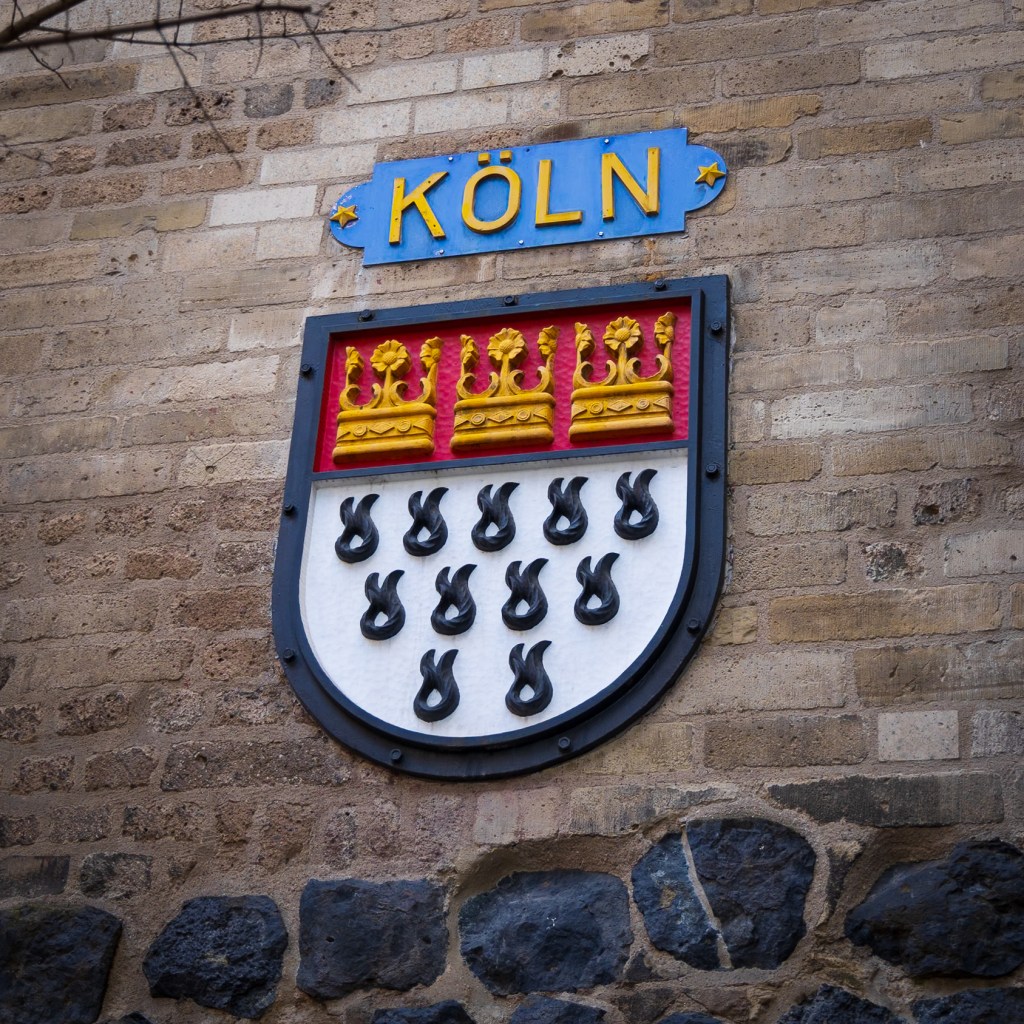
Cologne stands as a bastion of the Carnival tradition, akin to Rio in Brazil, Venice in Italy, and New Orleans in the United States. Notably, Cologne hosts the largest Carnival celebrations in Germany, attracting over 1.5 million attendees to its grand parade. For an authentic Carnival experience in Germany, Cologne stands as the quintessential destination to partake in this rich cultural extravaganza.
The Carnival in Cologne stands as a must-have experience in one’s lifetime. The festive ambiance of Carnival resonates profoundly within the Kölsch community. The palpable excitement in the city leading up to Karneval is unmistakable. This week-long celebration comprises street festivities, parades, and various special activities.
What attire is appropriate for Carnival?
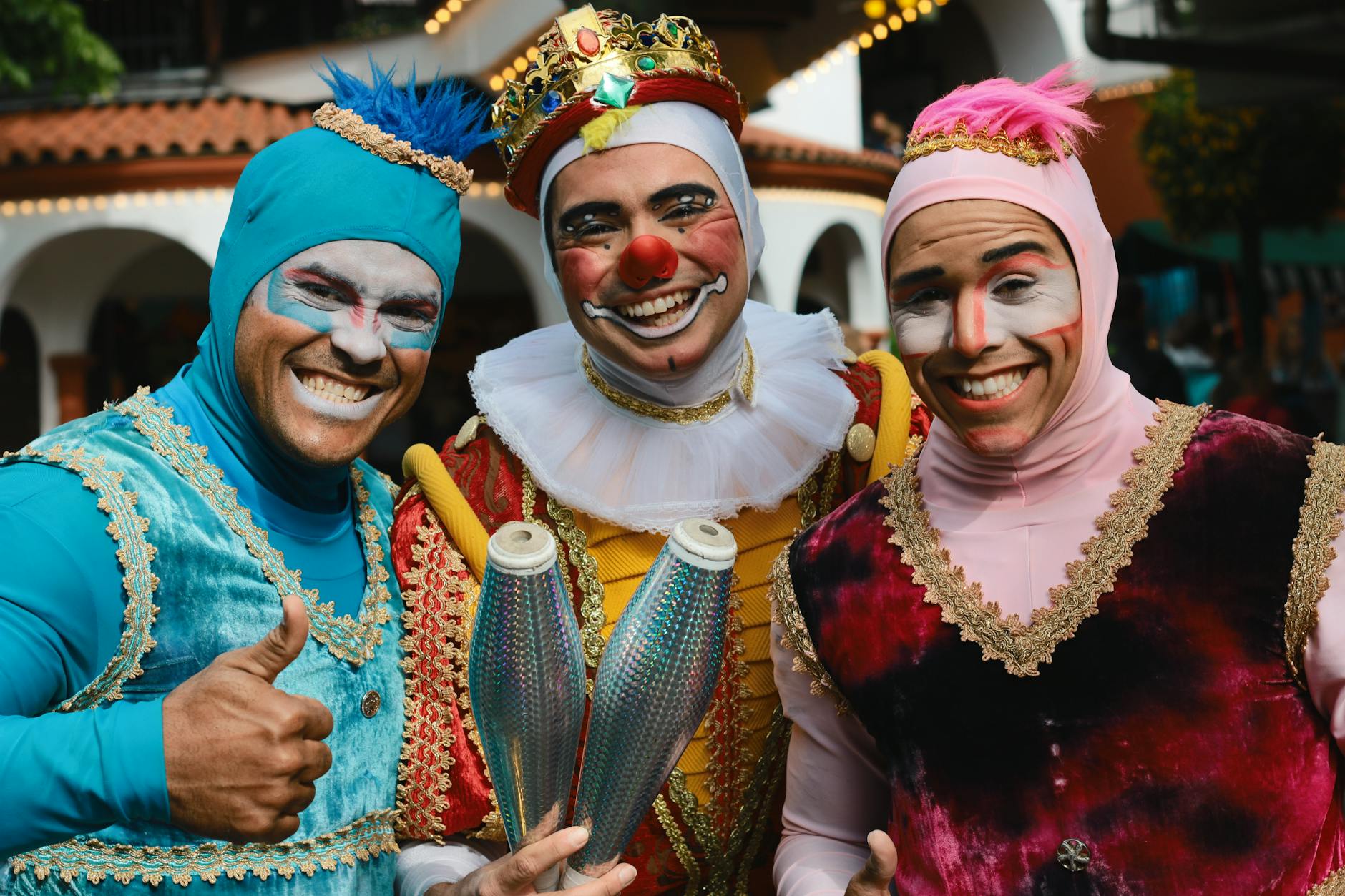
At Carnival in Cologne, a costume is an absolute necessity. This event is renowned for its tradition of elaborate dress-up, with attendees of all ages donning a variety of costumes, from whimsical characters to historical figures like musketeers and pirates.
Costumes for this event range from the straightforward, such as wigs or hats, to the intricate, like meticulously crafted group ensembles that take months to complete. Unlike the more provocative attire often seen during Halloween, these costumes tend to lean towards the eccentric and imaginative. While the most popular costume is similar to a clown, the diversity of outfits during Carnival knows no bounds. Red and white symbolize the iconic colors of Cologne. Therefore, during celebrations, a multitude of costumes in these hues contribute to a vibrant visual display.
When does the Cologne Carnival take place?
The Christian calendar follows the lunar cycle, causing the dates for Carnival to fluctuate annually. Traditionally, Carnival falls between the middle of February and early March. Carnival is often referred to as the fifth season in the Rhineland region. Broadly defined, Carnival constitutes an entire season known as the “fifth season,” commencing annually on November 11th at 11:11 a.m. and concluding on Ash Wednesday, marking the beginning of Lent.
One might ponder how the locals manage to sustain the Carnival festivities for months on end. Although a jubilant atmosphere pervades the entire 5th season, the pinnacle of Carnival unfolds during a 5-day period commencing from Silly Thursday (the Thursday preceding Lent) and culminating in Fat Tuesday. Further elaboration on these specific days follows, as they represent pivotal moments for visitors to immerse themselves in the authentic essence of Cologne’s Carnival celebrations.
The Most Significant Events of the Cologne Carnival
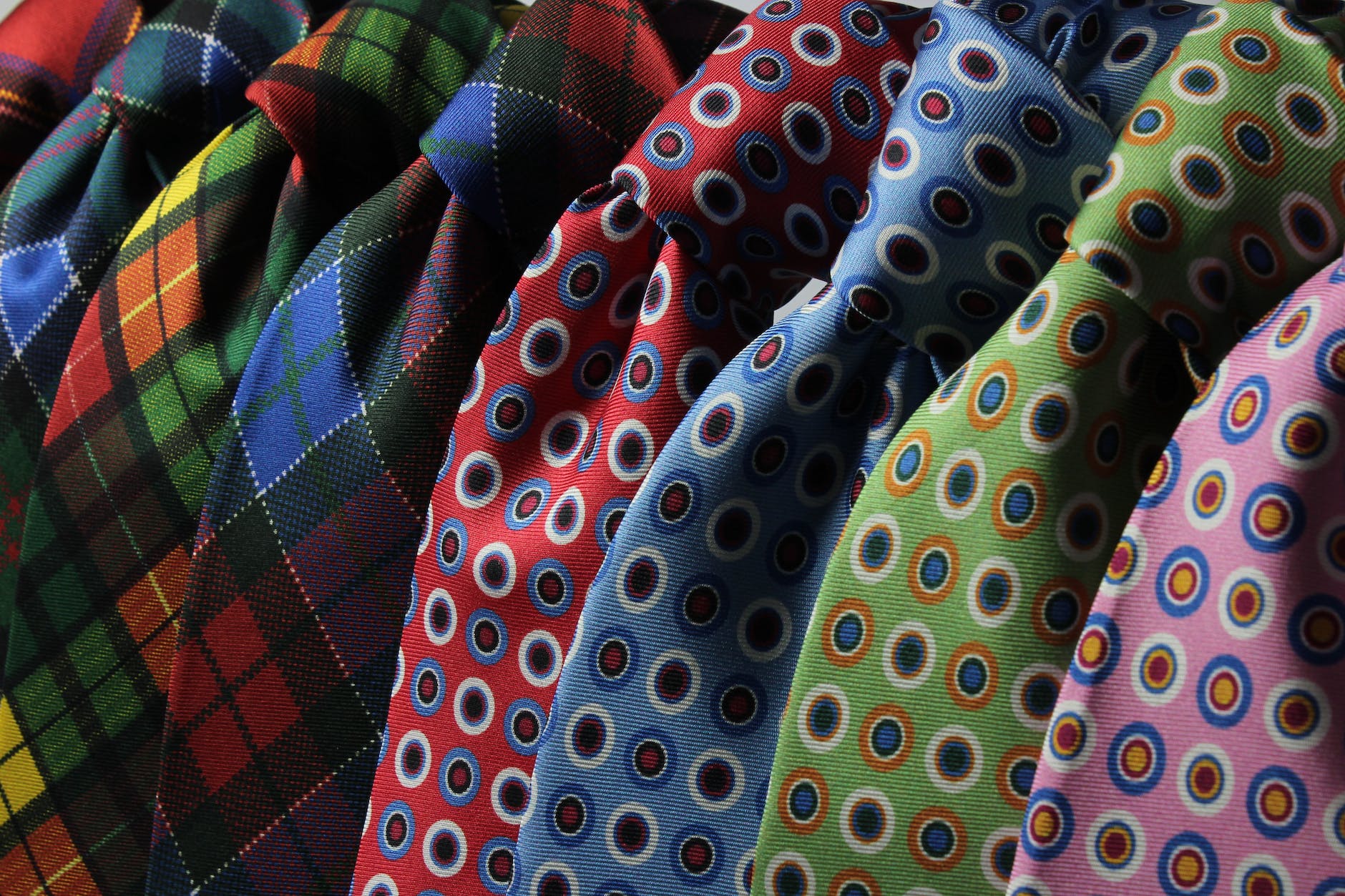
Weiberfastnacht (or Silly Thursday), a highlight of Carnival week, marks the unofficial commencement of the street celebrations. Translating to ‘feast night of the women’, women congregate in small groups, strolling through the city to ceremoniously sever the neckties of men they encounter. Upon compliance, men receive a bützchen, a token kiss on the cheek.
During the Carnival weekend in Cologne, there is no specific religious observance, yet Saturday stands out as the pinnacle for street festivities. With no work commitments the following day, residents of Cologne fully embrace the revelry on Saturday. The day kicks off early with a traditional Frühschoppen, or morning drink, followed by several lively pre-gatherings before noon. Additionally, an organized morning event known as Funkenbiwak in Neumarkt adds to the early celebratory atmosphere. As the day progresses, the spirited ambiance in Cologne escalates, culminating in lively and sometimes intense nighttime revelries. It is advisable to retire early to recuperate from any indulgences and avoid the more boisterous late-night scenes.
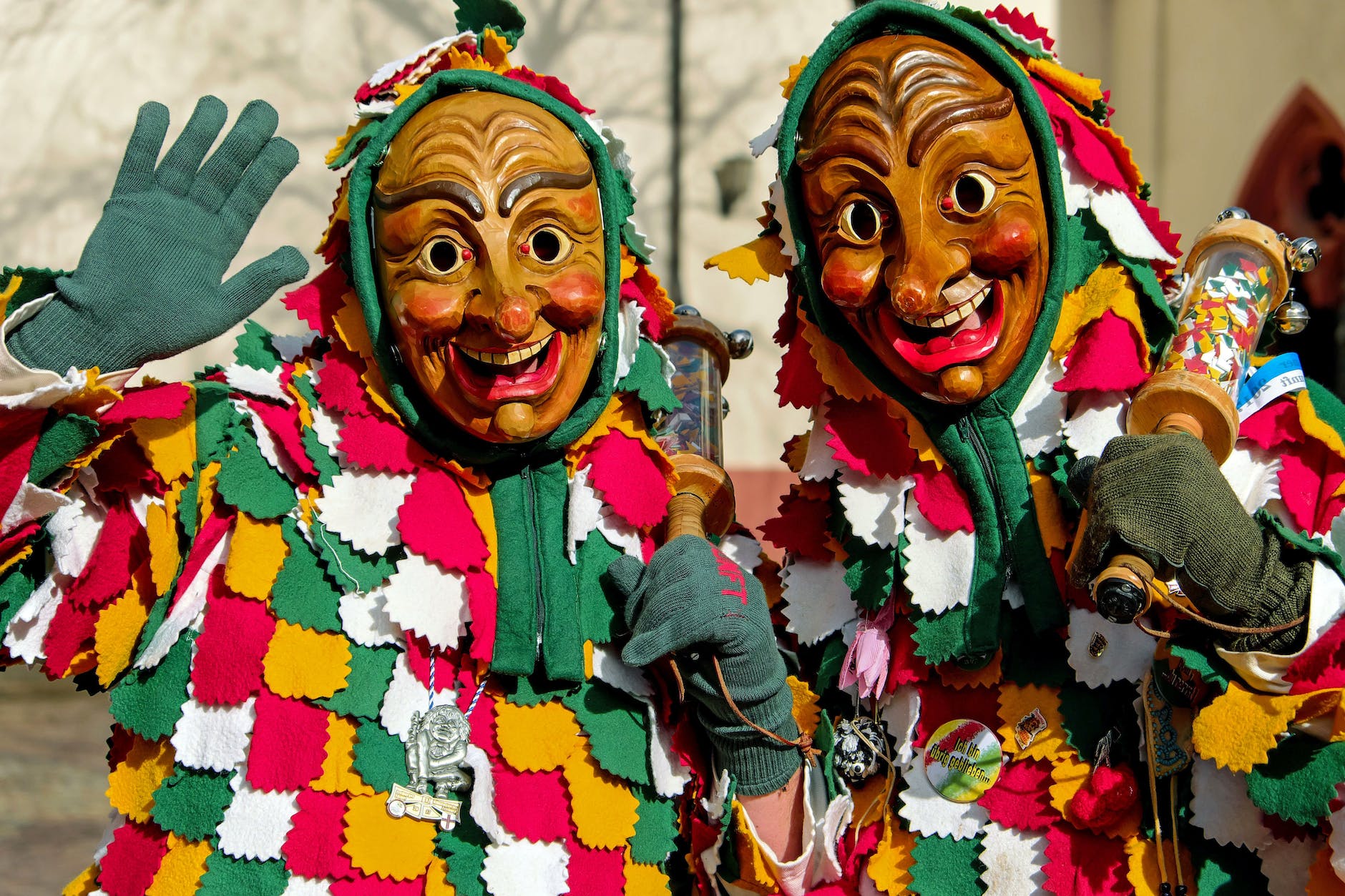
One notable Saturday event is the Geisterzug, or ghost procession, which garners significant attention. Originating as an alternative Carnival parade rooted in political dissent against the Iraq war in the early 1990s, the Geisterzug continues to carry a strong political undertone. Each year, the procession traverses a different neighborhood of Cologne, reflecting a diverse array of political and social themes. Keep abreast of updates on the procession to witness a spectacular display featuring vampires, witches, and ghouls.
Our Adventurous Experience at the Cologne Carnival
Upon our arrival in Cologne on the Sunday preceding Rosenmontag, we anticipated a tranquil day. However, to our delight, the city was vibrant with parades and bustling crowds, transforming our walk to the hotel with luggage into a more spirited and eventful journey than we had initially envisioned.
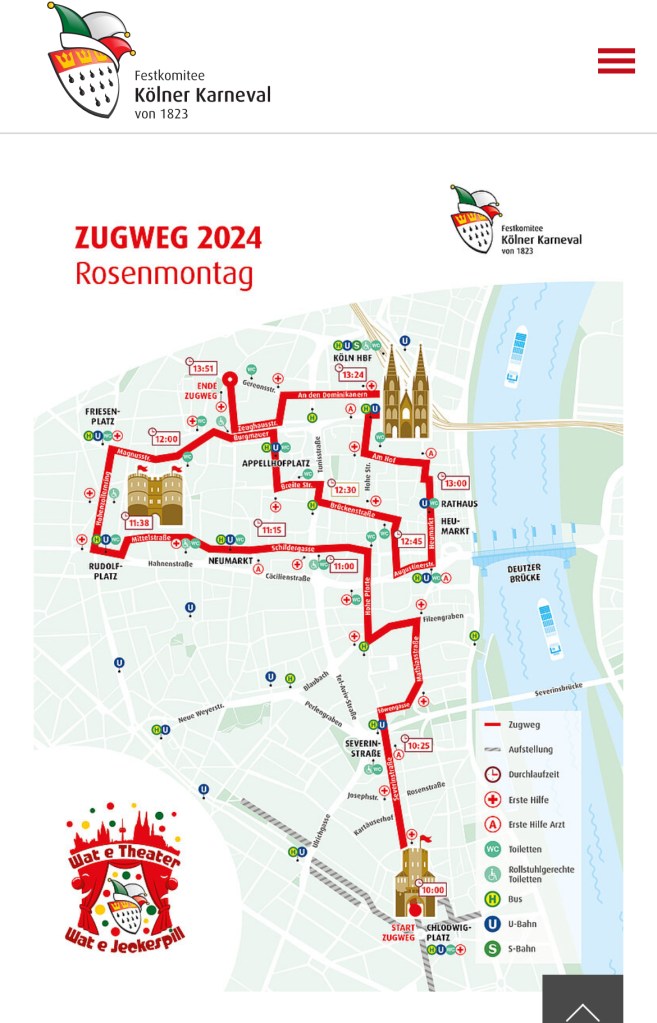
If there is a day not to be missed during Karneval, it is Rosenmontag. This day marks the grand parade, drawing over 1 million attendees to partake in the festivities. Commencing at 11:11 am, the procession features marching bands, dancers, and elaborately decorated floats parading along an 8km route through Cologne’s historic old city. The floats commonly employ dark humor or tongue-in-cheek references to satirize politicians or offer commentary on contemporary issues.
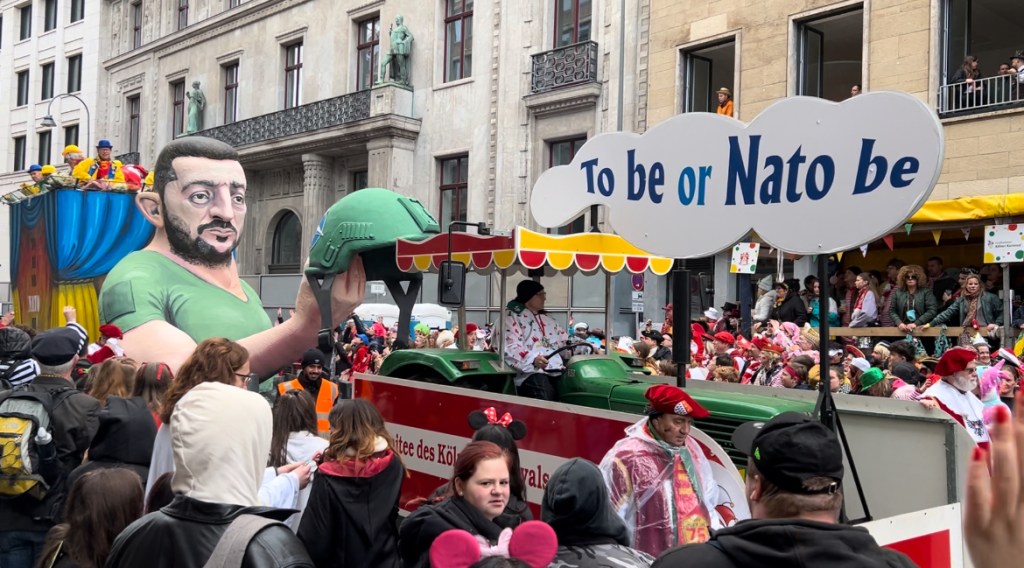
The festivities on Rosenmontag began very early in the morning. From our hotel window we were able to observe people lining the parade route and starting their celebrations as early as 8 that morning. As time passed, more and more celebrators gathered and the festive atmosphere grew in intensity. The parade made its way to our hotel shortly after noon and we observed the action from our hotel for about an hour before we decided it was time to join the party which officially lasted until around ten that evening, but unofficially lasted until the wee hours of the next day. As we had plans for a walking tour of the city on Tuesday morning, we didn’t stay up too late.
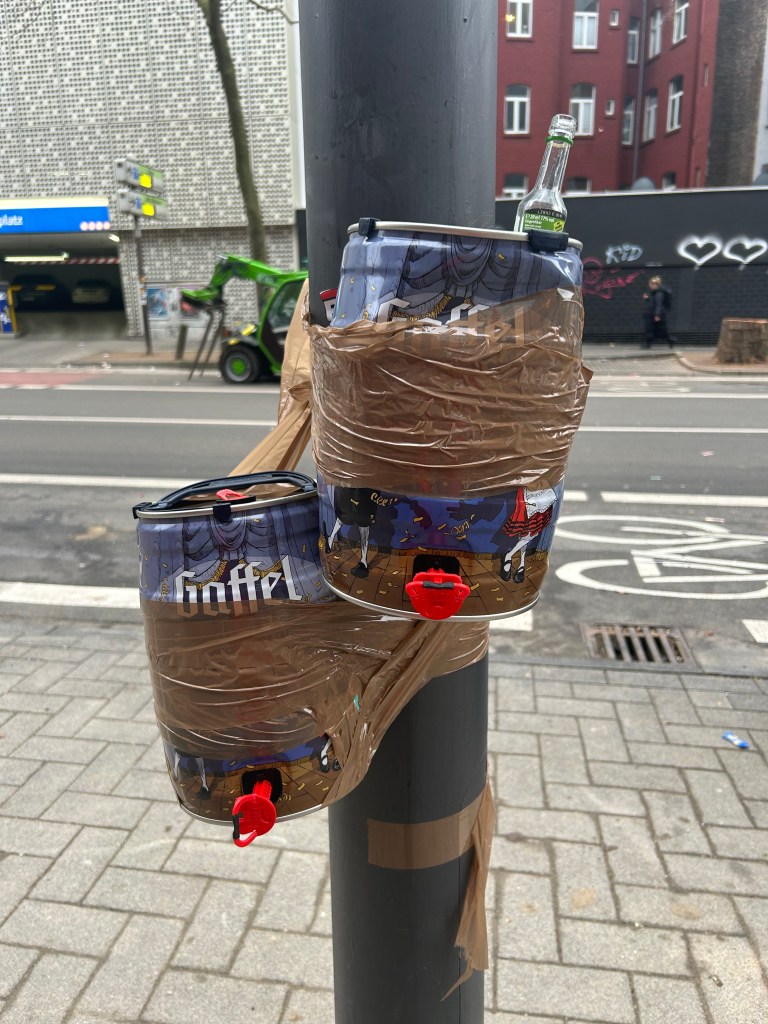
Shrove Tuesday or Mardi Gras or Fat Tuesday as it is known in the U.S. was pretty quiet and although this is the biggest day of Carnival celebrations in much of the world, we barely noticed any Carnival activity in Cologne on this day. We took a tour of the city and learned about the history, points of interest and other interesting facts of Cologne. Kölle Aalaaf!
Following days of exuberant celebrations, the ambiance gradually transitions to a more subdued state by Shrove Tuesday. The focal point of Shrove Tuesday festivities is the traditional Nubbelverbrennung, the symbolic burning of a straw figure. This ritual, known as a cathartic act, represents a collective discharge of any misdeeds partygoers may have engaged in during Karneval.
Throughout the city, life-sized straw effigies are prominently displayed in front of establishments ranging from bars and restaurants to private residences. As night falls, torch-lit processions take place, culminating in the incineration of the Nubbels. To ensure safety, fire rescue personnel are strategically positioned across the city to mitigate any potential risks. Among the notable locations hosting these ceremonies are Kwartier Latäng, renowned for its vibrant student community, as well as the vicinity near St. Agnes Church and in the old city area.
Ash Wednesday symbolizes the conclusion of the “Fifth Season” and heralds the commencement of Lent. Observant Catholic individuals will display an ash cross on their foreheads, a customary practice. Simultaneously, street cleaning vehicles traverse Cologne, meticulously erasing remnants of the prior week’s revelries.
How we utilized points to book a three-night stay at Lindner Cologne City Plaza Hotel.
During Carnival in Cologne, Germany, we enjoyed watching the Rosenmontag parade from our hotel window. Remarkably, we were able to stay for three nights at a cost of only €1.85 by using our Hyatt points. Surprisingly, we secured our hotel booking a mere two weeks before our stay.
📍Lindner Hotel Cologne City Plaza, part of the JdV by Hyatt, Magnusstrasse 20, Cologne, Germany, 50672

The hotel room rate listed on Booking.com was $191 per night; however, we decided to leverage our Hyatt points through the Hyatt app, requiring 5,000 points per night. To cover the duration of our stay, we transferred 15,000 Chase Reward points to Hyatt. Moreover, a city hotel tax of €1.85 was settled during the checkout process. This strategic use of points resulted in savings of around $575.
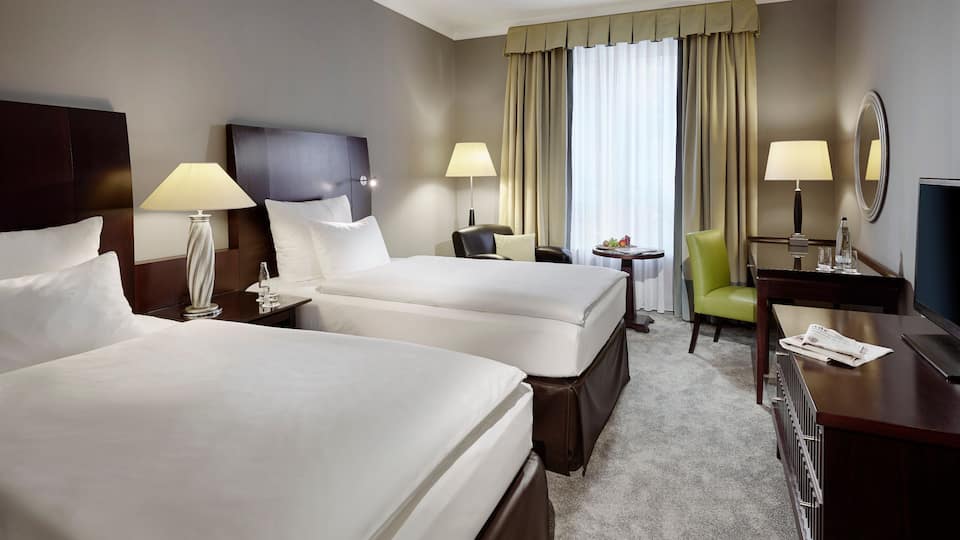
The hotel featured an exceptional spa and fitness area that we thoroughly enjoyed.


The Rosen Monday parade traversed directly in front of the hotel, where stands were available for spectators to purchase tickets and enjoy the spectacle.

If you would like to learn more about how to get started on using credit card points/miles for free travel, please read the following blog post to get started: Earning Points/Miles for Beginners.
Please do not hesitate to reach out with any questions you may have or just to say hello! Your presence and engagement mean a great deal to us.
Sit back, relax, and enjoy our YouTube video showcasing our Cologne escapade below!
Happy Travels!
Betty and Lee
 Traveling Expats
Leave a comment